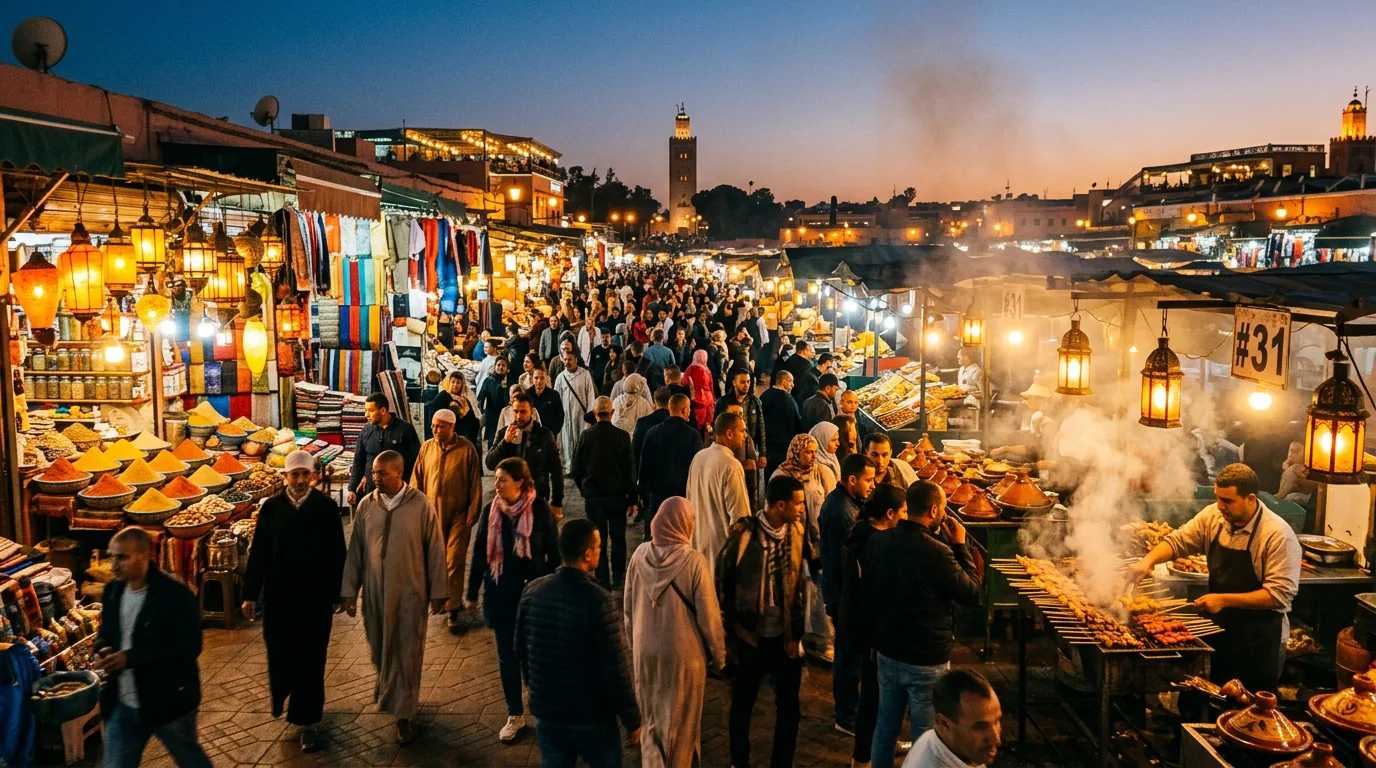
The short answer most travellers are looking for: the sweet spots for Marrakech are spring (roughly March to May) and autumn (roughly September to November), when the days are warm and clear without being brutal and the evenings stay pleasant. But Marrakech rewards visitors in every season if you understand its rhythm. The city sits in a hot semi-arid climate — long dry spells, big swings between day and night, and a summer that demands respect. Here is how the year actually feels, month by month, with what we tell guests about each window.
Marrakech's climate in a nutshell
Marrakech is hot and dry far more often than it is anything else. The defining features are a fierce summer, a mild but surprisingly cool-at-night winter, and two gentle shoulder seasons in between that most people consider the best time to come. Rain is scarce and tends to arrive as brief showers between late autumn and early spring. The figures below are typical, approximate norms rather than guarantees — weather varies year to year, and a single heatwave or cold snap can sit well outside the averages.
- Summer (June–August): very hot and dry, often around 35–40°C and capable of exceeding 43°C in a heatwave; mornings and evenings far more bearable.
- Autumn (September–November): warm, clear and comfortable — one of the two best windows, with the heat easing through the season.
- Winter (December–February): mild and sunny by day (often around 18–20°C) but cold at night (roughly 5–8°C); pack layers.
- Spring (March–May): warm, bright and comfortable — the other prime window, with wildflowers in the surrounding countryside and Atlas.
Marrakech month by month
| Month | Typical feel | Good for |
|---|---|---|
| January | Mild, sunny days; cold nights | Quiet medina, clear light, low-season value |
| February | Mild days warming; chilly evenings | Early-bloom countryside, fewer crowds |
| March | Warm, fresh, mostly dry | All-day sightseeing, Atlas day trips |
| April | Warm and bright — a peak window | Everything; expect busier riads |
| May | Warm to hot; heat building | Long days before the summer peak |
| June | Hot and dry | Early starts, pool afternoons, the coast |
| July | Very hot; midday is intense | Dawn sightseeing, riad downtime, value |
| August | Very hot, peak of the heat | Same as July; Essaouira escapes the worst |
| September | Hot easing to warm — a peak window opens | Comfortable touring as crowds return |
| October | Warm, clear, comfortable | Arguably the loveliest all-rounder |
| November | Mild days, cooler nights; first rains possible | Soft light, thinning crowds |
| December | Mild, sunny days; cold nights | Festive riads; book early for the holidays |
These are typical, approximate patterns — treat them as a planning guide, not a forecast. For your exact travel window we always send guests current conditions from the ground.
The sweet spots: spring and autumn
If you want the easiest, most comfortable Marrakech, aim for March to May or September to November. Days are warm and clear, evenings are pleasant rather than cold, and the city's full range — long medina walks, the Majorelle and Bahia, an Atlas day trip, an Agafay or Sahara overnight — all sit comfortably within reach without battling the heat. These are also the most popular windows, so riads and the best guides book up well ahead. Reserve early if you are travelling around Easter or through October.
Visiting in summer: how to beat the heat
June to August is hot — often 35–40°C and sometimes beyond 43°C in a heatwave — but it is far from off-limits if you plan around the sun rather than through it. The trick is to split your day:
- Sightsee early. Be out by 8am for the medina, gardens and monuments while it is still cool and the light is soft.
- Take a long midday break. Retreat to a shaded riad courtyard or pool through the worst of the afternoon heat, as locals do.
- Come back out in the evening, when Jemaa el-Fna and the souks come alive and the temperature finally relents.
- Escape to the coast. Breezy Essaouira stays markedly cooler and makes a perfect summer day trip or overnight.
- Hydrate hard, wear a hat and high-SPF sunscreen, and choose breathable linen and cotton.
Visiting in winter: warm days, cold nights
Winter catches people out in both directions. The days are often gloriously mild and sunny — around 18–20°C is common — yet the nights can fall to roughly 5–8°C, and many riads are built to hold the cool rather than the warmth. Bring proper layers and a warm jacket for the evenings. If you are pairing the city with the nearby Atlas or a desert night, expect it to be colder still after dark — desert and mountain nights can approach freezing in the depths of winter. The reward is crisp, clear light, a calmer medina and better value outside the Christmas and New Year peak.
A note on Ramadan
Ramadan can be an atmospheric, rewarding time to visit, but it changes the city's rhythm: some cafés and restaurants keep reduced daytime hours, and the evenings come alive once the fast is broken. Because the Islamic calendar is lunar, Ramadan shifts earlier by roughly eleven days each year, so its dates move steadily through the seasons. Always check when it falls for your travel window before booking, and plan a little extra flexibility around daytime meals if your trip overlaps with it.
What to pack by season
- Spring & autumn: light layers, a thin jacket for evenings and breezy Atlas days, comfortable closed-toe walking shoes, sunscreen and a hat.
- Summer: breathable linen and cotton, a wide-brimmed hat, SPF 50+, sunglasses, a refillable water bottle — and a light cover layer for air-conditioned interiors and the coast.
- Winter: pack as for a cool European autumn — a warm jacket, a fleece or jumper, and layers for genuinely cold nights, plus something extra for any Atlas or desert excursion.
- Year-round: modest clothing that covers shoulders and knees for the medina and religious sites, and a light waterproof from late autumn to early spring.
For a full season-by-season checklist, see our Marrakech packing guide, and browse our private tour options to build a trip around your dates.
Frequently asked
What is the best time of year to visit Marrakech?
For most travellers, spring (roughly March to May) and autumn (roughly September to November) are the sweet spots. Days are typically warm and clear without the punishing heat of high summer, and evenings are pleasant rather than cold. These windows suit long days on foot in the medina, Atlas day trips and desert overnights equally well, which is why they tend to be the busiest and the loveliest.
How hot does Marrakech get in summer?
Marrakech has a hot semi-arid climate, and summer (June to August) is genuinely hot and dry — daytime highs often sit around 35–40°C and can push past 43°C in a heatwave. It is very doable if you plan around it: sightsee early, retreat to a shaded riad or pool through the midday peak, and come back out in the cooler evening. Mornings and nights are far more comfortable than the afternoon.
Is Marrakech cold in winter?
Winter days (December to February) are usually mild and sunny — often around 18–20°C — which surprises visitors expecting Africa to be hot year-round. The catch is the nights, which can drop to roughly 5–8°C, and many riads are built to stay cool rather than warm. Pack proper layers and a warm jacket for evenings, and expect the nearby Atlas and desert to be colder still after dark.
When is the rainy season in Marrakech?
Marrakech is dry for most of the year. What little rain falls tends to come between about November and March, usually as brief showers rather than long wet spells. Even in those months you can expect plenty of bright, clear days. A light waterproof layer is enough insurance; you very rarely need to plan a trip around the weather.
Should I avoid visiting Marrakech during Ramadan?
You do not have to avoid it, but it helps to know what to expect. During Ramadan the rhythm of the city shifts — some cafés and restaurants keep reduced daytime hours, and the evenings come alive after the fast is broken. It can be a memorable, atmospheric time to visit if you are relaxed about daytime closures. Ramadan moves earlier by roughly eleven days each year, so check the dates for your travel window before booking.
When is the cheapest time to visit Marrakech?
The quietest and generally best-value periods are high summer (with its heat) and the depths of winter, outside the Christmas and New Year peak. Riad rates and flights tend to ease when the weather is at its most extreme. If you can handle hot afternoons or cool nights, you will often find more space, lower prices and a calmer medina than in the spring and autumn rush.
Travelling soon?
We'll plan your trip around the season you're coming in.
Tell us your dates and we'll shape an itinerary that works with the weather — early starts in summer, warm layers in winter, and the right day trips for your window — plus current conditions from the ground.
Request an itinerary