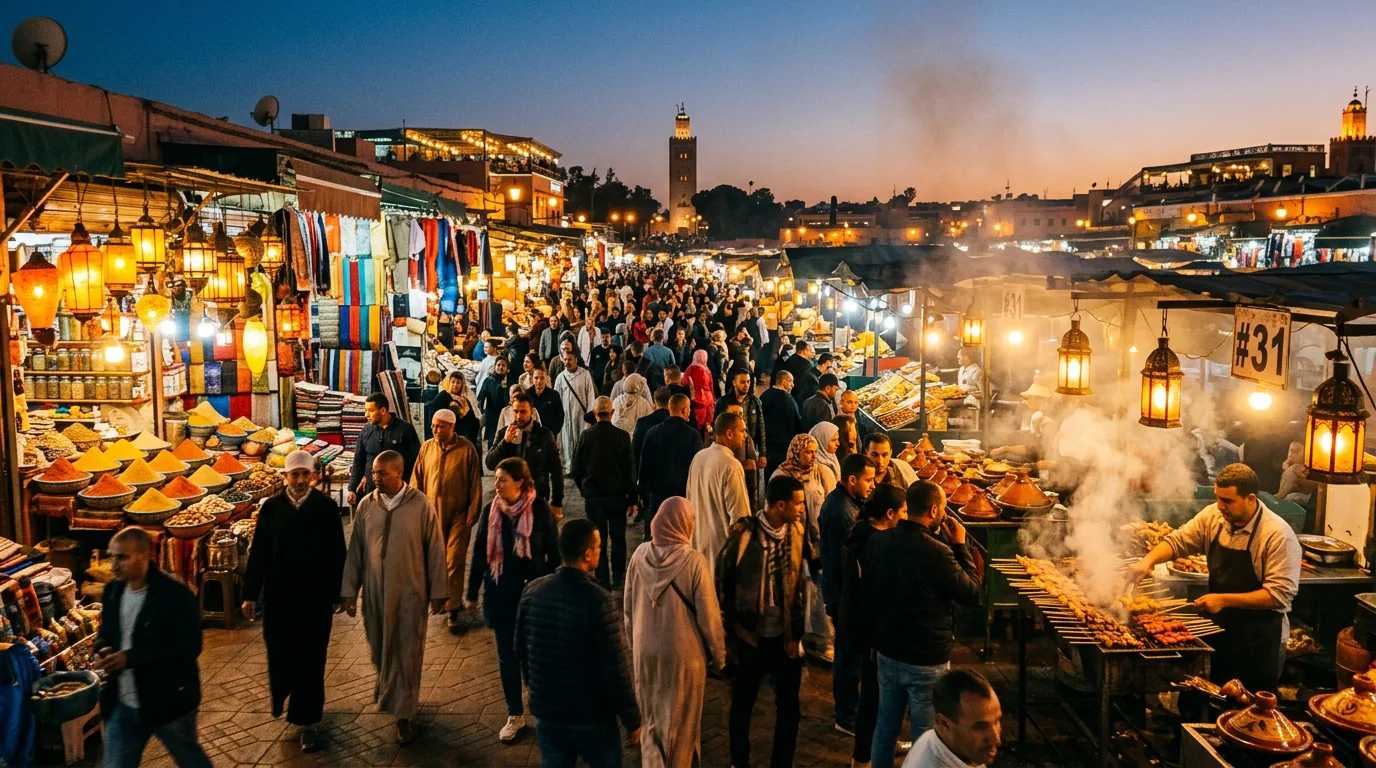
March to May and September to November are when Marrakech is at its best — warm but not punishing, long days, evenings made for a rooftop dinner. Summer is hot but manageable with the right rhythm; winter is mild, sunny and gloriously free of crowds.
In this guide
Why does the season matter so much in Marrakech?
Marrakech sits at around 450 metres on the edge of the Haouz plain, with the High Atlas at its back shielding it from the Atlantic. That position hands the city a semi-arid climate of big seasonal swings: spring and autumn are a gift, summer turns genuinely fierce, and winter stays mild and bright by European standards while the nights run cold. The medina's tight lanes throw welcome shade, but they also bottle the heat in July and August, when the afternoon mercury routinely climbs past 38°C.
Spring — March to May
For a great many visitors, spring is Marrakech at its finest. Daytime highs climb from around 18°C in early March to about 28°C by May, and the evenings settle into perfect rooftop weather. It lines up beautifully with the season's other draws too — the rose harvest in the Dadès Valley in late April and early May, and ideal trekking conditions up in the Atlas. April is the year's pricing peak for riads and hotels, so book well ahead.
Ramadan, which falls in the early-year months through the late 2020s, reshapes the city's tempo in some spring weeks — thinner daytime street food but an electric, lantern-lit atmosphere around the Jemaa el-Fnaa after sunset. Check the dates before you commit.
Summer — June to August
June is the hinge — comfortable enough through the first fortnight, then the heat arrives in earnest. July and August are the scorchers: midday readings of 38–42°C are routine, the occasional chergui wind off the Sahara can nudge it higher, and the afternoon medina becomes a place to escape rather than explore. The trade-off is real, though — fewer tourists, softer riad prices, and evenings that ease back to a bearable 24–27°C. Visit in summer and you build the day around the heat: out early (7–10am), out again late (5–9pm), and treat the middle of the day as downtime.
- Upside: fewer tourists, lower riad rates, a lively after-dark city
- Downside: brutal afternoon heat in the medina, and Sahara day trips turn miserable
- Tactic: base in a riad with a pool and keep sightseeing to early morning and after 5pm
Autumn — September to November
Autumn is Marrakech in balance. September is still warm at 28–32°C, but the savage heat has broken; October and November deliver ideal walking weather — 20–26°C by day, cool by evening. Late November into early December usually brings the Marrakech International Film Festival, shifting a different, glamorous energy through the Palmeraie and the medina's bigger hotels. It is prime Sahara season as well: comfortable desert days paired with cold, crystal-clear nights down at the dunes.
Winter — December to February
Winter in Marrakech is badly underrated. The days are sunny and easy at 16–20°C; the evenings and nights turn properly cold at 5–10°C and want a warm layer. The medina is at its quietest, riads drop to honest off-season rates, and the High Atlas above Imlil wears a photogenic cap of snow that you can see from the city rooftops. This is also when the Sahara's best season opens — the cold desert nights are part of the deal. Christmas and New Year bring a brief price surge; January and February are the calmest, cheapest weeks of the whole year.
Frequently asked
What is the hottest month in Marrakech?
July, as a rule, with average highs of 38–42°C; August runs it close. Both months also see the city at its emptiest and its cheapest for a room.
What is the best month to visit Marrakech?
April and October top the list time and again — comfortable temperatures, long daylight, and the Atlas in prime shape for day trips and trekking.
Is Marrakech cold in winter?
The days are mild and sunny at 16–20°C, but the evenings and nights drop to 5–10°C, so pack a warm layer for after dark. Snow almost never falls in the city itself, though you will see it crowning the Atlas peaks.
Can you visit Marrakech in August?
Yes, as long as you respect the heat. Build the day around the cool hours — early morning and evening — pick a riad with a pool, and resist the urge to pack midday sightseeing into the itinerary.
Is Marrakech busy at Christmas?
The final week of December is one of the city's busiest stretches — riads fill fast and prices jump, so book early. January and February that follow are the quietest and most affordable time of the year.
Planning a trip?
Let a Marrakech atelier handle the details.
Tell us your dates and style and we'll send a written itinerary and a transparent quote within 24 hours.
Request an itineraryKeep reading
Planning
The Best Time to Visit Morocco
For a Marrakech city break, spring (March–May) and autumn (September–November) hit the sweet spot — sun-warmed days in the medina, cool enough rooftops at dusk, and perfect conditions for Agafay, the Ourika valley and an Atlas or desert day trip.
Planning
Things to Do in Marrakech: The Essential Guide
Marrakech is glorious sensory overload — a thousand-year-old medina, the cobalt of the Majorelle garden, the ritual of the hammam, candlelit rooftop dinners, and a square that reinvents itself every evening into one of the world's great open-air theatres. This is our insider map to where your hours are best spent, from the souks and the palaces to the day trips that fan out into the Atlas and the desert.
Itineraries
Morocco Itinerary: 7 Days
A week is plenty to pair our home city of Marrakech with the Sahara, or to trace the imperial cities of the north. Here are two proven 7-day Morocco itineraries, both designed to start or finish in Marrakech — and how to choose between them.