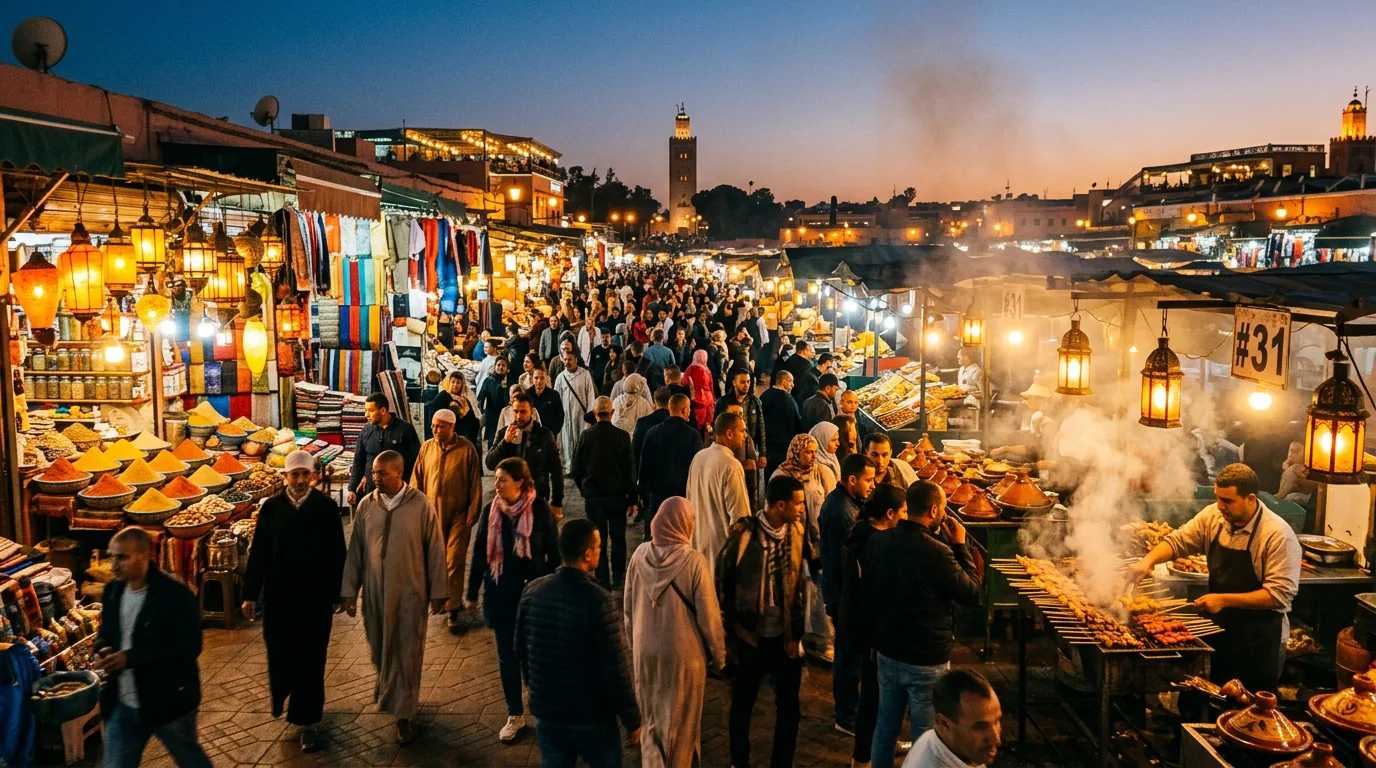
For a Marrakech city break, spring (March–May) and autumn (September–November) hit the sweet spot — sun-warmed days in the medina, cool enough rooftops at dusk, and perfect conditions for Agafay, the Ourika valley and an Atlas or desert day trip.
In this guide
Marrakech month by month
Marrakech sits at the foot of the High Atlas on the edge of a semi-desert plain, and its weather swings hard with the calendar. The same square that's golden and pleasant in April becomes a furnace by July. Plan around the heat and the city rewards you in every season.
- Spring (Mar–May): the prime window — snow still capping the Atlas behind warm souks, blossom in the gardens, ideal day-trip weather.
- Summer (Jun–Aug): fierce in the medina (often 38–45°C by afternoon); slow your pace, lean on the riad pool, and escape to Essaouira or the cooler Ourika valley.
- Autumn (Sep–Nov): a second sweet spot — heat easing, long clear light over the rooftops, comfortable Agafay sunsets.
- Winter (Dec–Feb): mild sunny days, lively low-season medina and cold desert nights; the Atlas peaks turn white as a backdrop.
Timing the day trips
An Agafay stone-desert dinner or a camel ride is glorious from October through April but punishing at midday in high summer — go for sunset whatever the month. The Ourika valley, an hour up into the foothills, runs a few degrees cooler than the city and makes a good summer escape, though its river is fullest with spring snowmelt.
For a longer push to Merzouga or Zagora from Marrakech, October to April is the comfortable window. Essaouira on the coast stays breezy and mild year-round — a three-hour drive west and the obvious bolt-hole when the city overheats in July and August.
What can move your dates
Ramadan shifts roughly eleven days earlier each year (it sits in the late-winter window through the late 2020s) and changes the daytime rhythm — some medina cafés trim their hours, though riads, hammams and tours run as normal and the after-dark squares come alive. The Marrakech rose harvest in the nearby Dadès valley peaks in May, and the city's film festival draws a crowd in autumn; lock in riads early around either.
Frequently asked
What is the cheapest time to visit Marrakech?
Riad rates dip in deep summer (July–August), when the city bakes, and in mid-winter outside the holidays. June and November sit just outside the two peaks and tend to offer the best balance of price and pleasant weather.
When is Marrakech too hot?
July and August, when afternoons in the medina routinely top 38–45°C. If you come then, sightsee early and late, rest at the riad pool through the heat, and time any Agafay or Atlas trip for sunset.
Is December a good time to visit Marrakech?
Yes — sunny, mild days, an atmospheric low-season medina and fewer crowds. Just pack layers: a rooftop dinner or an Agafay night gets genuinely cold once the sun drops, and the Atlas behind the city holds snow.
Planning a trip?
Let a Marrakech atelier handle the details.
Tell us your dates and style and we'll send a written itinerary and a transparent quote within 24 hours.
Request an itineraryKeep reading
Practical
What to Pack for Morocco
Pack light, modest and layered. A Marrakech trip swings from hot medina days to cool rooftop dinners and genuinely cold Agafay or Atlas nights, so breathable layers, broken-in walking shoes and one warm top cover almost everything.
Planning
Is Morocco Safe to Visit?
Yes — Marrakech is a well-trodden, welcoming city with a tourism industry built around visitors. The realistic day-to-day concerns are petty scams and the famous medina hustle around Jemaa el-Fna and the souks, both easily managed once you know the patterns.
Planning
Morocco Travel Costs & Budget
Marrakech bends to almost any budget. Mid-range visitors spend roughly US$80–150 per person per day; a private, riad-based city break with a driver-guide and day trips typically runs US$200–400+ per day depending on season and standard.