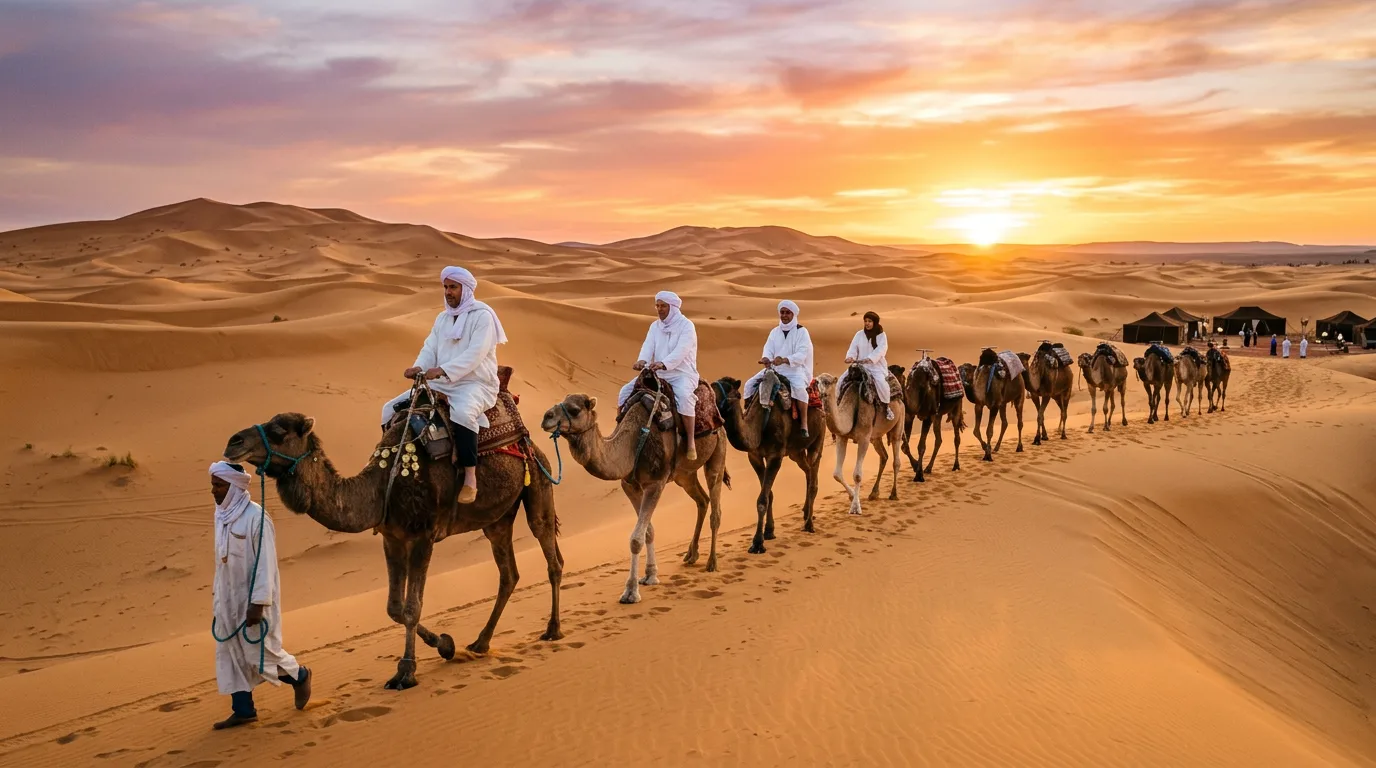
Marrakech works beautifully with children — riads wrap a private courtyard around them, camels in the Palmeraie enchant every age, and Moroccan culture is genuinely warm towards families. Pacing and planning are everything.
In this guide
Marrakech as a family base, and where to go from it
Marrakech is an ideal child-friendly base: enough to fascinate — the snake charmers and drummers on Jemaa el-Fna, the colours of the souks, the calèche horse-carriages — without overwhelming, and riads that give you a private, secure retreat at the end of the day. The Sahara, specifically a night at a desert camp, is the universal highlight for children from about six upwards; the camel ride, the dune climb and the star-filled sky are genuinely magical. It is a long haul from the city, so build in the driving days.
Closer to home, the Ourika Valley and the High Atlas foothills make a superb half- or full-day escape with kids — river paddling, waterfalls and a Berber lunch. Agafay's stony desert is an easy half-day camel-and-camp taster without the long Sahara drive. A day trip to Essaouira adds a windswept beach, ramparts and fresh seafood, and suits families with very young children who need downtime between sights.
Pacing and riads vs hotels
A private riad — particularly one with a plunge pool or a garden courtyard — is a revelation with children. The enclosed space gives young ones room to run while the adults exhale; there is no big lobby, no busy restaurant entrance, and staff who tend to be genuinely delighted by kids. Many medina riads have family suites or interconnecting rooms. Budget an extra half day in Marrakech rather than cramming in too many sights or back-to-back day trips.
Avoid peak summer heat (July–August); children overheat quickly and Marrakech at 40°C-plus is unpleasant for everyone. Spring (March–May) and autumn (September–November) are the ideal windows — warm, comfortable days and cool evenings perfect for the square after dark.
The desert with children
Sahara trips depart Marrakech over the Tizi n'Tichka pass, and Merzouga (Erg Chebbi) is the most accessible desert for families. A short camel trek of 20–40 minutes into the dunes is manageable even for young children, and luxury camps have proper beds and ensuite bathrooms rather than sleeping bags on the sand. Bring warm layers — desert nights cool dramatically even in spring. If a multi-day drive is too much for little ones, an overnight at an Agafay camp an hour from the city gives the camel, the dunes and the campfire without the long road.
Food and practicalities
Moroccan food is family-friendly: mild tagines, flatbreads, couscous, the famous fresh orange juice on Jemaa el-Fna and a parade of pastries. Avoid tap water and unpeeled raw salads; stick to bottled water and cooked food, especially for young children. Most riads will happily tone down seasoning and serve children's meals at off hours. Pack familiar snacks for long driving days — the Atlas and desert roads out of Marrakech are beautiful but long.
- Bring: high-factor sun cream, a children's insect repellent, anti-diarrhoea medicine, and oral rehydration sachets.
- Private transport is essential with children — you control the pace and the stops on every Atlas or desert run.
- Most riads are genuinely child-welcoming; ask about family rooms and pool depth when booking.
- Pharmacies (farmacie) are everywhere in Gueliz and around the medina and are well stocked for basic medicines.
Frequently asked
What is the best age to take children to Marrakech?
From about five or six, children get the most from Marrakech and Morocco — old enough for the camel trek, the souks and the desert night sky. Younger children can absolutely come, but the dense medina and the long Atlas and desert drives are harder work; choose a riad with a pool and keep the days shorter.
Is the Sahara safe for children?
Yes, with sensible planning. The dune camel trek is short and gentle, luxury camps have proper beds and bathrooms, and the environment is safe. Avoid July and August with young children due to extreme heat. Spring and autumn are ideal, and an Agafay camp near Marrakech is a gentler alternative to the long Merzouga drive.
Are Marrakech riads suitable for families?
Most riads are excellent for families. The enclosed courtyard or plunge pool gives kids a safe space; many have family suites or adjoining rooms. Ring ahead to check pool depth and room layout — some smaller medina riads have steep, open staircases.
Is Moroccan food suitable for children?
Broadly yes — bread, mild tagines, couscous, fresh fruit and pastries are universally appealing, and the orange juice on Jemaa el-Fna is a hit. Stick to bottled water and cooked food. Riads and visitor restaurants happily adjust spice levels and serve plain options.
What is the best family loop based in Marrakech?
Marrakech as a base (with a riad with a pool), a Sahara or Agafay desert night, the Ourika Valley for river and waterfall fun, and a day at Essaouira on the coast make an ideal family loop. Keep the longest drives split across two days and the children stay happy.
Planning a trip?
Let a Marrakech atelier handle the details.
Tell us your dates and style and we'll send a written itinerary and a transparent quote within 24 hours.
Request an itineraryKeep reading
Planning
The Best Time to Visit Morocco
For a Marrakech city break, spring (March–May) and autumn (September–November) hit the sweet spot — sun-warmed days in the medina, cool enough rooftops at dusk, and perfect conditions for Agafay, the Ourika valley and an Atlas or desert day trip.
Planning
Morocco Travel Costs & Budget
Marrakech bends to almost any budget. Mid-range visitors spend roughly US$80–150 per person per day; a private, riad-based city break with a driver-guide and day trips typically runs US$200–400+ per day depending on season and standard.
Practical
What to Pack for Morocco
Pack light, modest and layered. A Marrakech trip swings from hot medina days to cool rooftop dinners and genuinely cold Agafay or Atlas nights, so breathable layers, broken-in walking shoes and one warm top cover almost everything.