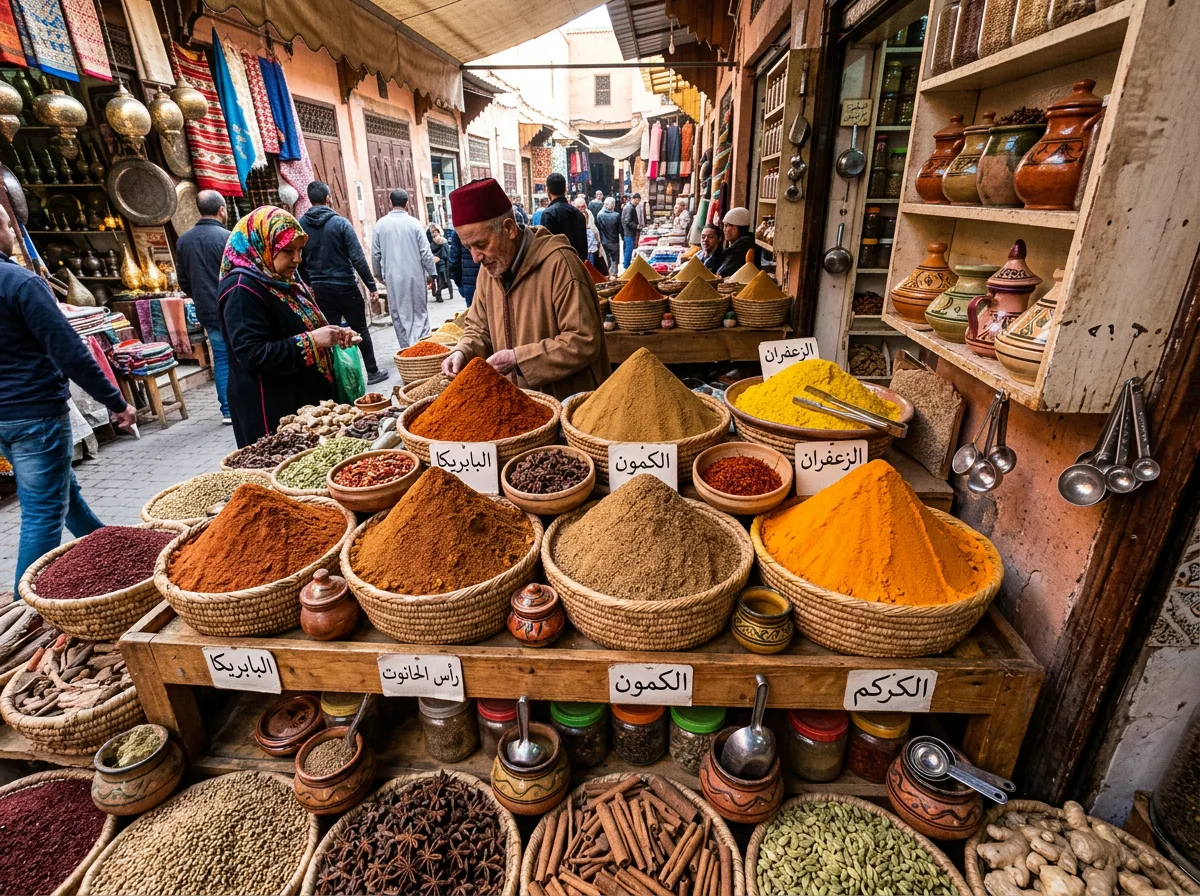
Marrakech bends to almost any budget. Mid-range visitors spend roughly US$80–150 per person per day; a private, riad-based city break with a driver-guide and day trips typically runs US$200–400+ per day depending on season and standard.
In this guide
Currency and payments in Marrakech
The currency is the Moroccan dirham (MAD), a closed currency you can't easily buy before you fly — withdraw from ATMs (plenty around Gueliz and the edges of Jemaa el-Fna) or exchange on arrival at RAK. Riads, Gueliz restaurants and bigger shops take cards, but the souks, petit taxis, hammam tips and rural day-trip stops run on cash. Keep a stash of small notes for haggling and baksheesh.
What things cost in Marrakech
Rough, real-world ranges to set expectations (they shift with the season and the neighbourhood):
- A glass of mint tea or coffee: 15–30 MAD; a casual tagine lunch in the medina: 60–120 MAD.
- A good riad room: US$60–200+ per night; design riads and Agafay camps go far higher.
- A licensed half-day private medina guide: roughly US$60–120.
- A traditional hammam and scrub: from around 150–300 MAD at a neighbourhood bath, far more at a spa riad.
- An Agafay sunset dinner or a day trip to Ourika, Essaouira or Aït Ben Haddou by private car: from around US$120–250+ per car.
Where the money goes — and how to save
On a private Marrakech trip, the riad and the driver-guide are the big line items, and both scale with season and standard. Travelling in the shoulder months, mixing a couple of self-guided medina days with one or two guided excursions, and filling the car (a private vehicle costs the same for two as for four) all stretch the budget without thinning the experience.
Frequently asked
How much does a week in Marrakech cost?
A comfortable mid-range week, using the city as a base for a few day trips, runs roughly US$600–1,100 per person excluding international flights. A fully private riad-and-driver trip with an Agafay or Sahara night typically lands between US$1,400 and US$3,000+ per person for the week, depending on season and standard.
Should I bring cash or use cards in Marrakech?
Both. Cards work in riads, Gueliz restaurants and bigger shops, but carry dirham cash for the souks, petit taxis, hammam tips and rural day-trip stops, where cards aren't accepted.
Is Marrakech expensive?
It's as cheap or as plush as you make it. Street food, neighbourhood hammams and guesthouses keep it very affordable; private guiding, design riads and Agafay camps push it firmly into premium territory.
Planning a trip?
Let a Marrakech atelier handle the details.
Tell us your dates and style and we'll send a written itinerary and a transparent quote within 24 hours.
Request an itineraryKeep reading
Planning
Morocco Visa & Entry Requirements
Most visitors flying into Marrakech — including US, Canadian, UK, EU/Schengen, Australian, New Zealand and Japanese passport holders — enter Morocco visa-free for up to 90 days. You need a passport valid for at least six months beyond your arrival date.
Practical
Getting Around Morocco
Within Marrakech you'll mostly walk the medina and grab petit taxis between districts. For the airport, the day trips and onward cities, the choice is between the train (to Casablanca, Rabat, Fes) and a private driver — and which you want depends on where you're headed.
Planning
The Best Time to Visit Morocco
For a Marrakech city break, spring (March–May) and autumn (September–November) hit the sweet spot — sun-warmed days in the medina, cool enough rooftops at dusk, and perfect conditions for Agafay, the Ourika valley and an Atlas or desert day trip.