Marrakech's tap water is treated and meets national standards, but on a short visit the sensible move is bottled or filtered water for drinking. The usual culprit behind a holiday stomach is not contamination but simply an unfamiliar microbial mix — easy to sidestep with a little care.
In this guide
Can you drink the tap water in Marrakech?
The Office National de l'Eau Potable (ONEP) treats and chlorinates Marrakech's mains water to national standards, and locals drink it daily without a second thought — they have the gut flora for it. For a visitor, the question is less about cleanliness and more about adjustment.
Even water that passes every safety test can unsettle a stomach unused to the local microbial profile, which is exactly why travellers sometimes feel off in a new country with no contamination involved at all. On a trip of a few days to a couple of weeks, sticking to bottled or filtered water is the simplest way to avoid losing an afternoon in your riad rather than wandering the souks.
What about day trips into the Atlas, Agafay and beyond?
Once you leave Marrakech, the infrastructure gets patchier. In small Atlas villages and mountain guesthouses (gîtes) above Ourika or Imlil, water may come straight from a spring with no treatment, or run through old pipes. On an Agafay or Sahara overnight, camp water is usually drawn from a deep well or trucked in — fine for washing, less ideal to drink untreated.
For a multi-day Atlas trek or an extended desert stay, pack a portable filter or purification tablets. The gîtes along the Toubkal routes generally sell bottled water, but supply thins on the more remote valley paths, so do not count on it.
- High Atlas villages: drink bottled or filtered water; the tap may be fine, but it is not worth the gamble on a short visit.
- Agafay and Sahara camps: camp water is generally fine for washing; drink the bottled water provided.
- Mountain springs: clear-looking spring water can still carry giardia — do not drink it untreated without a filter.
- Ice: technically made from tap water, but ice in drinks at reputable Marrakech restaurants and rooftops is generally fine.
Is tap water okay for brushing your teeth?
This comes down to how cautious you want to be. Plenty of seasoned travellers brush with tap water in their Marrakech riad and never notice a thing, and the common view is that in the city it is usually fine for tooth-brushing; out in rural guesthouses and the desert, switch to bottled.
If your stomach is easily upset, brushing with bottled water for the whole trip is a trivially cheap precaution — bottled water sells for a few dirham a large bottle in any corner shop or supermarket across Marrakech.
Cutting down on single-use plastic
Plastic bottle waste is a real problem in Morocco, from the medina lanes to hiking trails. A reusable bottle topped up with filtered water where you can find it is the greener option, and many of the better riads and Gueliz hotels keep a filtered-water dispenser or will refill yours on request.
A portable filter — a LifeStraw bottle, a Sawyer Squeeze or similar — lets you drink from almost any source with confidence, which earns its place on an Atlas trek where lugging litres of bottled water up the trail is no fun. Purification tablets are a lighter backup.
If you do get a stomach upset
Traveller's stomach, whatever the trigger, is mostly a matter of staying hydrated — clean water plus electrolyte sachets (oral rehydration salts, sold at any pharmacy in Gueliz or around the medina). Most cases clear within a day or two without medication. If symptoms are severe, include blood, or drag past 48 hours, get seen — Marrakech's private clinics handle travel illness routinely. Many travellers to the region also carry a doctor-prescribed course of antibiotics as a standby.
Frequently asked
Can you drink the tap water in Marrakech?
Marrakech's tap water is treated and technically safe by national standards, but most visitors on a short trip stick to bottled water — not because the water is contaminated, but because any unfamiliar water can cause a temporary upset while your stomach adjusts. Bottled water is cheap and on sale everywhere in the city.
Is it safe to eat salads in Marrakech restaurants?
In good riads and reputable restaurants — including the rooftop spots around the medina — salads are generally fine, washed in treated water and prepared hygienically. At very basic street stalls, raw vegetables washed in uncertain water carry a little more risk. Cooked dishes are the safest bet if your stomach is sensitive.
What should I drink in Marrakech if not tap water?
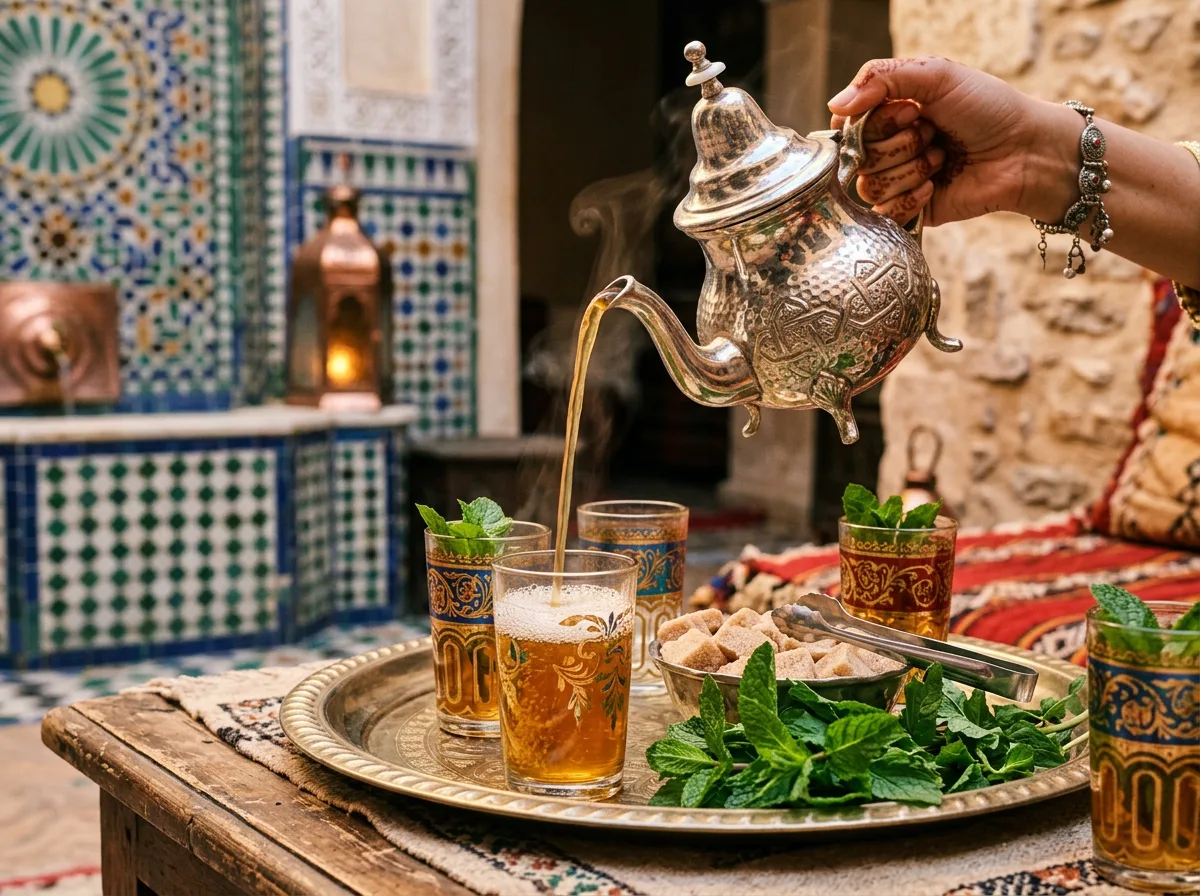
Bottled mineral water (Sidi Ali, Aïn Saïss, Oulmès and others) is the standard choice. Mint tea, made with boiling water, is completely safe — and a Marrakech ritual in its own right. Fresh orange juice from the Jemaa el-Fna stalls is generally fine. Skip ice only at the most basic establishments.
Is bottled water expensive in Marrakech?
No — a large bottle of mineral water costs only a few dirham from a supermarket or corner shop. Riads and restaurants charge more, but it is still modest by European or American standards, so there is no reason to take chances.
Should I bring water purification tablets to Marrakech?
Not for a standard city-based stay, but worth packing if you are adding an Atlas trek or an extended desert leg where bottled water is harder to find. Tablets or a portable filter are light and cheap and give you a fallback if you need to draw from a spring or well.
Planning a trip?
Let a Marrakech atelier handle the details.
Tell us your dates and style and we'll send a written itinerary and a transparent quote within 24 hours.
Request an itineraryKeep reading
Planning
Is Morocco Safe to Visit?
Yes — Marrakech is a well-trodden, welcoming city with a tourism industry built around visitors. The realistic day-to-day concerns are petty scams and the famous medina hustle around Jemaa el-Fna and the souks, both easily managed once you know the patterns.
Practical
What to Pack for Morocco
Pack light, modest and layered. A Marrakech trip swings from hot medina days to cool rooftop dinners and genuinely cold Agafay or Atlas nights, so breathable layers, broken-in walking shoes and one warm top cover almost everything.
Practical
Morocco Travel Checklist: Everything to Do Before You Go
A full pre-departure run-through for a Marrakech-based trip: documents, bookings, money, health, connectivity and packing — everything to nail down before you board so the red city greets you without a single loose end.