No. 02, The food issue

What to eat in Marrakech, from dawn msemen to midnight snail soup

Dawn
msemen, baghrir
Midday
mechoui, tanjia
Night
harira, snails
Get my written quoteQuote for: the evening food tour with a local

Marrakech local time

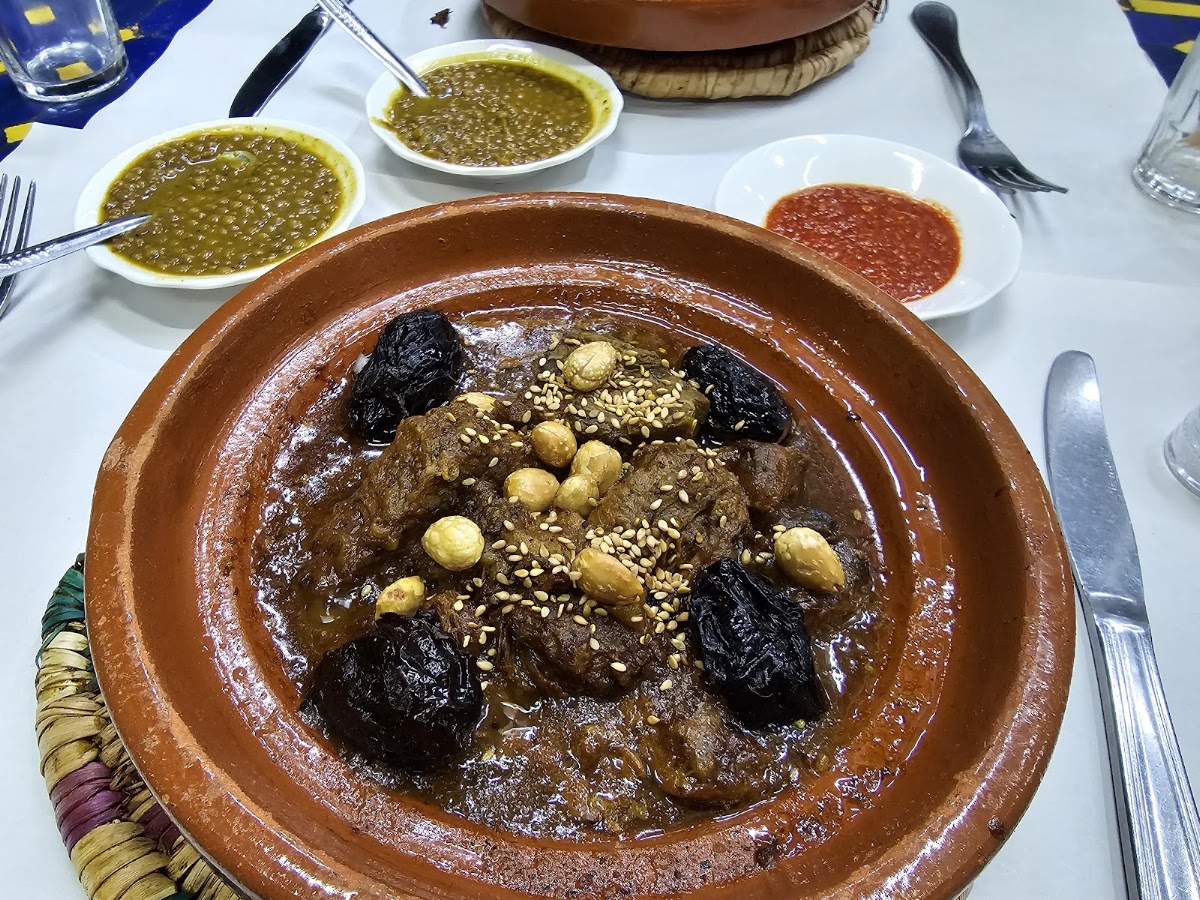
A lamb tagine with prunes and toasted almonds, small dishes of sauce beside it

Breakfast in Marrakech is msemen and baghrir with honey from about 06:00. Midday is mechoui, lamb slow-roasted in pit ovens, and tanjia, the city's own stew cooked in hammam ashes. From about 16:00 the stalls of Jemaa el-Fnaa serve harira, grills and snail soup until about midnight. Mint tea runs through it all.

Marrakech, by the clock

What's on the fire in Marrakech

Thirteen dishes and when each one is cooking. The strip opens on the hour it is in Marrakech.

Get my written quoteQuote for: the evening food walk, on the date you choose
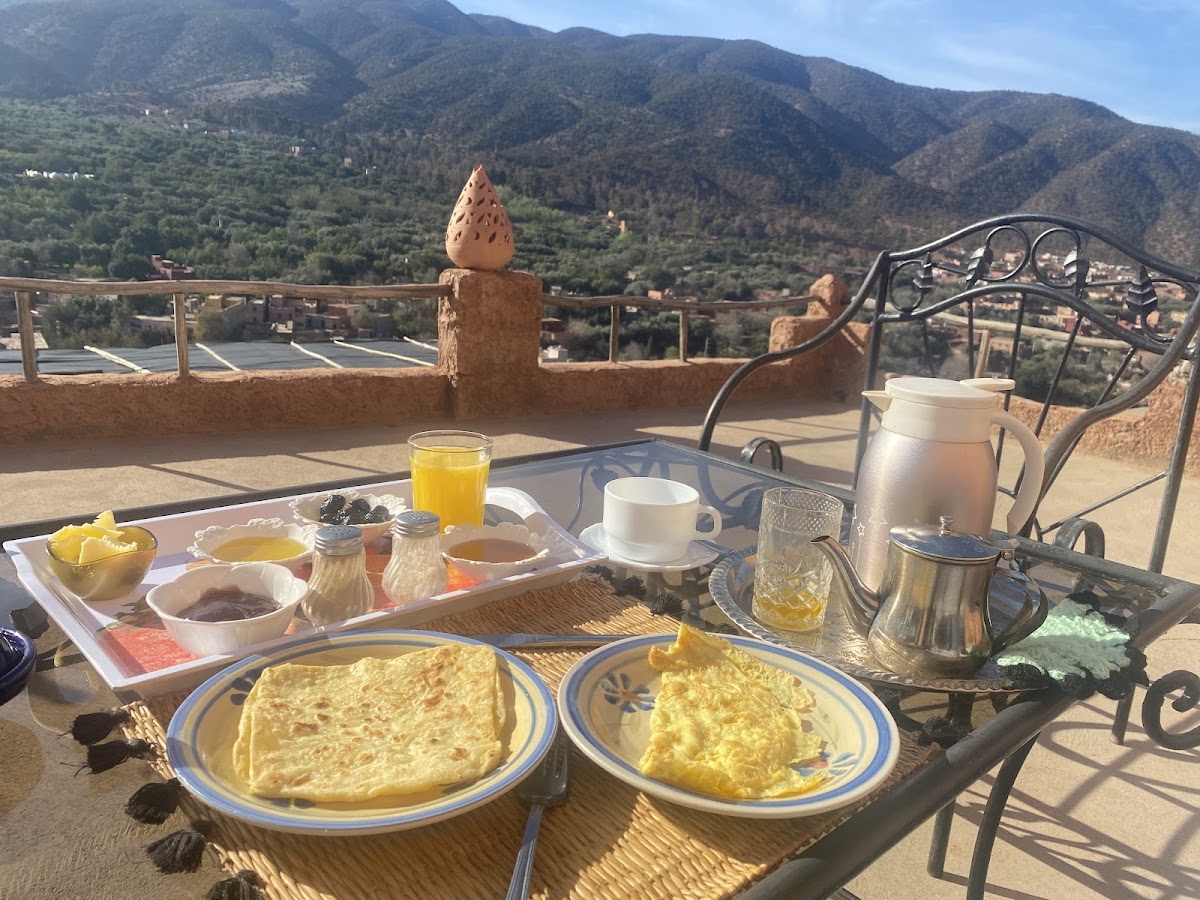
  1. A terrace breakfast in the Atlas foothills: msemen, eggs, orange juice and a pot of tea

    Msemen

    Breakfast counters near Bab Doukkala and in most derbs; look for a woman folding dough beside a hot griddle.

    How locals eat it, where, and the street price

    Torn by hand and dipped in honey or melted butter, with a glass of mint tea, standing at a counter or on a plastic stool before work.

    Where: Breakfast counters near Bab Doukkala and in most derbs; look for a woman folding dough beside a hot griddle.

    Paid at the stall: about MAD 5–10 each

    Manners: Eat with your right hand. Point and hold up fingers; the price is small and usually fixed.

  2. The numbered night-market stalls

    The centre of Jemaa el-Fnaa from late afternoon until about midnight.

    How locals eat it, where, and the street price

    Squeezed onto a bench, shoulder to shoulder, with bread as the spoon: merguez, brochettes, fried fish, aubergine and tomato salads.

    Where: The centre of Jemaa el-Fnaa from late afternoon until about midnight.

    Paid at the stall: about MAD 40–100 for a full meal

    Manners: Agree what you are ordering and the price before you sit. Bread and olives set down unasked may appear on the bill, so ask.

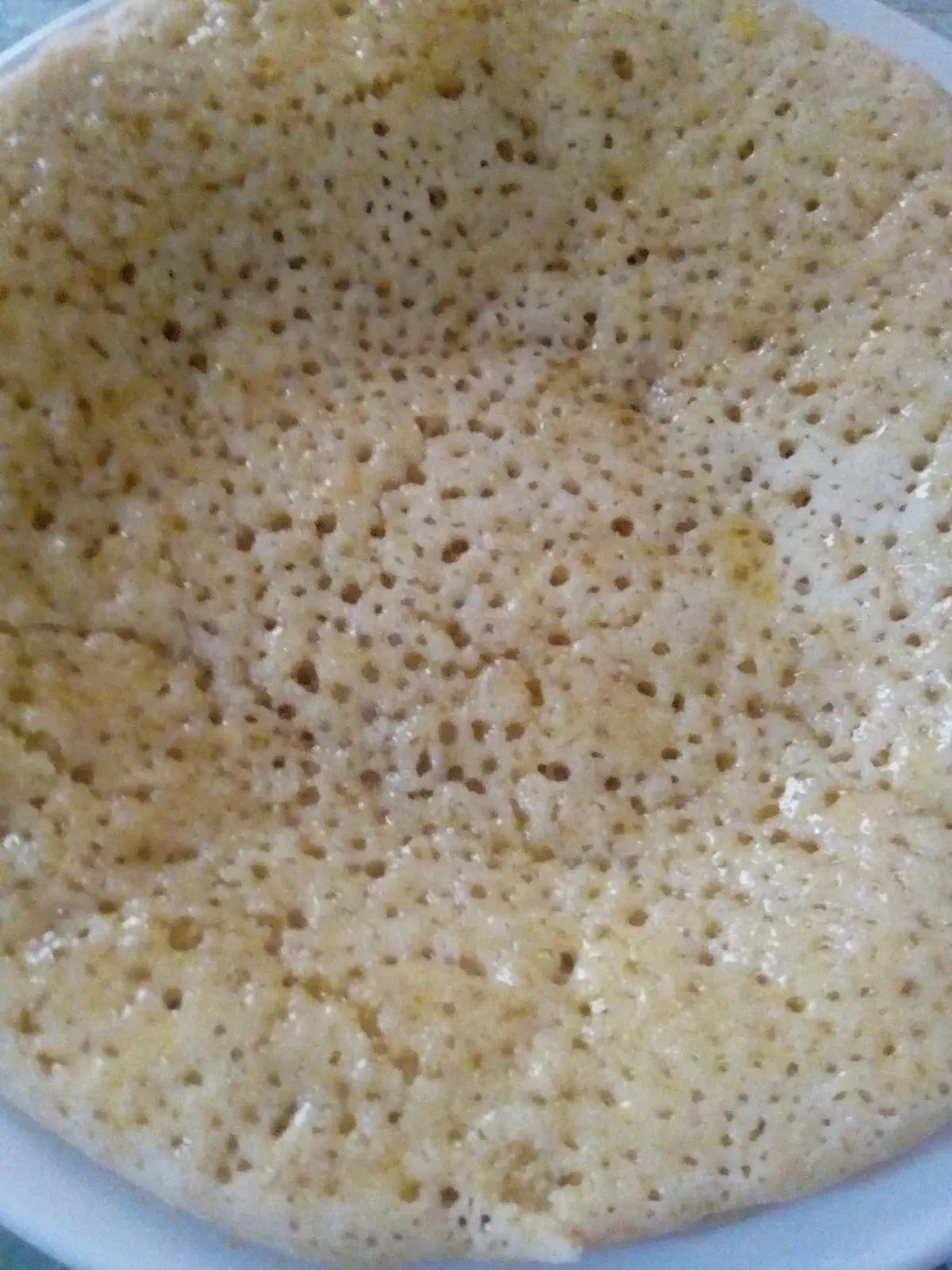
  3. A baghrir, its thousand-hole surface glazed with honey

    Baghrir

    The same dawn counters as msemen, and on most riad breakfast tables.

    How locals eat it, where, and the street price

    Soaked in warm butter and honey, which runs into the holes. A home breakfast and a Ramadan-table favourite.

    Where: The same dawn counters as msemen, and on most riad breakfast tables.

    Paid at the stall: about MAD 5–10 each

    Manners: Sticky by design; a napkin is fine, licking fingers is not frowned on.

  4. Steamed sheep's head

    A few specialist stalls in Jemaa el-Fnaa.

    How locals eat it, where, and the street price

    Cheek, tongue and brain picked off with bread and dusted with cumin.

    Where: A few specialist stalls in Jemaa el-Fnaa.

    Manners: Ask for cheek (the easiest start) and point; the cook does the carving.

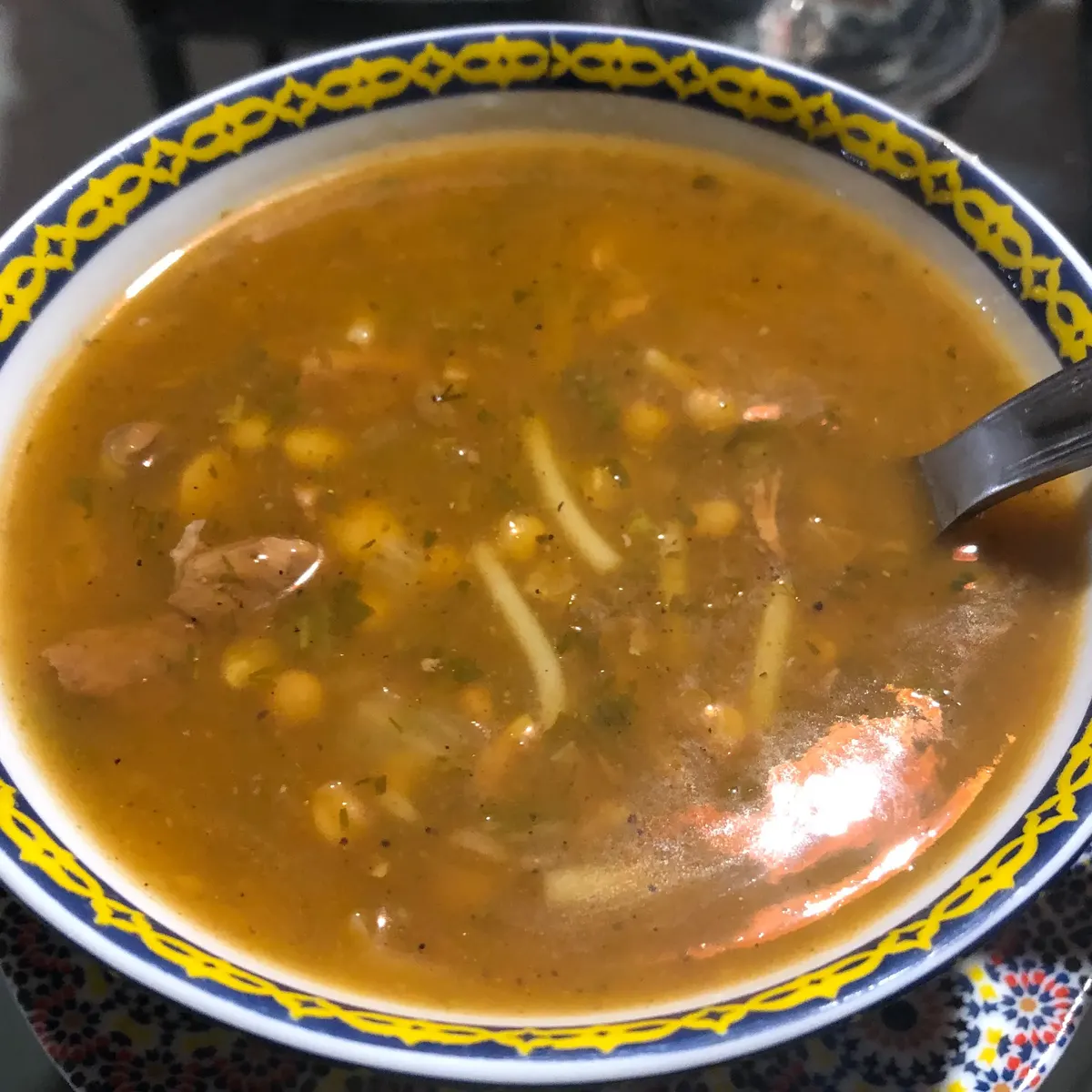
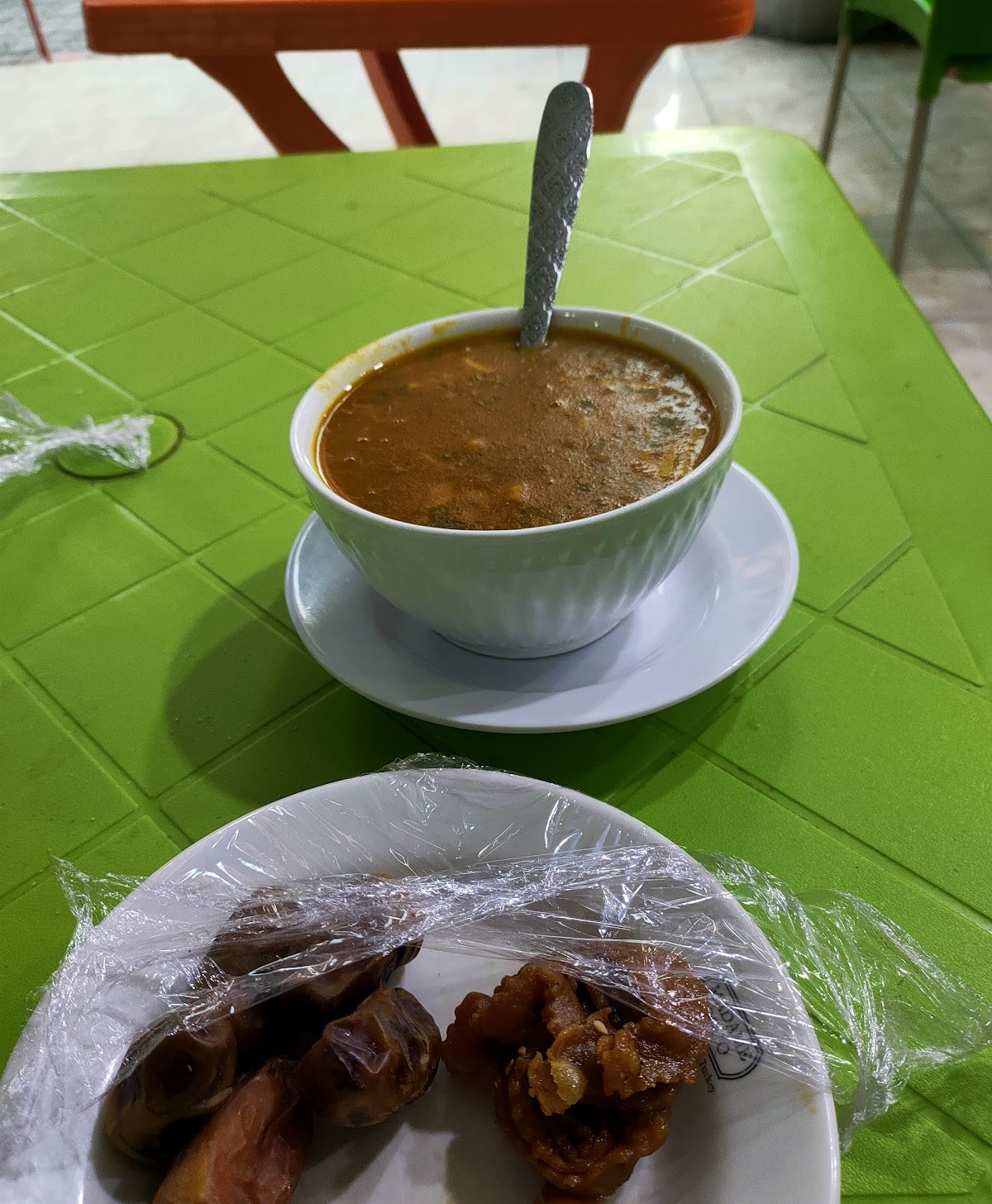
  5. A painted bowl of harira with chickpeas, lentils and lamb

    Harira

    Soup counters in the derbs, and the harira stalls in Jemaa el-Fnaa every evening.

    How locals eat it, where, and the street price

    From a bowl with a wooden spoon, with dates and a piece of bread. In Ramadan it is the first spoonful after the fast, beside chebakia.

    Where: Soup counters in the derbs, and the harira stalls in Jemaa el-Fnaa every evening.

    Paid at the stall: about MAD 10–15 a bowl at the square

    Manners: Eat a date first if you are joining an iftar; it is how the fast is broken.

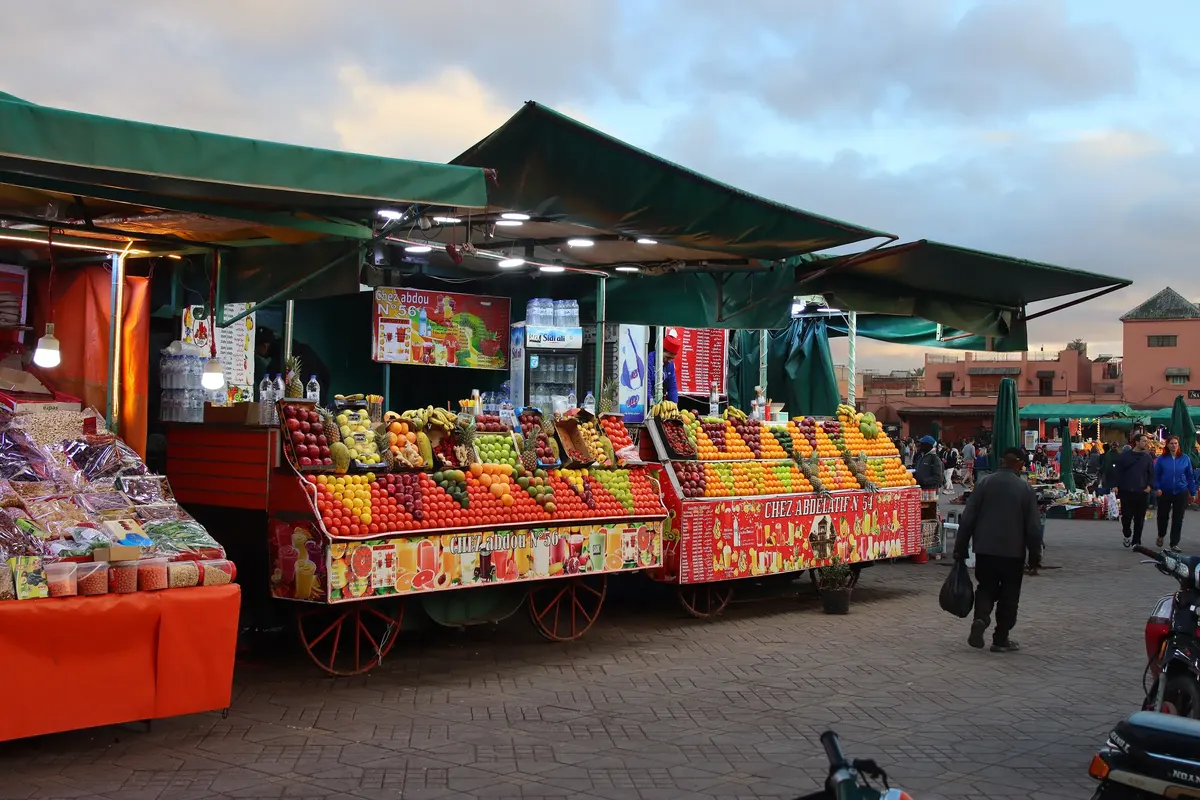
  6. The orange-juice carts of Jemaa el-Fnaa under green awnings, oranges stacked high

    Orange-juice carts

    Lined up across Jemaa el-Fnaa from morning.

    How locals eat it, where, and the street price

    A glass on the move, drunk standing at the cart, glass handed back.

    Where: Lined up across Jemaa el-Fnaa from morning.

    Paid at the stall: about MAD 5 a glass (the square posts prices; check before ordering)

    Manners: Ask for it without ice or water if you prefer. Watch it squeezed in front of you.

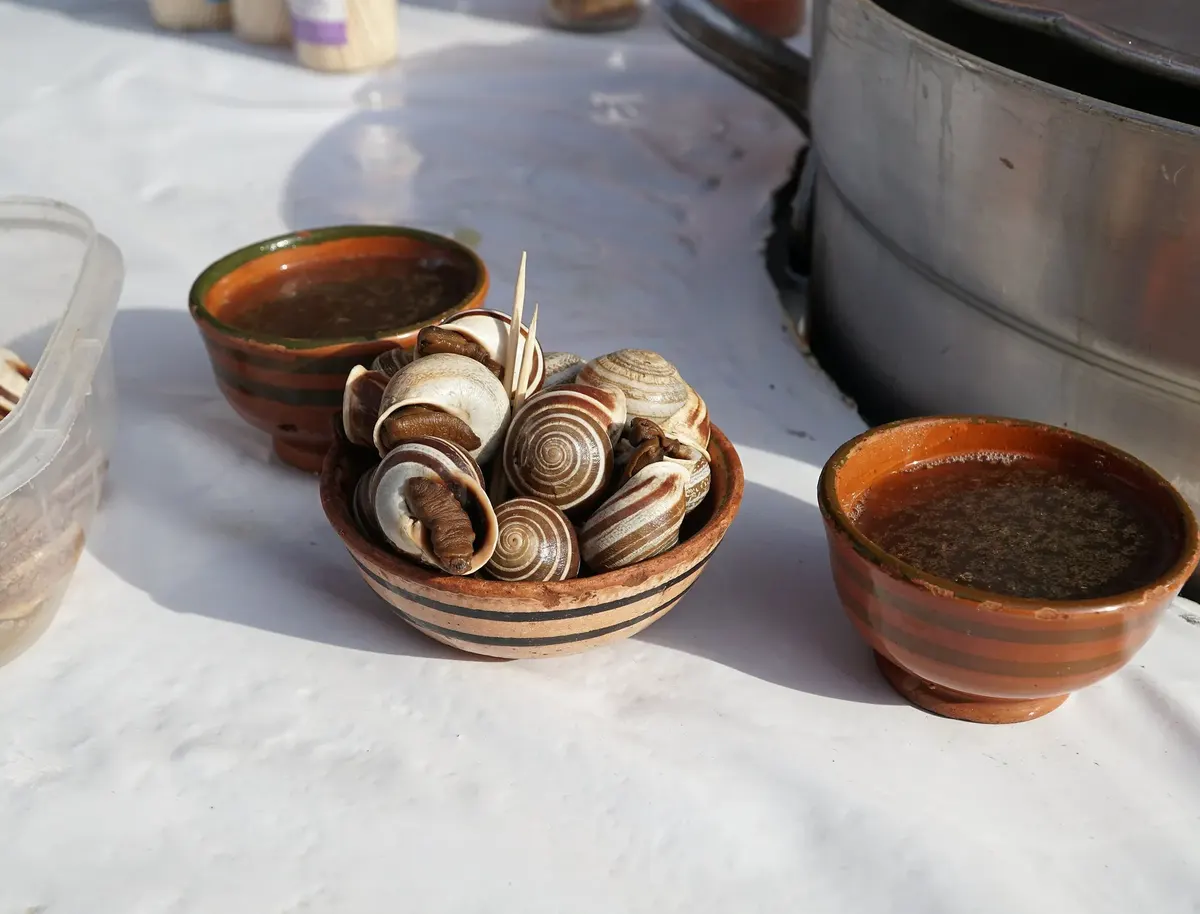
  7. Bowls of snails in their spiced broth at a Marrakech stall

    Snail soup

    The snail carts on the east side of Jemaa el-Fnaa. One food-listing site picks stalls 31 and 32; locals each have their own.

    How locals eat it, where, and the street price

    Snails picked out with a toothpick, then the broth drunk from the bowl. Many Marrakchis swear by it for a cold or a heavy stomach.

    Where: The snail carts on the east side of Jemaa el-Fnaa. One food-listing site picks stalls 31 and 32; locals each have their own.

    Paid at the stall: about MAD 10–20 a bowl

    Manners: Drink the broth; leaving it is leaving the point.

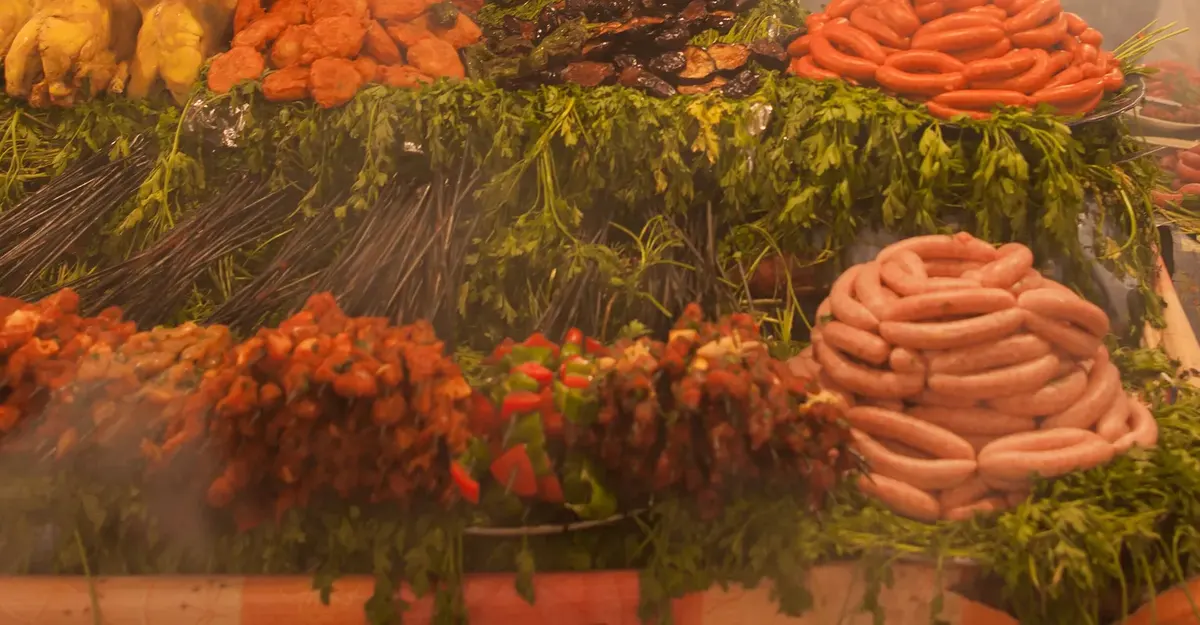
  8. Coils of merguez and skewers piled on a Jemaa el-Fnaa grill stall in the smoke

    Merguez

    The grill stalls in Jemaa el-Fnaa and butcher-grills in the derbs.

    How locals eat it, where, and the street price

    Pushed into half a round of bread with harissa or a tomato salad.

    Where: The grill stalls in Jemaa el-Fnaa and butcher-grills in the derbs.

    Manners: Grill smoke is part of the meal; sit downwind if you mind it.

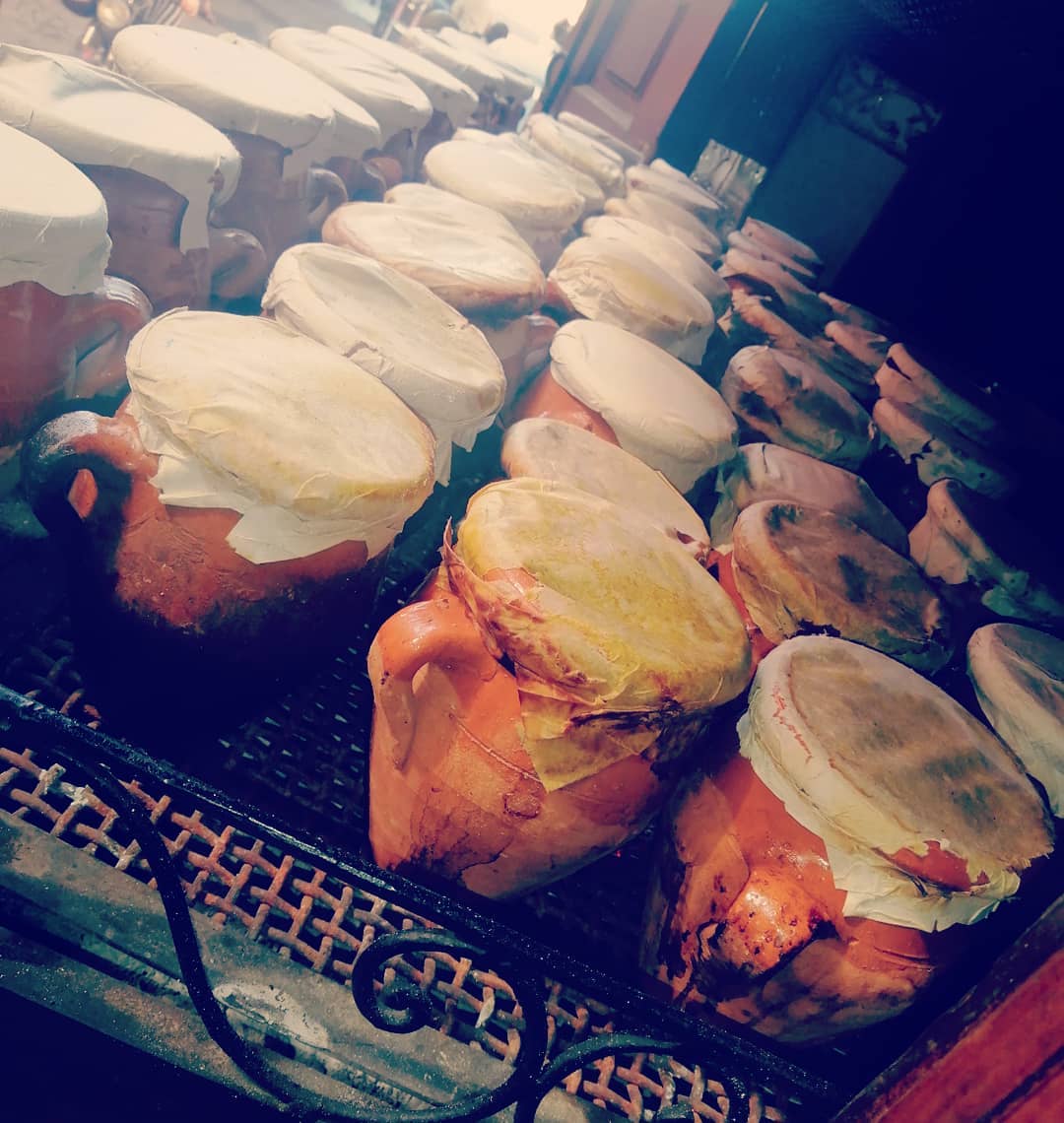
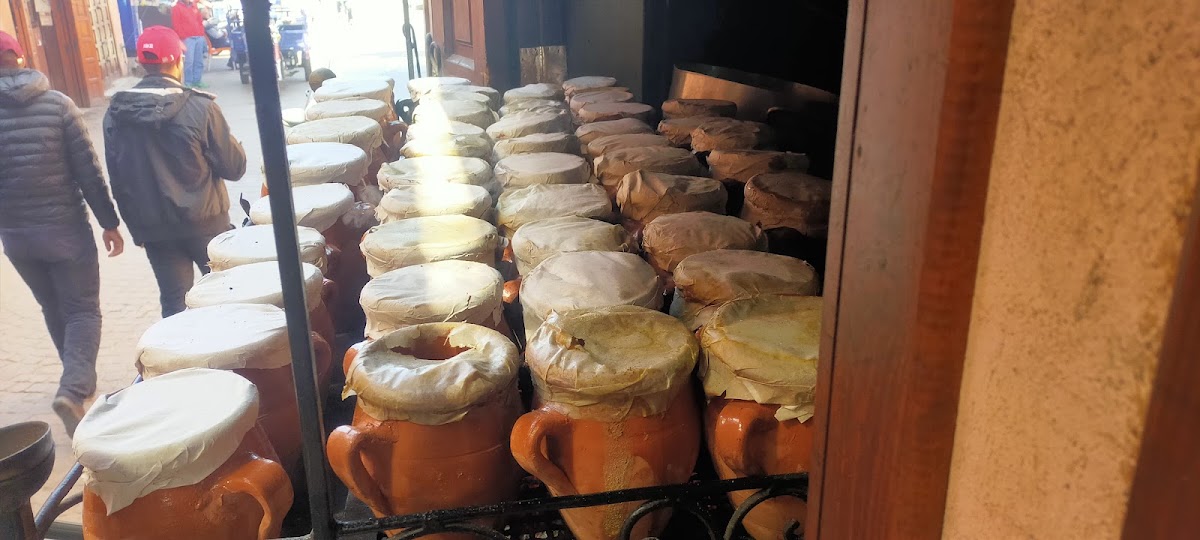
  9. Clay tanjia urns, their mouths sealed with paper, packed together for the furnace

    Tanjia

    Mechoui Alley by the spice market cooks it to order; in the derbs, ask at the farnatchi's door beside a hammam.

    How locals eat it, where, and the street price

    Traditionally a men's dish: workmates or friends fill the urn in the morning, hand it to the farnatchi who feeds the hammam fire, and collect it hours later for a shared lunch, eaten from the pot with bread.

    Where: Mechoui Alley by the spice market cooks it to order; in the derbs, ask at the farnatchi's door beside a hammam.

    Paid at the stall: about MAD 80–100 a portion at Mechoui Alley (sources disagree; check the board)

    Manners: Eat with bread from the shared dish, right hand only, from the part in front of you.

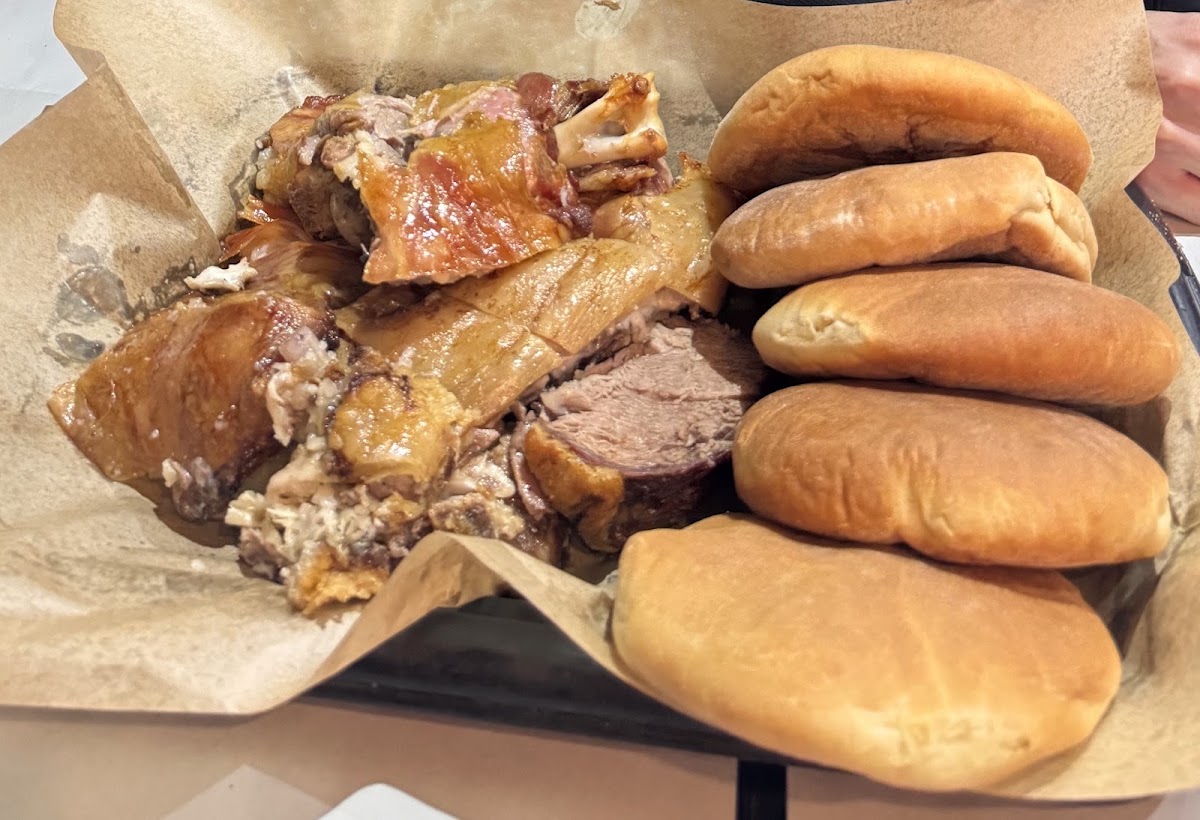
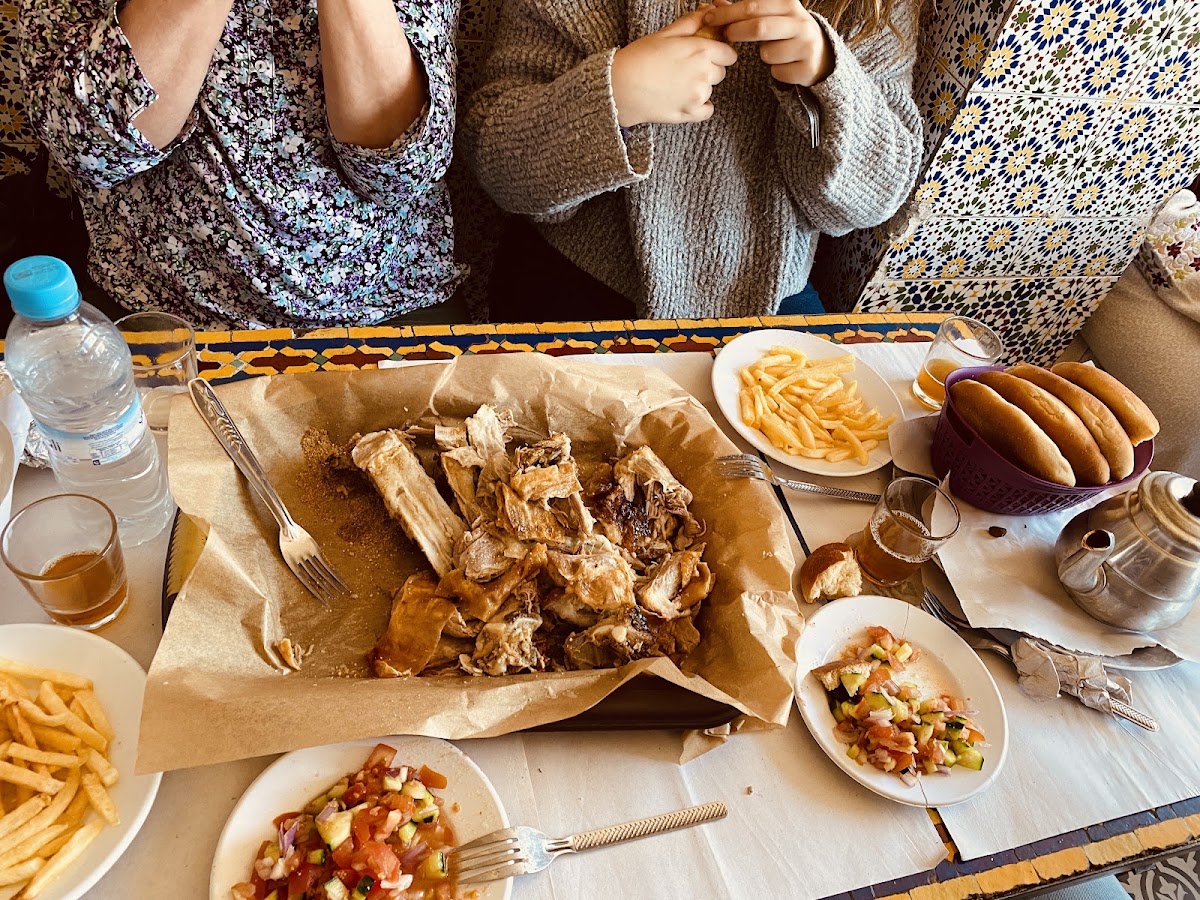
  10. Pit-roasted mechoui lamb on paper with a stack of round khobz bread

    Mechoui Alley

    The alley of mechoui stalls at the edge of the spice market (Souk Ablueh side), Chez Lamine Hadj Mustapha the best known.

    How locals eat it, where, and the street price

    A quarter-kilo on brown paper, a pinch of cumin and salt, round bread, mint tea. Eaten with your fingers at a bench.

    Where: The alley of mechoui stalls at the edge of the spice market (Souk Ablueh side), Chez Lamine Hadj Mustapha the best known.

    Paid at the stall: about MAD 170–200 a kilo; a quarter-kilo is about one portion

    Manners: Come before about 14:00; when the lamb is gone, it is gone. Many stalls rest on Friday.

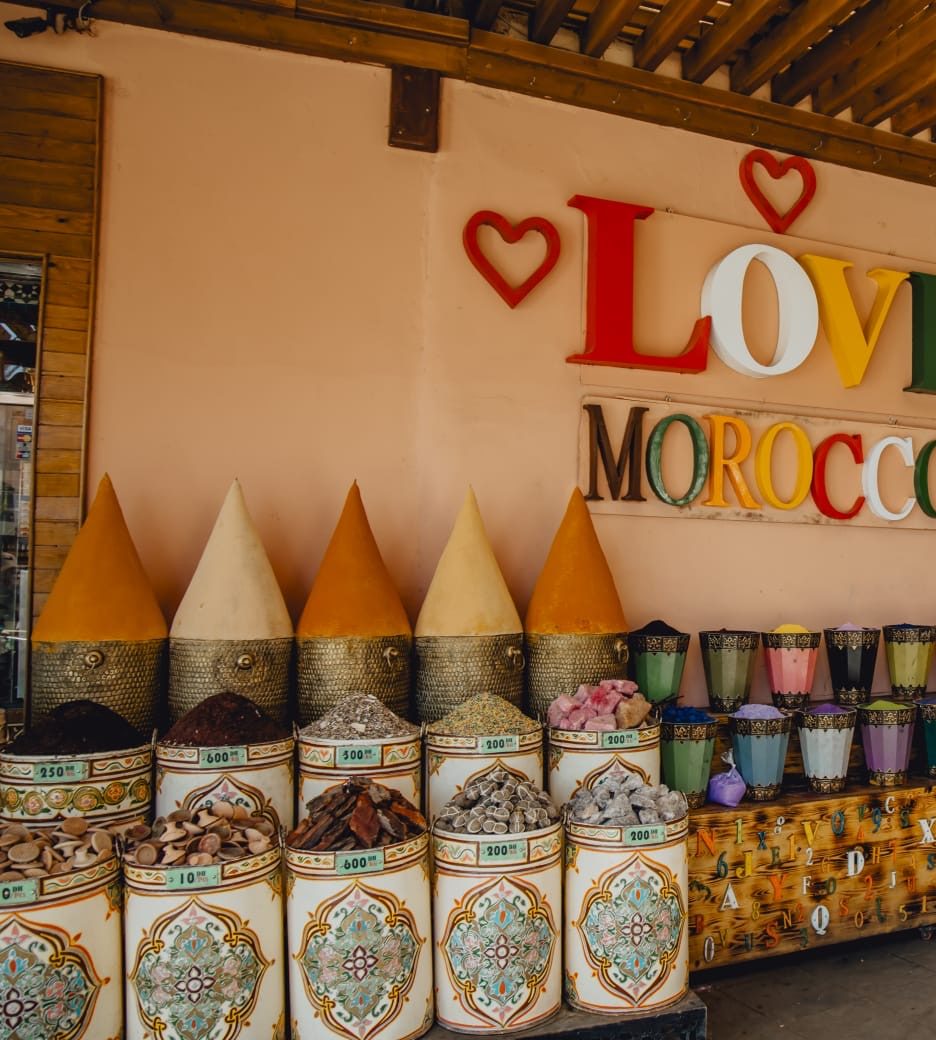
  11. A medina spice shop: cones of ground spice in front of shelves of jars

    The spice squares

    Rahba Kedima, a short walk north of Jemaa el-Fnaa; the Mellah market off Place des Ferblantiers.

    How locals eat it, where, and the street price

    Marrakchi cooks buy cumin, ginger, saffron and preserved lemons by weight; herbalists sell blends for the hammam, the stomach and the cold.

    Where: Rahba Kedima, a short walk north of Jemaa el-Fnaa; the Mellah market off Place des Ferblantiers.

    Manners: Smell freely, buy small. A herbalist's tasting is a sales pitch; a polite 'la, shukran' ends it.

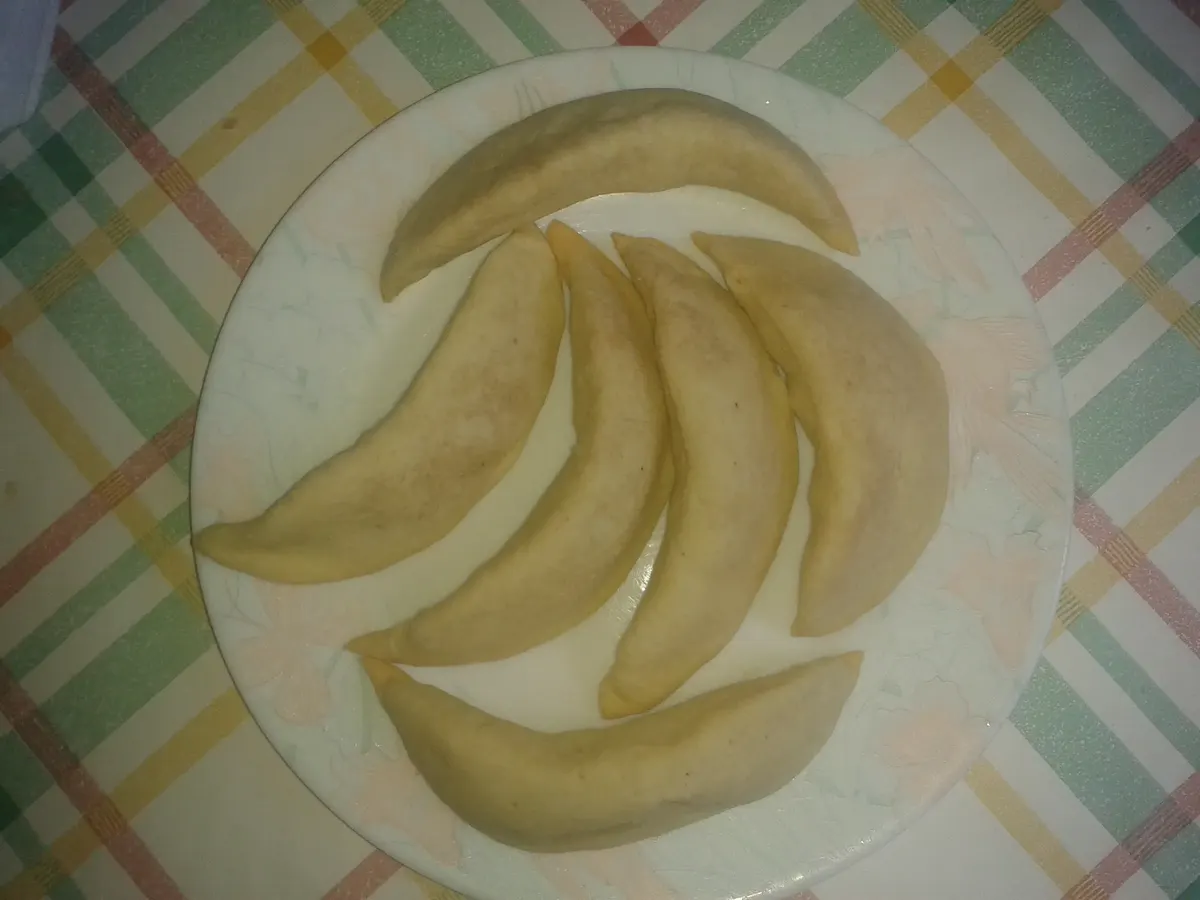
  12. A plate of kaab el ghazal, crescent almond pastries dusted with sugar

    Gazelle horns

    Pâtisseries in Gueliz and the medina; sold by the piece or by weight.

    How locals eat it, where, and the street price

    With tea when guests come, and laid out at Eid and weddings.

    Where: Pâtisseries in Gueliz and the medina; sold by the piece or by weight.

    Manners: Offered with tea at a home, take one; turning down both tea and sweets reads as cold.

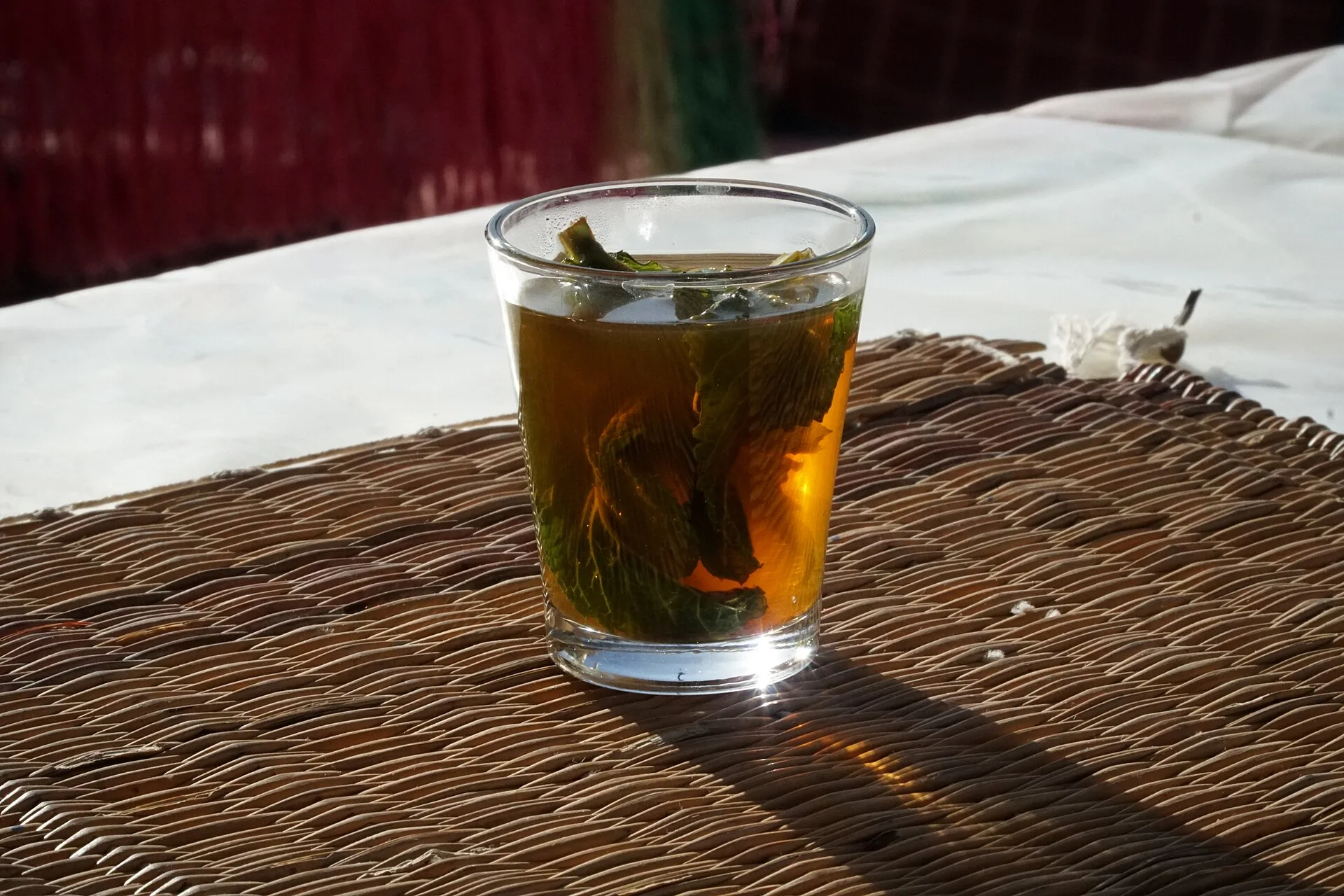
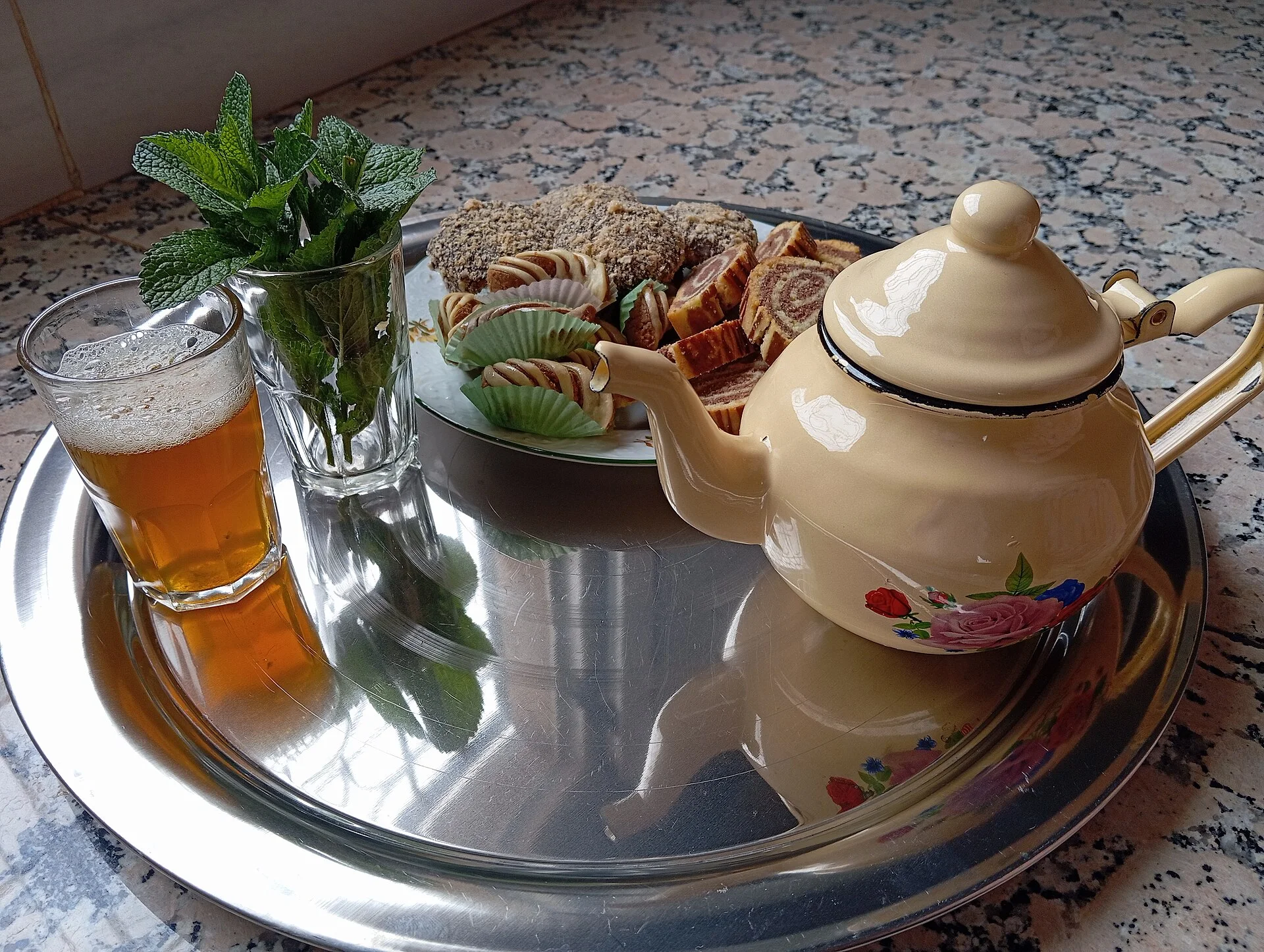
  13. A glass of mint tea, packed with fresh leaves, on a woven table mat

    Mint tea

    Everywhere: shops, homes, cafés, carpet showrooms, the back of a taxi rank.

    How locals eat it, where, and the street price

    Poured from about 30–45 cm above the glass to raise a crown of foam (rghwa), then poured back into the pot and out again until it tastes right. Usually three rounds from the same leaves.

    Where: Everywhere: shops, homes, cafés, carpet showrooms, the back of a taxi rank.

    Manners: Accept at least one glass when offered; refusing outright is rude. Drinking tea in a shop does not oblige you to buy. Hold the hot glass by the rim and base.
What to eat in Marrakech, hour by hour

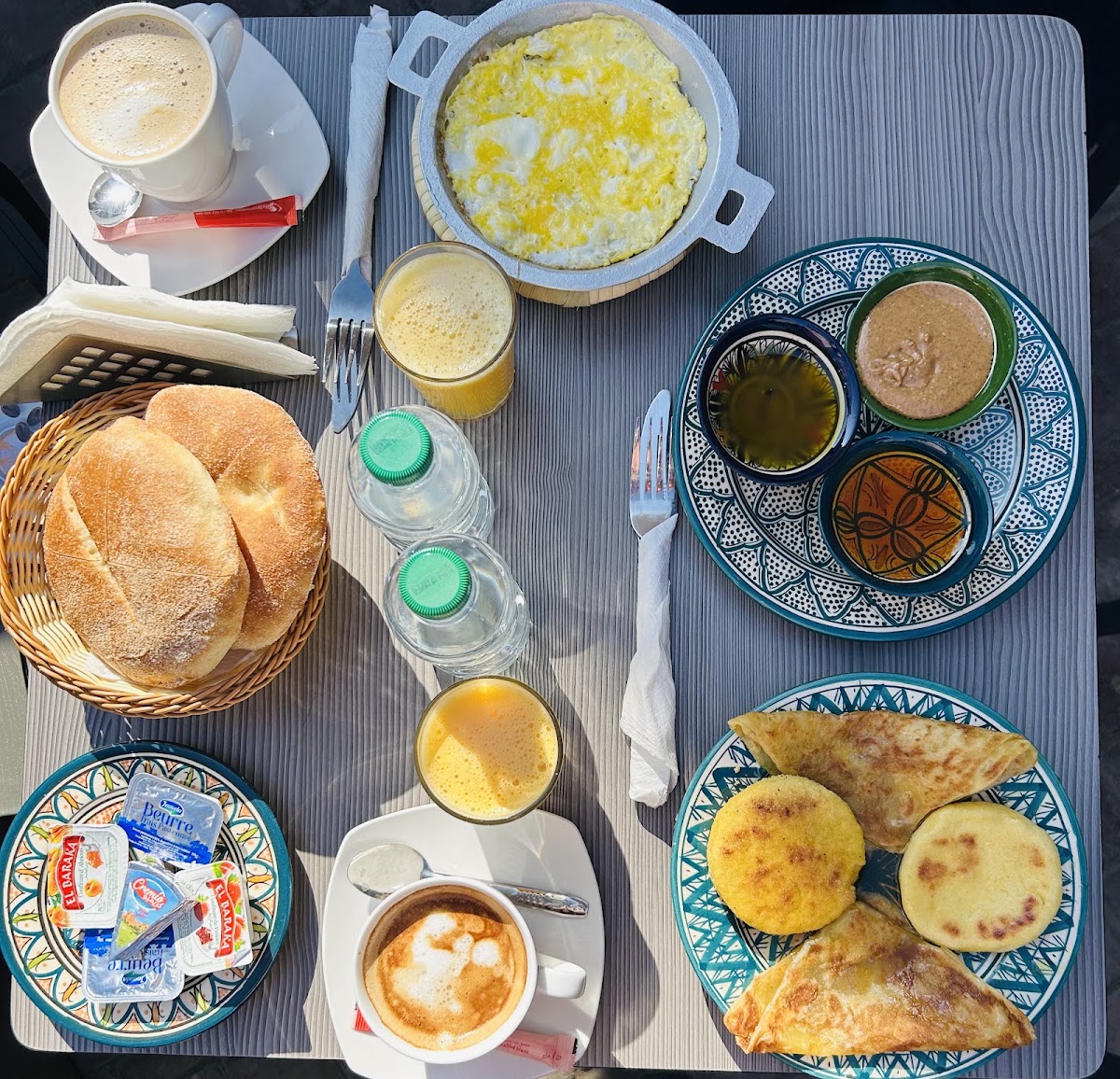
A Moroccan breakfast from above: msemen, harcha, round khobz in a basket, amlou, olive oil and orange juice

From about 06:00

Dawn: breakfast at the counters

Msemen, a folded flatbread, and baghrir, a semolina pancake cooked on one side only, come off the griddles from about 06:00, with honey; you pay the counter MAD 5–10 each. Bab Doukkala's counters are among the best known.

Midday, until about 14:00

Midday: mechoui and tanjia

In Mechoui Alley, off the northeast corner of Jemaa el-Fnaa, whole lambs roast in clay pit ovens and are sold by weight at the stall, MAD 170–200 a kilo paid there, until they run out, usually by about 14:00. Tanjia, beef or lamb sealed in a clay urn and cooked for hours in hammam ashes, is the dish Marrakech calls its own.

From about 16:00

Evening: the night stalls

From about 16:00 the numbered stalls go up in Jemaa el-Fnaa: harira, snail soup and grills. Paid at the stall: harira MAD 10–15, snail soup MAD 10–20, a full grill meal MAD 40–100.

Sweets

Chebakia, honey-soaked sesame flowers, belong to Ramadan. Gazelle horns, almond paste in a thin pastry crescent, come with tea for guests. Sellou is a toasted flour, sesame and almond mound eaten by the spoonful.

All day

Mint tea

Gunpowder green tea brewed with fresh spearmint and sugar, poured from 30–45 cm up to raise a foam called rghwa, usually in three rounds from the same leaves. Accept at least one glass when offered.

At sunset

In Ramadan

The fast breaks at sunset with dates, harira and chebakia; Moroccans call the meal ftour. Ramadan 2027 is expected to begin about 8 February. After ftour the square and souks fill late into the night.

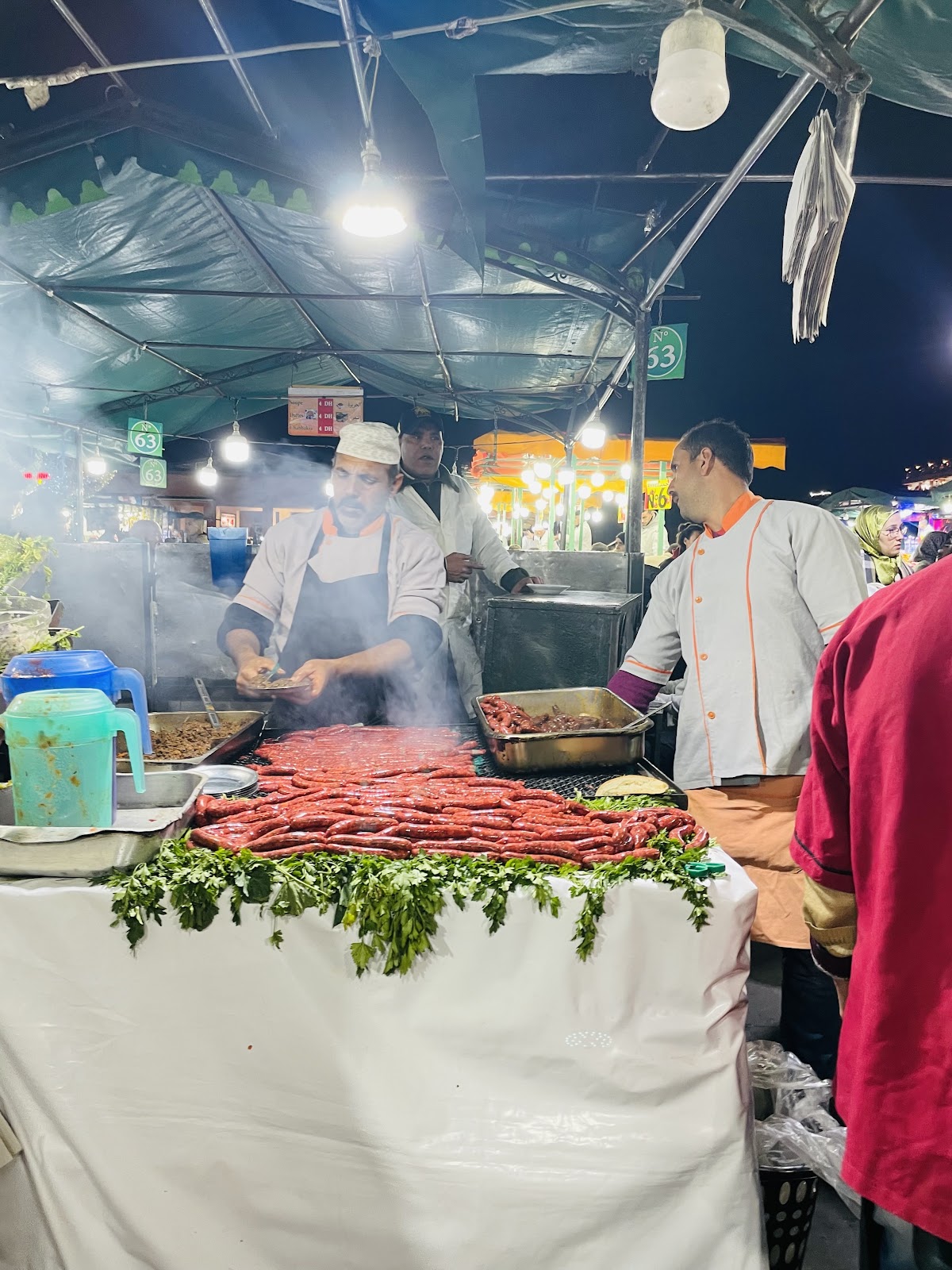
Cooks at a Jemaa el-Fnaa night stall behind a grill of skewers, smoke rising under the lights

A night grill on Jemaa el-Fnaa · from about 16:00

Tanjia: the dish Marrakech is known for

Sealed tanjia urns lined up along a medina lane as people walk past

Tanjia, from the hammam ashes

Tanjia, a beef or lamb stew sealed in a clay urn and cooked for hours in the ashes of a hammam furnace, is the dish Marrakech calls its own. Tanjia and mechoui, where and when

Eat the snails, then drink the broth.

Out at the stalls after dark, or travelling alone? Read our honest guides: Is Marrakech safe for solo women? and the common scams, and how to avoid them.

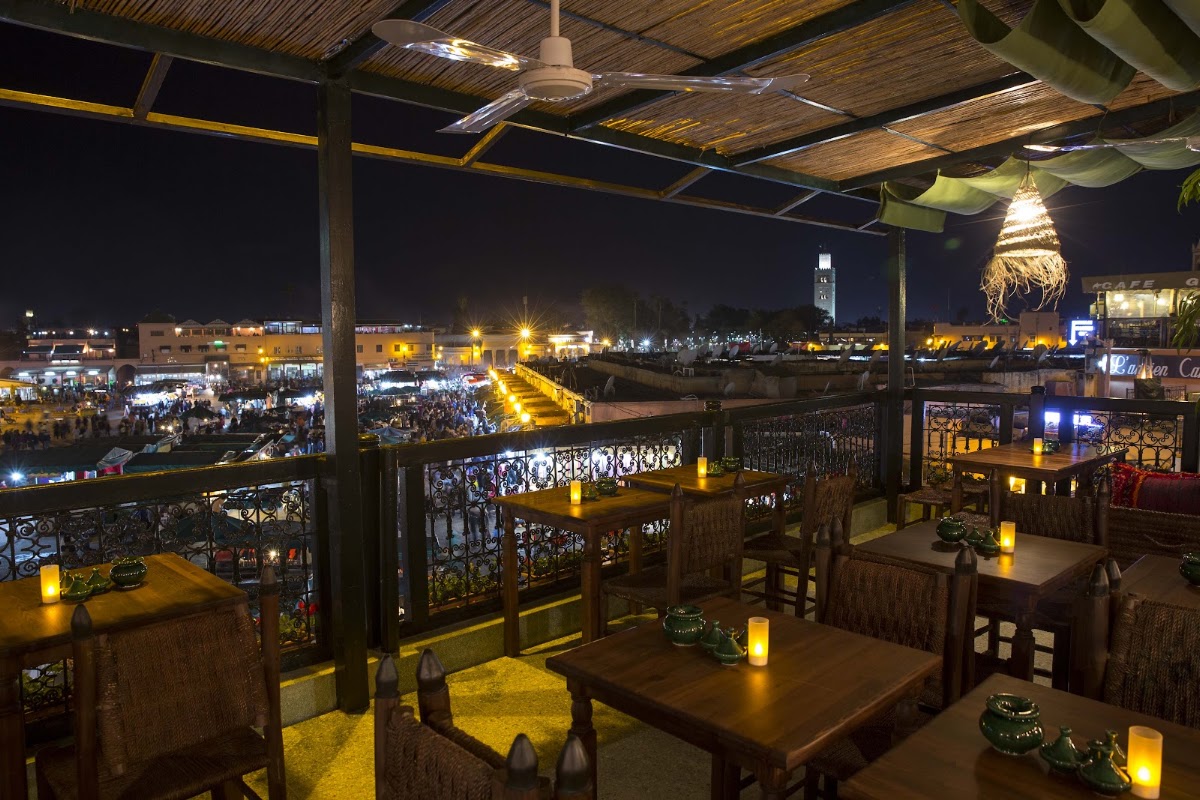
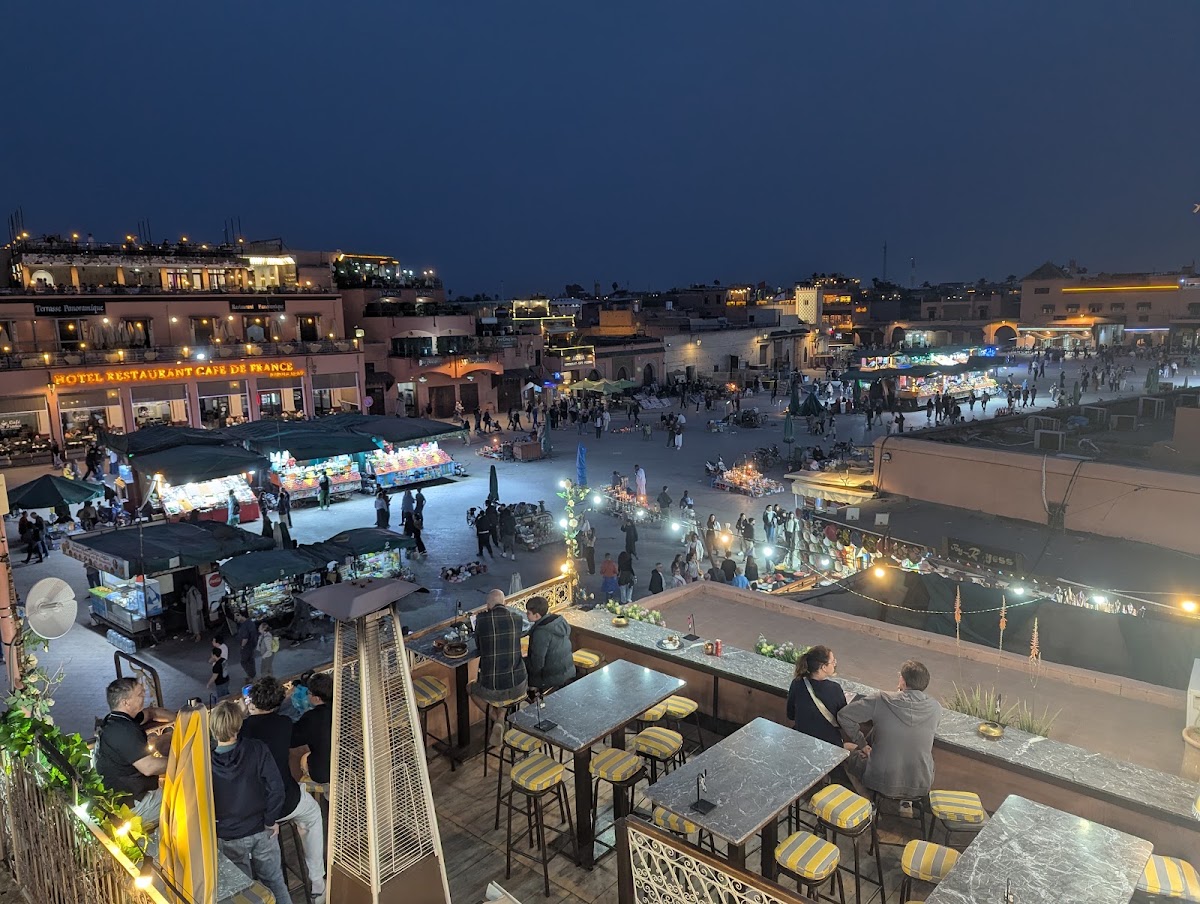
Jemaa el-Fnaa at night from a rooftop terrace, the food stalls lit below

Jemaa el-Fnaa from a rooftop · after dark

Take a Marrakech food tour with a local guide

Tell us your dates and group size. A planner writes back within 24 hours with a plan and a fixed written quote. Asking costs nothing.

Worth knowing before you go

  • Ask the price before you sit at a stall, and refuse bread or olives you didn't order; check the bill against the board.
  • Eat with your right hand, from the part of a shared dish in front of you.

Marrakech food: FAQ

What is the most typical food in Marrakech?

Tanjia, a beef or lamb stew sealed in a clay urn and cooked for hours in the ashes of a hammam furnace, is the dish Marrakech calls its own.

How much does street food cost in Marrakech?

Paid at the stall: MAD 5–10 for msemen, MAD 10–15 for harira, MAD 10–20 for snail soup, and MAD 40–100 for a full meal at the night stalls.

Is street food in Jemaa el-Fnaa safe to eat?

Busy stalls with hot, freshly cooked food and juice squeezed in front of you are the safest choices. Drink bottled or filtered water.

Can visitors eat during Ramadan?

Yes. Riads and many tourist restaurants serve by day; it is courteous not to eat or drink openly in the street during daylight.

Photo credits: Mint tea glass: Adam Harangozó, CC BY-SA 4.0 (Wikimedia Commons); Baghrir: Sabah HAANA, CC BY-SA 4.0 (Wikimedia Commons); Orange-juice carts: Draceane, CC BY-SA 4.0 (Wikimedia Commons); Snails: Adam Harangozó, CC BY-SA 4.0 (Wikimedia Commons); Grill stall: Grand Parc - Bordeaux, France, CC BY 2.0 (Wikimedia Commons); Gazelle horns: Waran18, CC BY-SA 3.0 (Wikimedia Commons); Harira: إيان, CC BY-SA 4.0 (Wikimedia Commons); Mint tea tray: مصطفى ملو, CC BY-SA 4.0 (Wikimedia Commons).