No. 01, Marrakech

Marrakech city guide, district by district

A walled medina of souks, palaces and Jemaa el-Fnaa, ringed by a French-built new town, gardens and palm groves. One day across the city, from the Palmeraie at sunrise to the square at dusk.

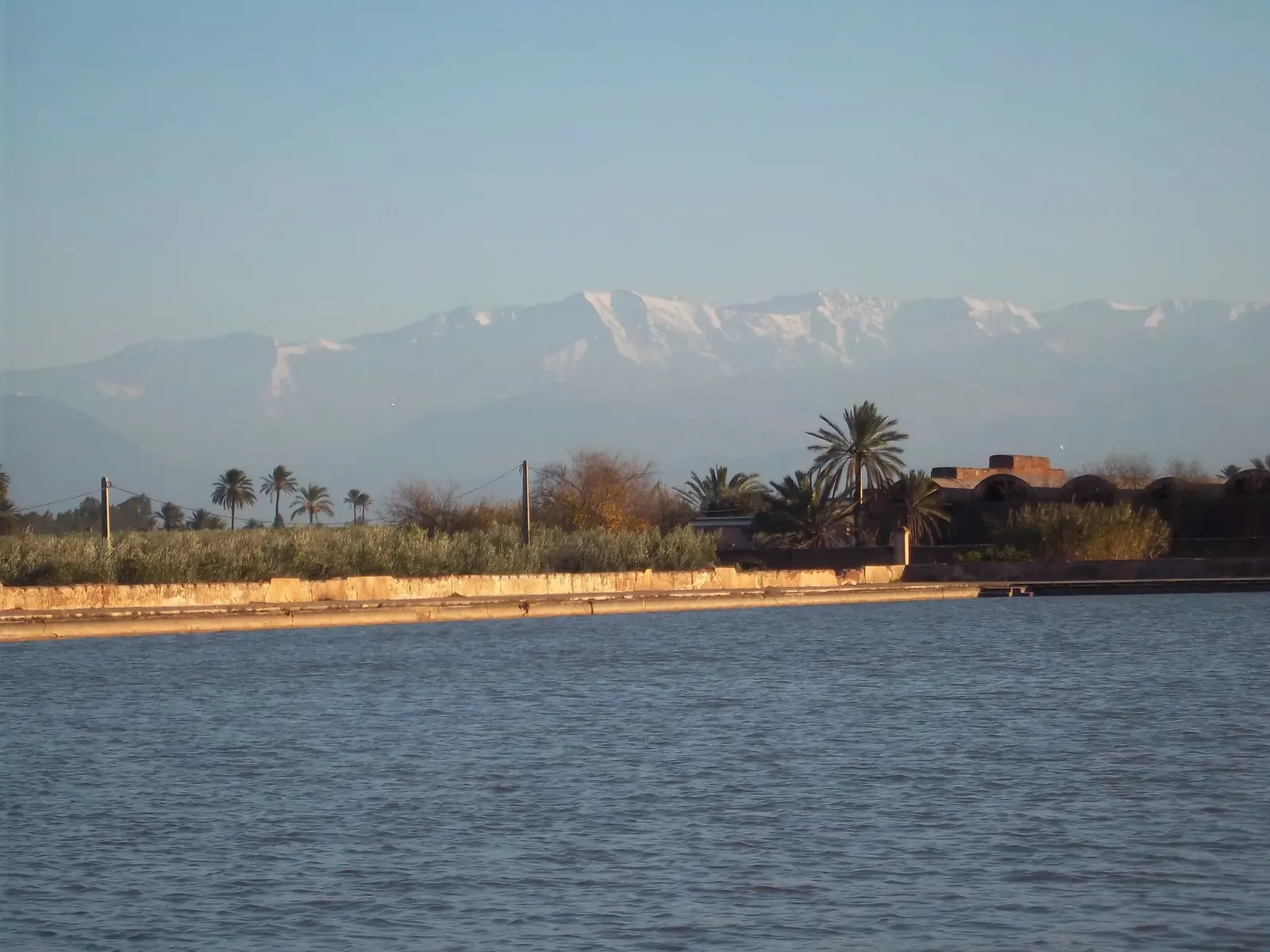
A wide basin of still water, palms along its far wall and the snow-capped High Atlas beyond
The Agdal basin, the High Atlas behind · Photo: Belbaraka, CC BY-SA 3.0, via Wikimedia Commons (resized)

The city, one day

What to see in Marrakech, place by place

Follow the map from the palm groves at dawn, through the new town and the gardens, into the medina for the afternoon, and out onto the square as the grills light.

Map of Marrakech: the places in this guide

Map data © OpenStreetMap contributors

  1. The Palmeraie

    Palm groves on the city's north-east edge, where the balloons rise at dawn and camels walk the tracks.

    Go early: the light is low, the air is cool, and the Atlas is still sharp on the horizon.

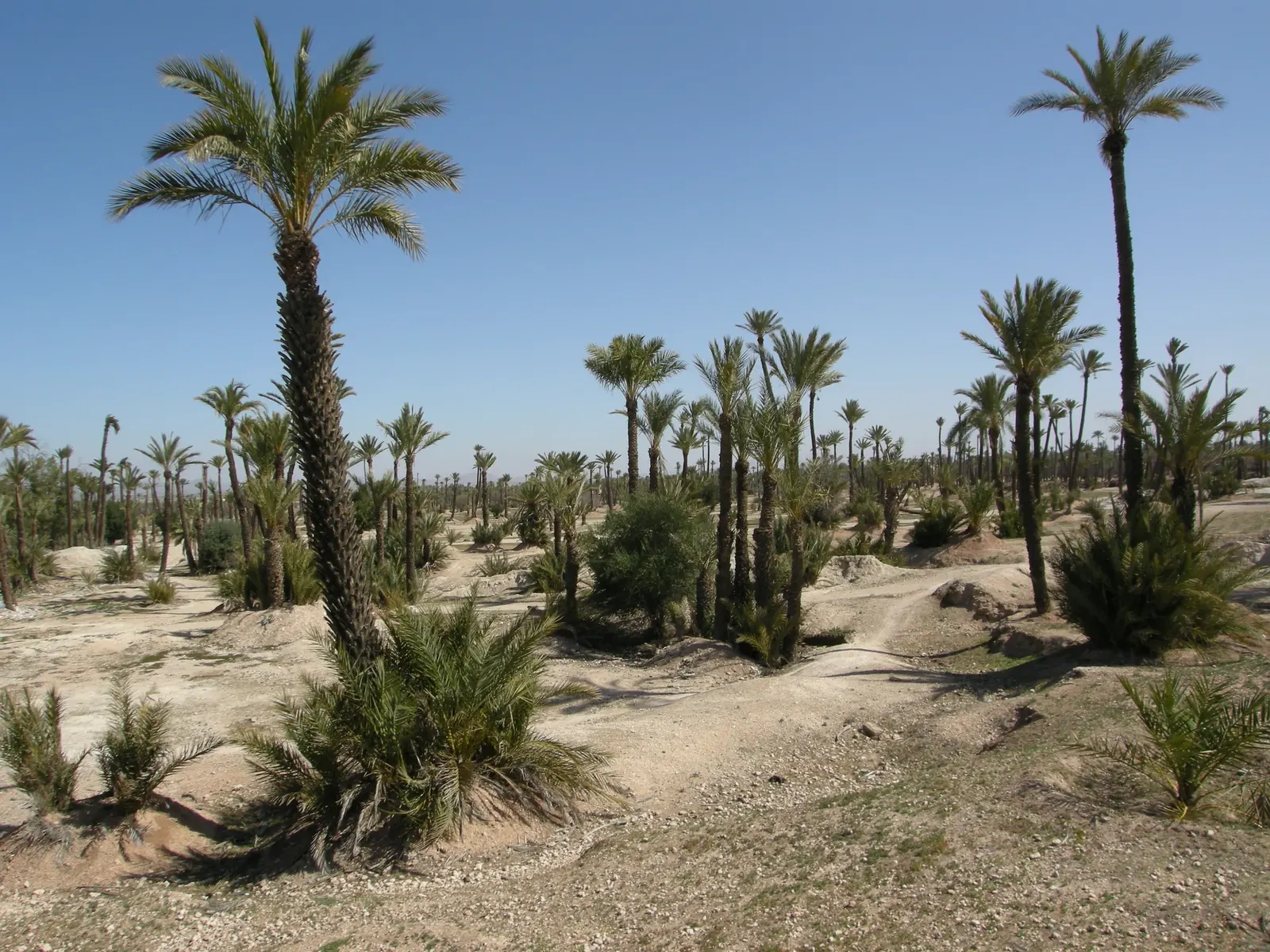
    An open grove of tall date palms under a clear sky
    A palm grove in the Palmeraie · Photo: Alex, CC BY-SA 3.0, via Wikimedia Commons (resized)
    Palmeraie camel rides, honestly
  2. Majorelle & the YSL museum

    A painter's garden of bamboo, cacti and one impossible blue, rescued by Yves Saint Laurent.

    Book the 08:00 slot online. By ten, it's the busiest acre in Morocco.

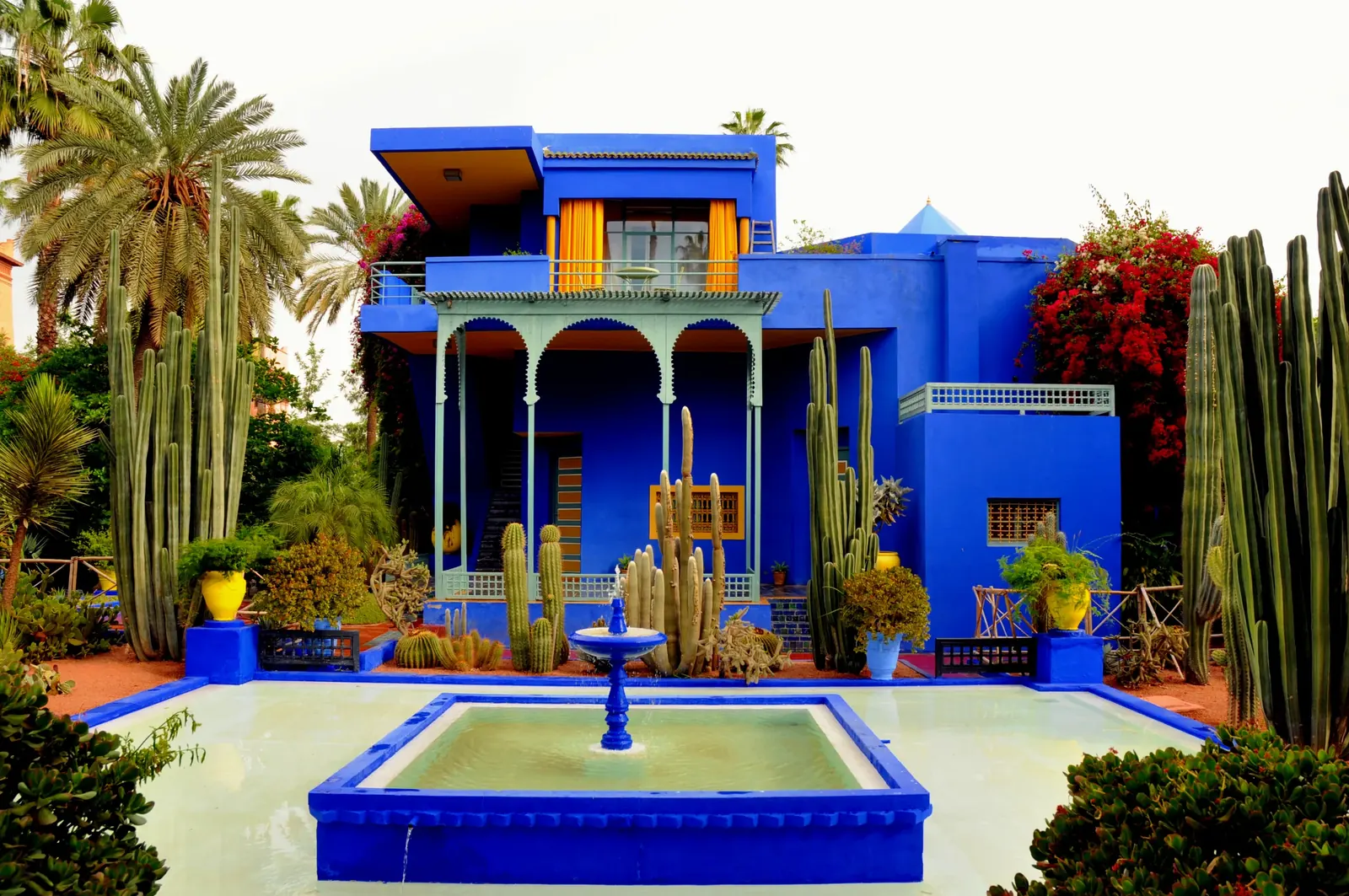
    The cobalt-blue villa of the Jardin Majorelle behind a fountain and cacti
    Jardin Majorelle · Photo: Viault, CC BY-SA 3.0, via Wikimedia Commons (resized)
    Majorelle visiting guide
  3. Gueliz

    The French-built new town: wide avenues, galleries, pastry shops and a coffee on a terrace.

    It's where Marrakchis shop and work, and it's a good place to breathe after the medina.

    Galleries in Gueliz
  4. Hivernage

    Garden hotels, wide boulevards and the Royal Theatre, between the new town and the walls.

    Come for a long lunch by a pool, and come back after dark for the city's dressiest nightlife.

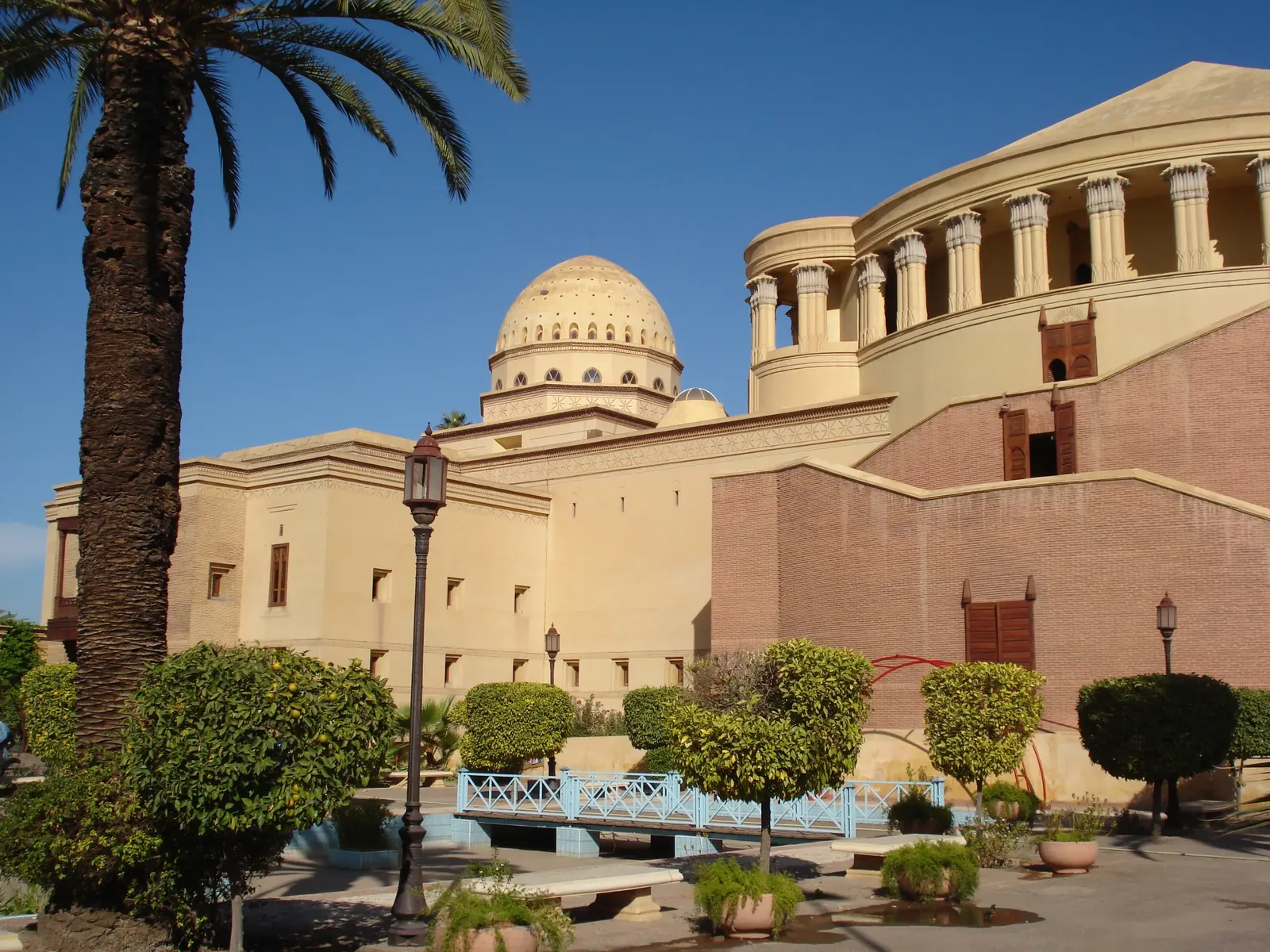
    The Théâtre Royal's dome and colonnade above its garden, under a blue sky
    The Théâtre Royal dome above its garden · Photo: Hilverd Reker, CC BY-SA 3.0, via Wikimedia Commons (resized)
    Marrakech after dark
  5. The Menara

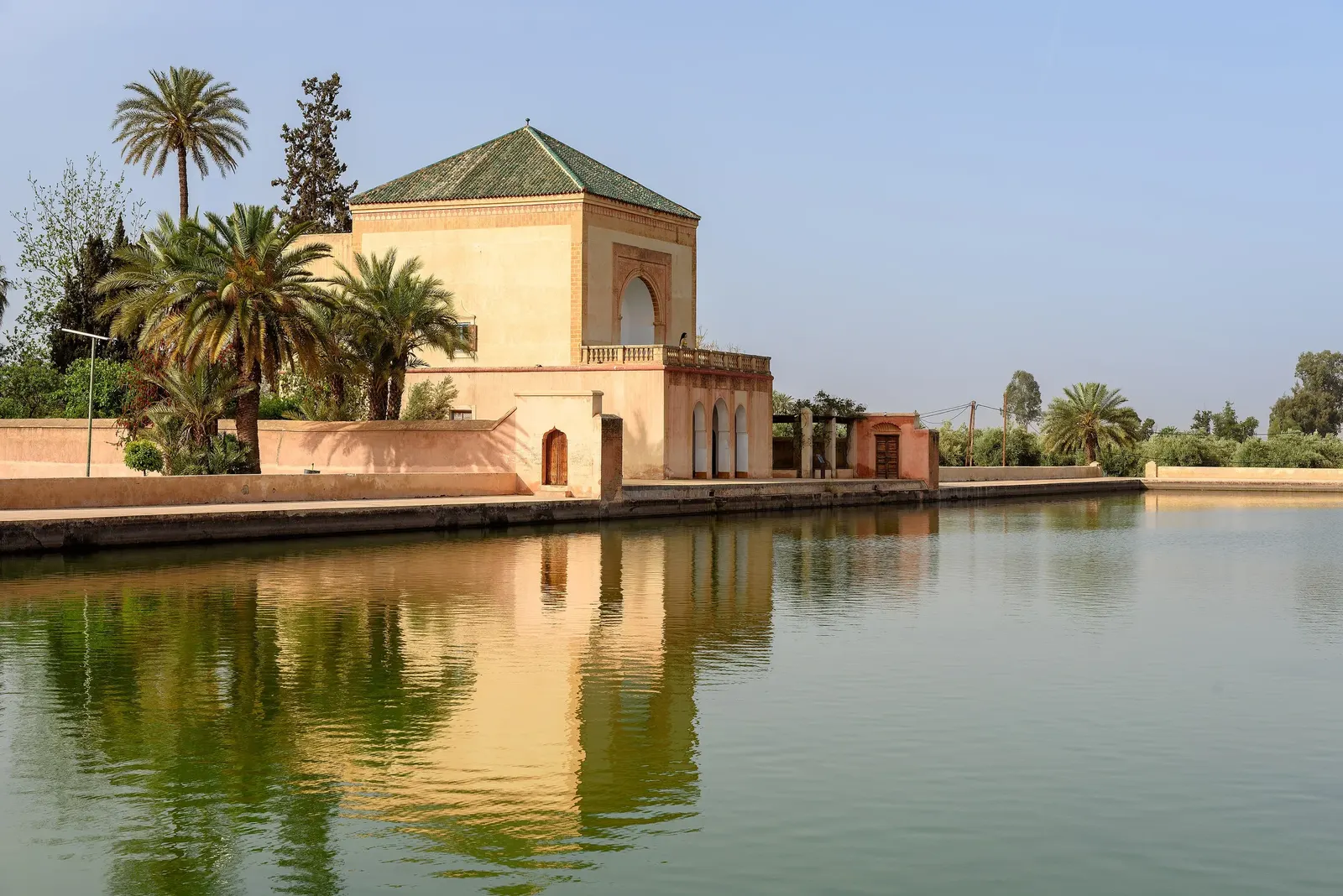
    A 12th-century reservoir in a sea of olive trees, its pavilion framed by the High Atlas.

    Free to walk. Clear winter afternoons give you snow on the peaks behind the water.

    The Menara pavilion and palms reflected in the great basin
    The Menara pavilion and its basin · Photo: Mustang Joe, CC0, via Wikimedia Commons (resized)
    Menara Gardens guide
  6. The Kasbah & Saadian Tombs

    Through the carved Bab Agnaou gate, the royal quarter, where the Saadian sultans lie under cedar and marble.

    Close by is El Badi, a ruined palace whose walls are now held by storks.

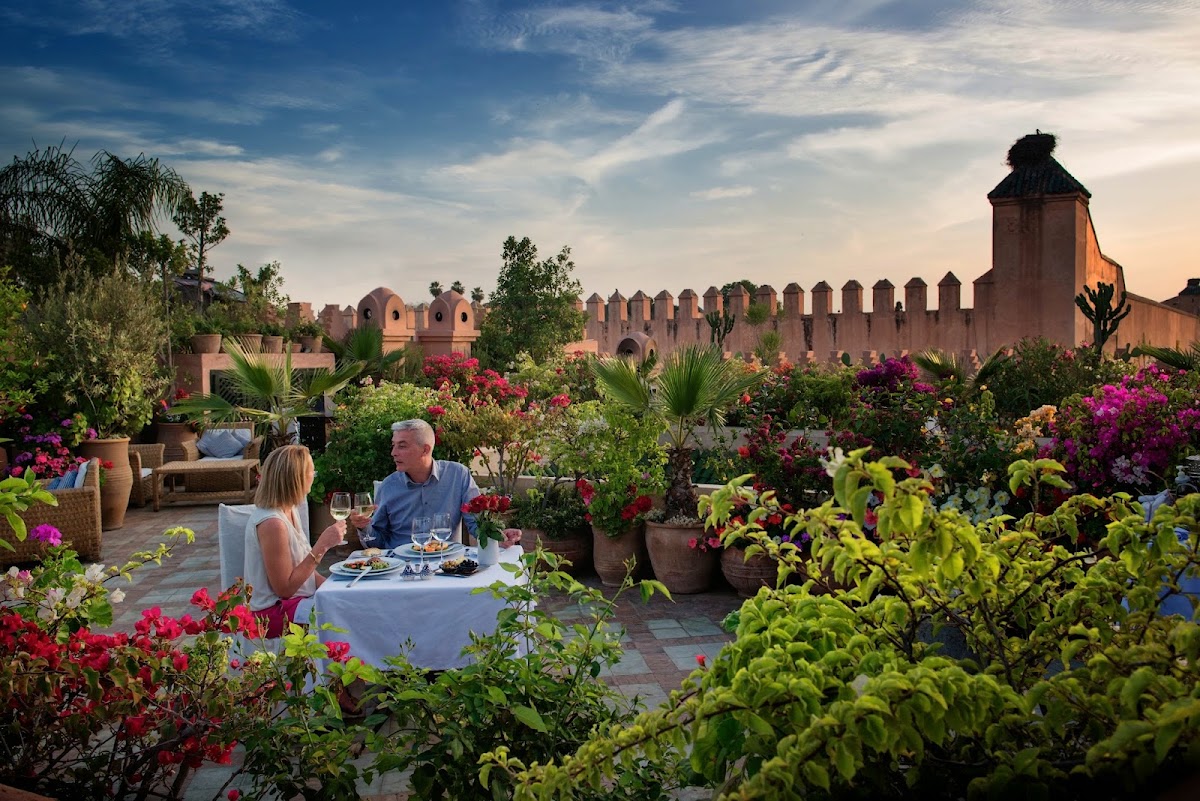
    A rooftop garden table beside crenellated red ramparts
    A rooftop garden beside the Kasbah ramparts
    Saadian Tombs guide
  7. Bahia Palace

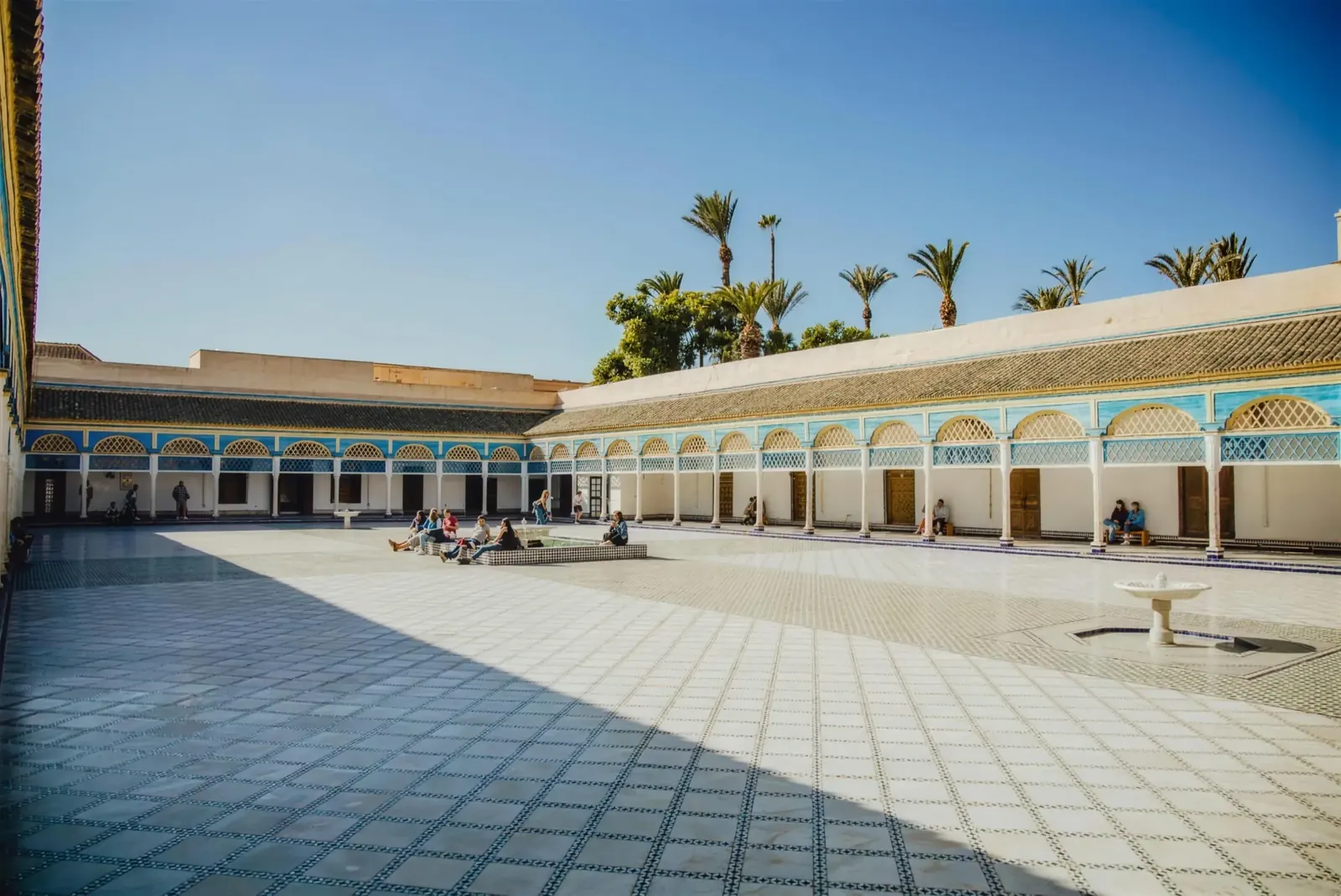
    A vizier's palace built to dazzle, with painted cedar ceilings, carved stucco and courtyards of orange trees.

    Unfurnished, so you're there for the craft. Look up in every room.

    The Bahia Palace's great courtyard: marble paving, painted arcades and palms
    Bahia Palace, the great courtyard
    Bahia Palace guide
  8. The Mellah

    The old Jewish quarter, with its balconied houses, a working synagogue and the city's covered spice market.

    Quieter than the souks and more lived-in. A guide unlocks the history behind the doors.

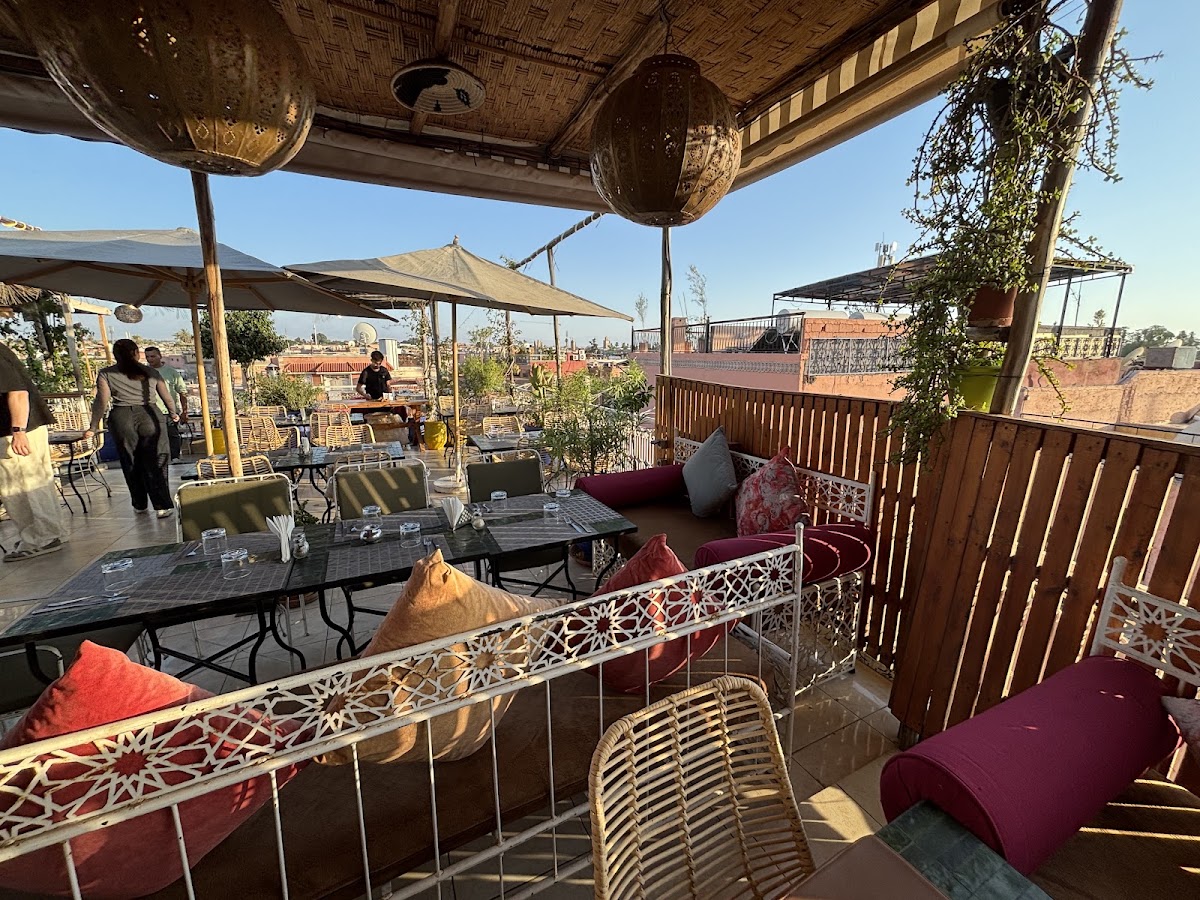
    A rooftop restaurant by day, cushions and parasols over the rooftops
    A medina rooftop · by day
    The Mellah & spice square
  9. Mouassine

    A neighbourhood of fountains, riads and design shops, home to Le Jardin Secret.

    It's the medina at a whisper, ten minutes from the noise.

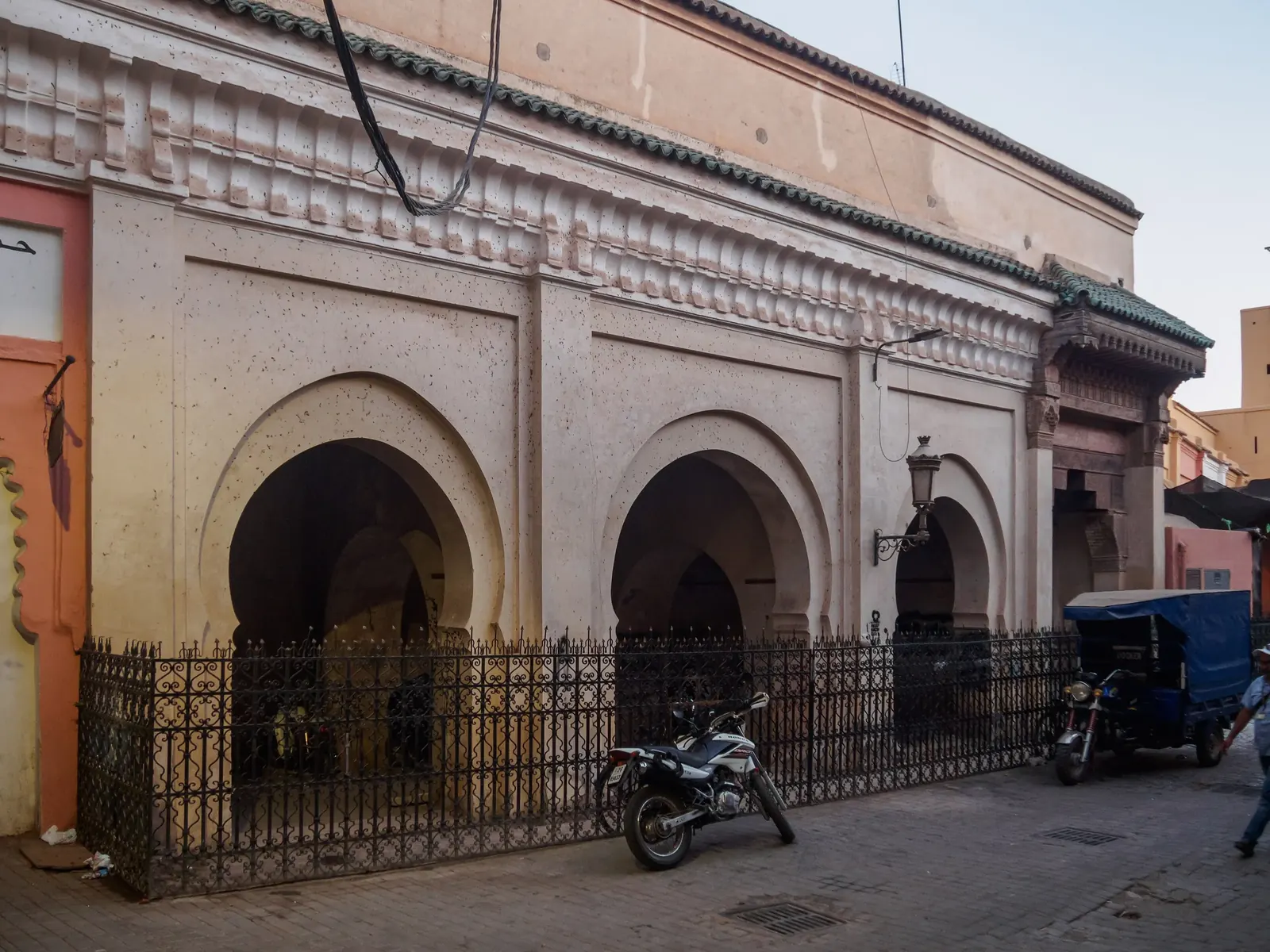
    The Mouassine fountain: three horseshoe arches behind an iron railing
    The Mouassine fountain · Photo: C messier, CC BY-SA 4.0, via Wikimedia Commons (resized)
    Le Jardin Secret guide
  10. The souks

    A covered maze north of the square, where each lane still has its trade: leather, brass, dyers, spices.

    Shopkeepers start closing up towards dusk, so this is your last hour to haggle.

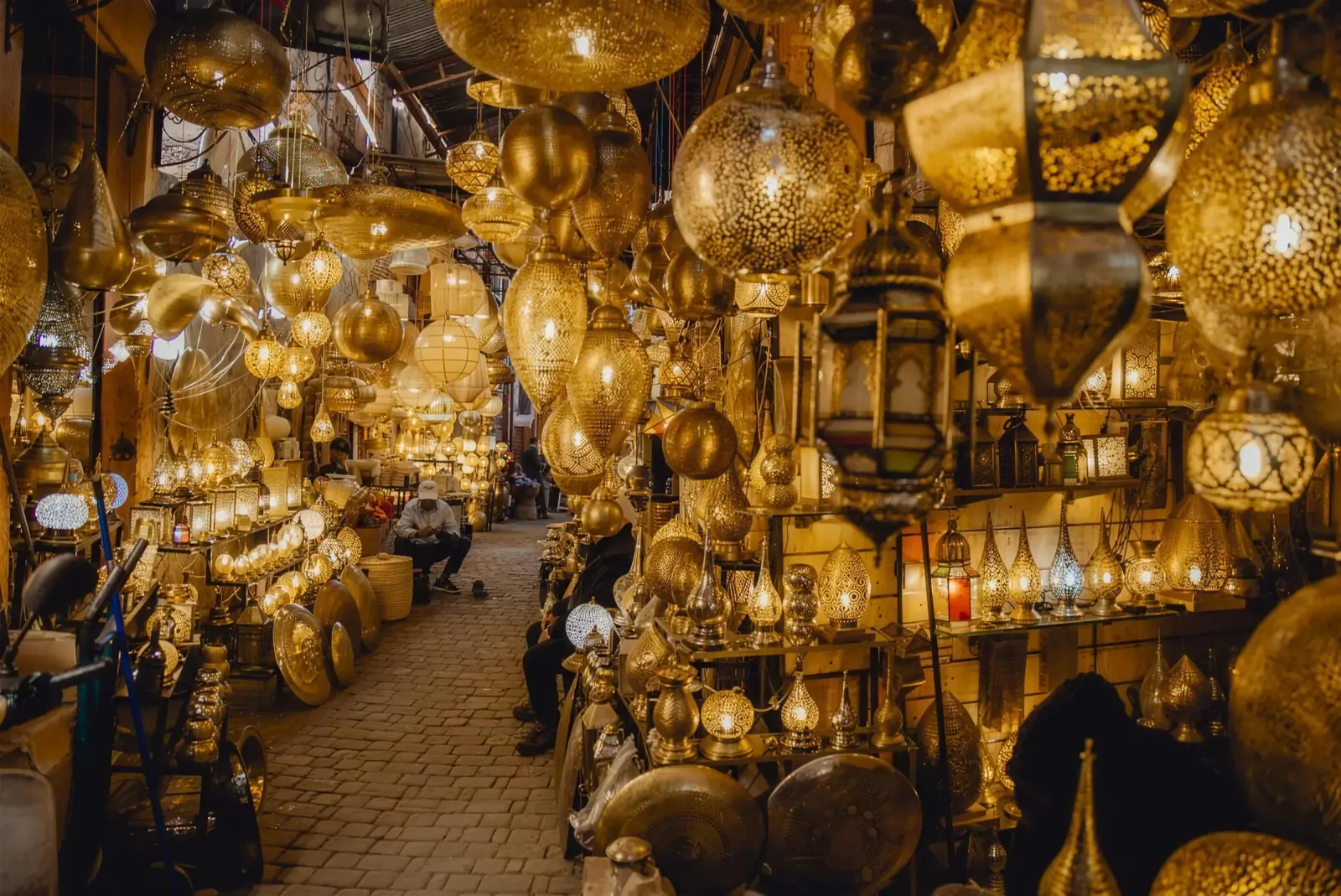
    A souk lane hung floor to ceiling with brass and glass lanterns
    A lantern shop in the souk
    A guided souk walk
  11. Jemaa el-Fnaa at dusk

    The call to prayer rolls over the square, the grills light, and smoke rises against the Koutoubia.

    Storytellers, gnawa drums and a hundred kitchens. This is the one hour Marrakech is known for.

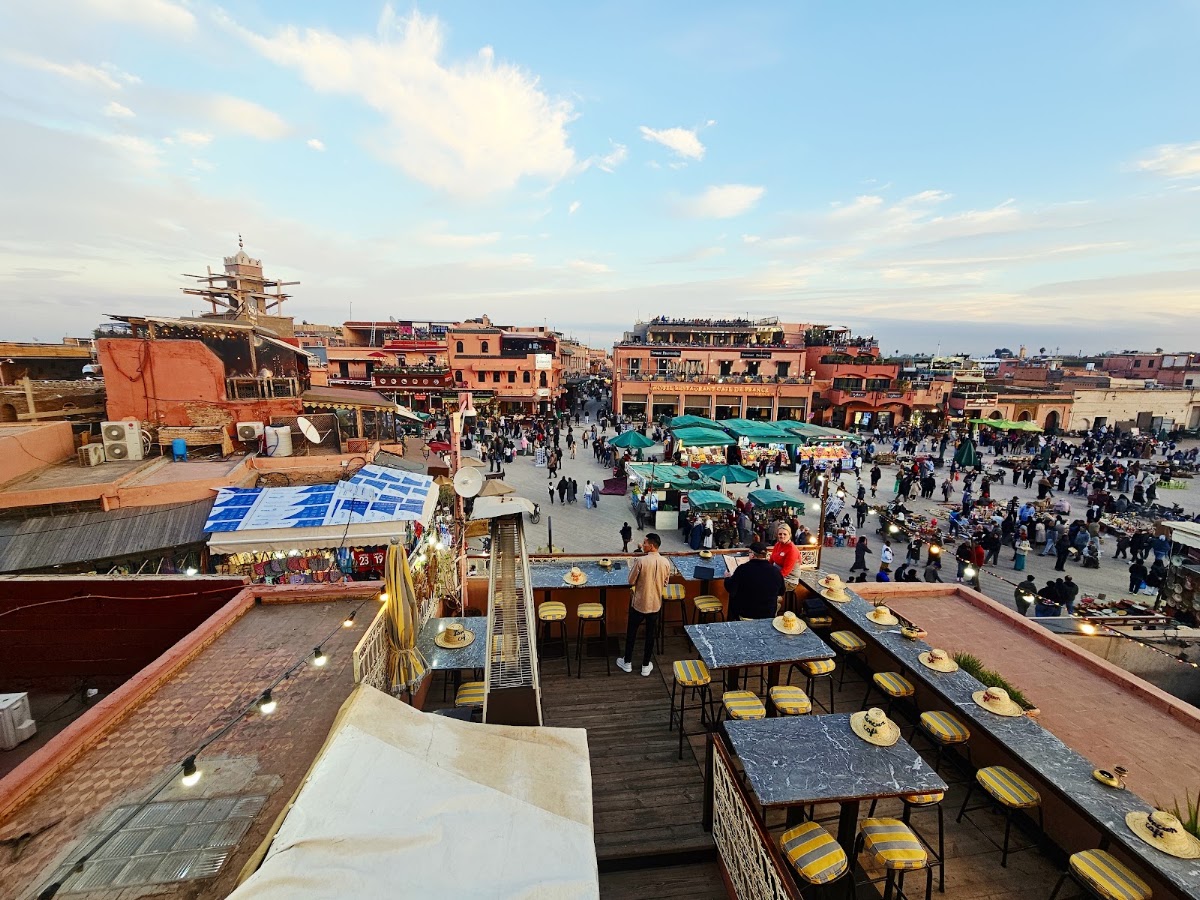
    Jemaa el-Fnaa by day from a terrace, the stalls and crowds below
    Jemaa el-Fnaa · by day
    Jemaa el-Fnaa guide
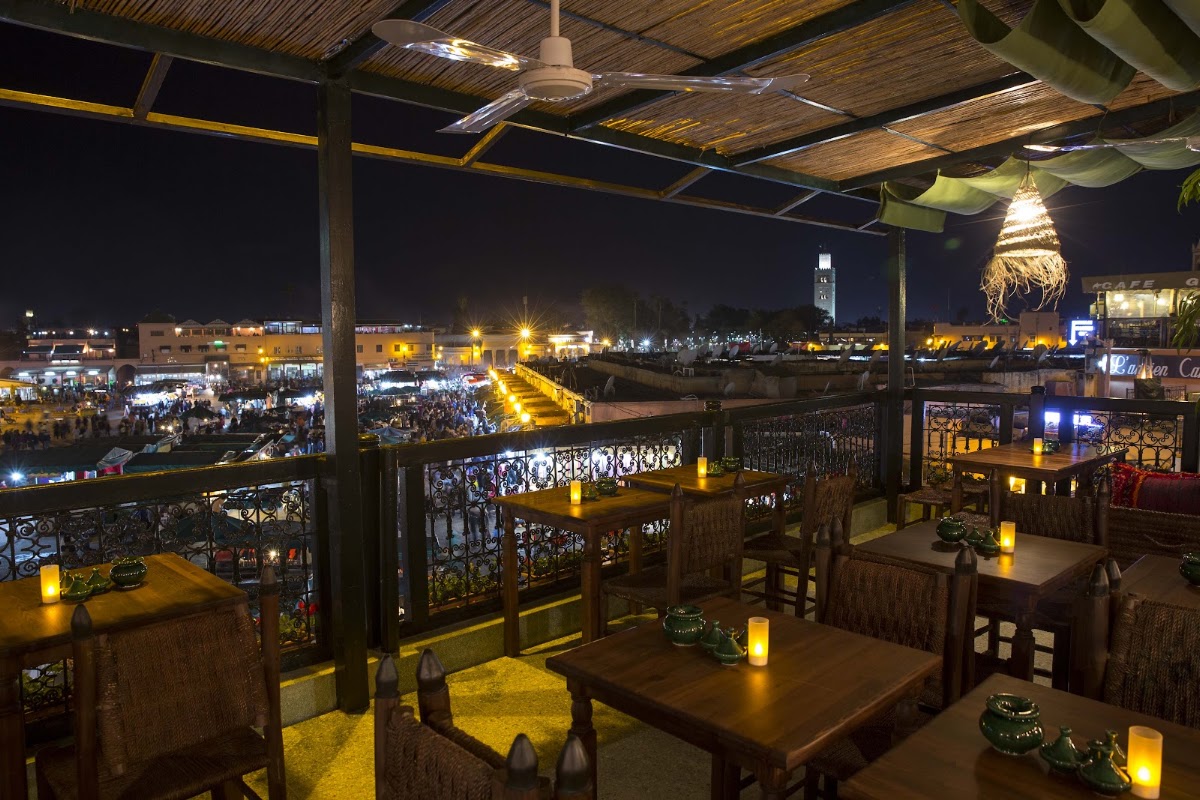
A terrace over the square at night, candles on the tables and the Koutoubia lit far off
A terrace over Jemaa el-Fnaa · at night

Jemaa el-Fnaa at sunset: when to be there

19:00, Jemaa el-Fnaa

  1. The light goes pink on the Koutoubia.
  2. The call to prayer rolls across the square.
  3. A hundred grills catch at once, and the smoke rises.
  4. Somewhere, a gnawa drum starts.

Watch from a café terrace as the sun drops, then go down into the stalls. The food stalls run from about 6 pm to midnight.

Want a private guide for the Marrakech souks?

A licensed local guide for a morning in the medina, a driver for Majorelle and the Palmeraie, or the whole day planned. Tell us your dates and we'll send a written quote.

Marrakech city guide: FAQ

What are the main districts of Marrakech?

Marrakech has two halves. The walled medina holds Jemaa el-Fnaa, the souks, Mouassine, the Mellah (the old Jewish quarter), the Kasbah with the Saadian Tombs, and the Bahia Palace. Outside the walls are Gueliz (the French-built new town, with the Jardin Majorelle on its edge), Hivernage (hotels and nightlife), the Menara gardens to the west, and the Palmeraie palm groves to the north-east.

Where should I stay in Marrakech: medina or Gueliz?

Stay in the medina, in a riad, if you want atmosphere and to walk everywhere. Most of the sights are within about 15 minutes of Jemaa el-Fnaa on foot. Choose Gueliz or Hivernage for modern hotels, easier taxis and quieter nights. Many first-timers split their stay: the medina first, then a garden hotel.

How many days do I need to see Marrakech?

Two full days cover the medina's main sights, the souks and Majorelle at a comfortable pace. Three or four days let you add a hammam, a cooking class and a day in the Atlas or the Agafay.

Is it easy to get around Marrakech on foot?

Inside the medina, walking is the only practical way, and the lanes are easier with a guide on day one. Between districts, take a petit taxi. Ask for the meter ('compteur'), or agree the fare before you get in.

What changes on a Friday?

Friday midday prayer is the week's biggest. Many souk shops open late or close from about noon to 3 pm, then reopen, so 'everything shuts on Friday' is a myth. The sights we list keep their normal hours. Friday lunch is couscous day in Moroccan homes, and the place to eat it.

What changes during Ramadan?

Monuments stay open with shorter hours, and many restaurants close from about 5 pm to 8 pm while families break the fast. Daytime is slow; after iftar the souks and Jemaa el-Fnaa come alive until about midnight. Ramadan 2027 is expected to start around 8 February 2027, confirmed by moon sighting. Eating in public isn't illegal for visitors, but keep it discreet.