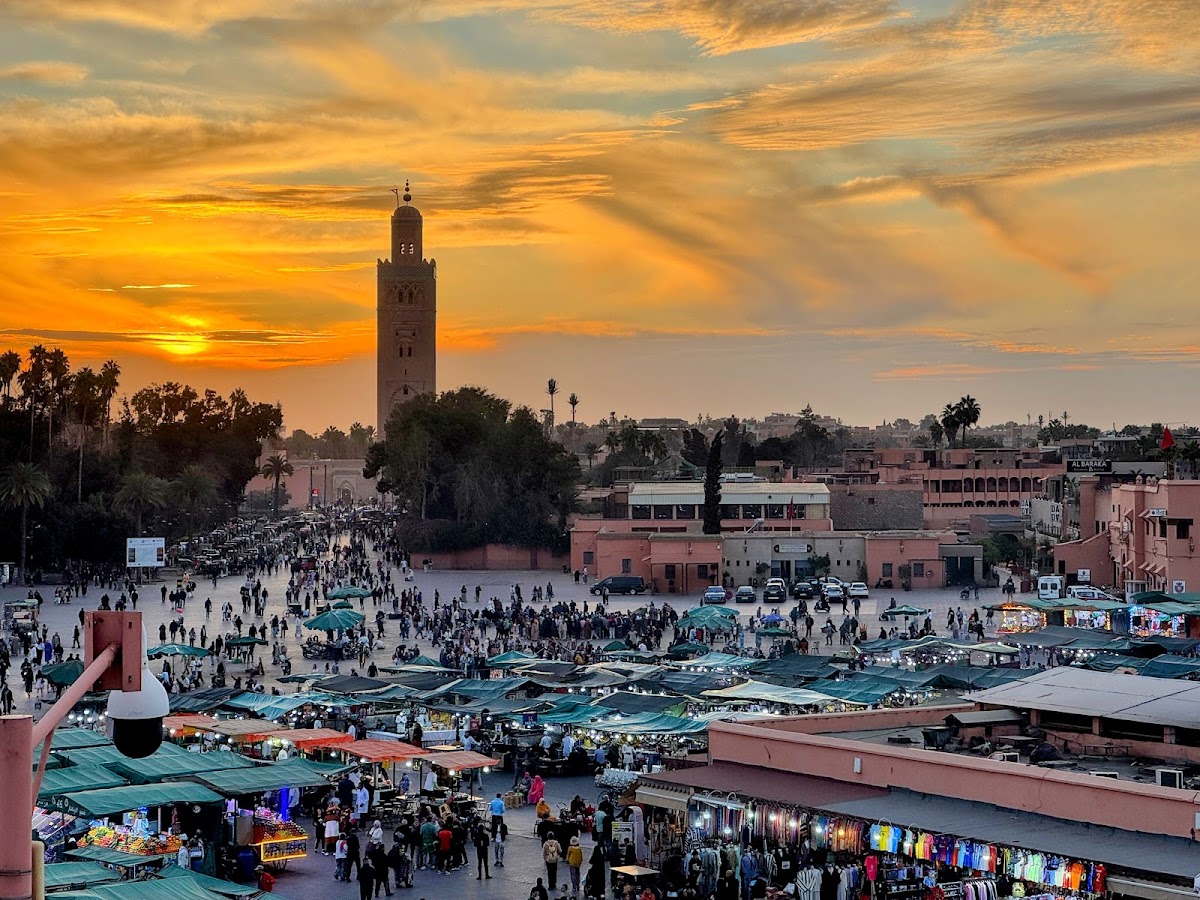
Built from 16:00. Gone by dawn.
Jemaa el-Fnaa at night: what to see and eat, hour by hour
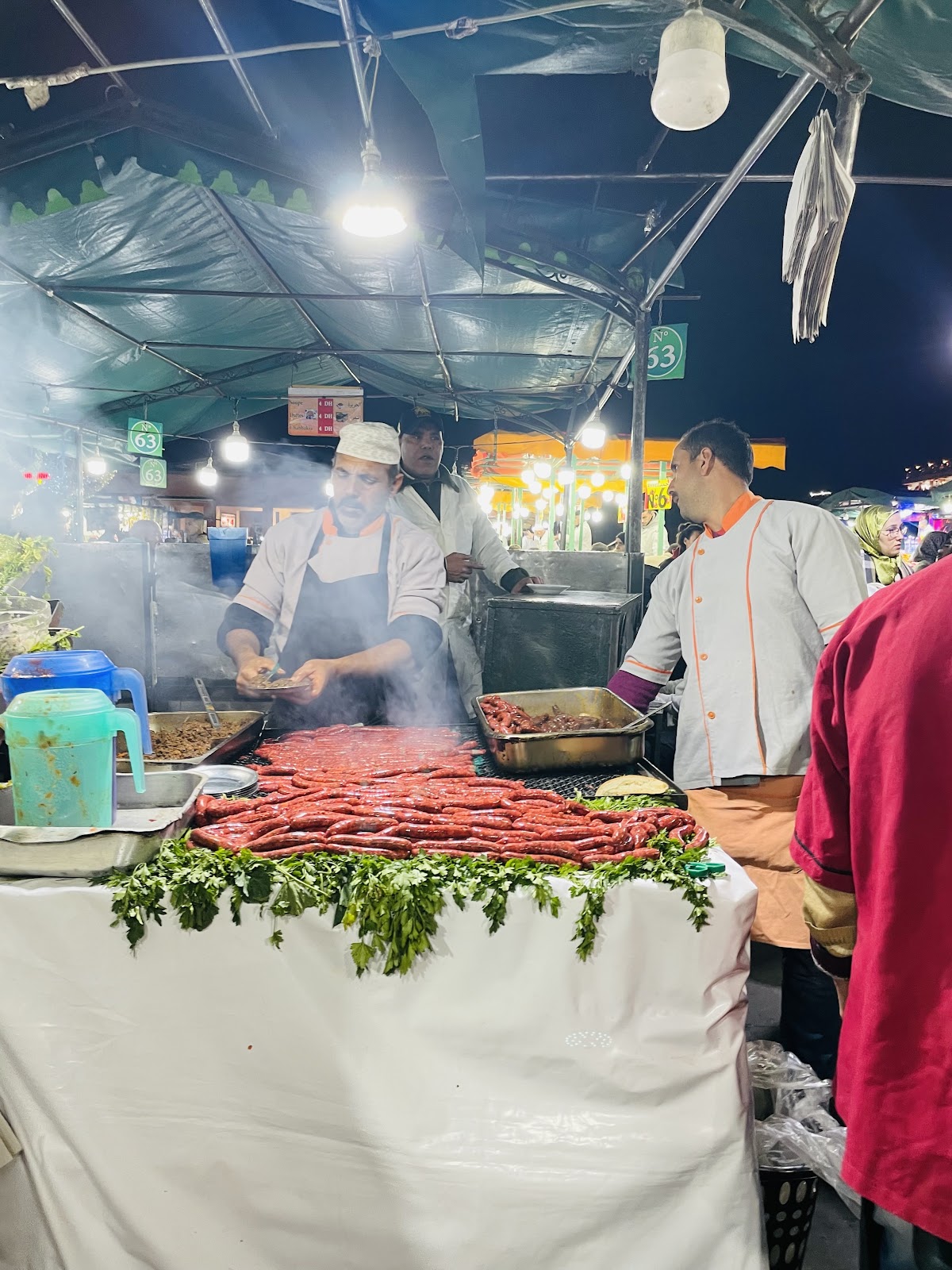
Jemaa el-Fnaa turns into an open-air kitchen every evening. Stall crews wheel in from about 16:00, grills light at dusk and the numbered stalls serve until about midnight. Storytellers, Gnawa musicians and acrobats gather crowds in circles called halqa. Entry is free; agree every price first.
One night, hour by hour
When do the Jemaa el-Fnaa food stalls open?
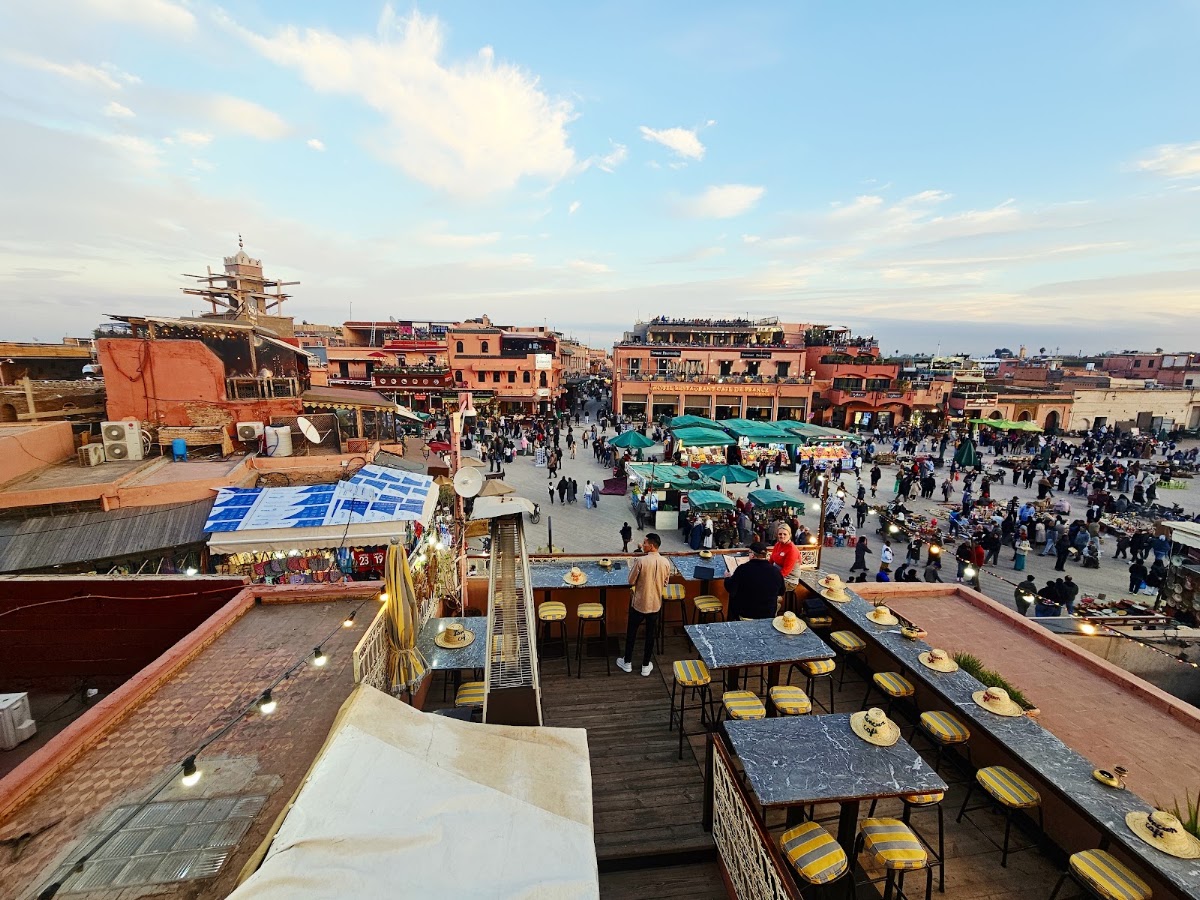
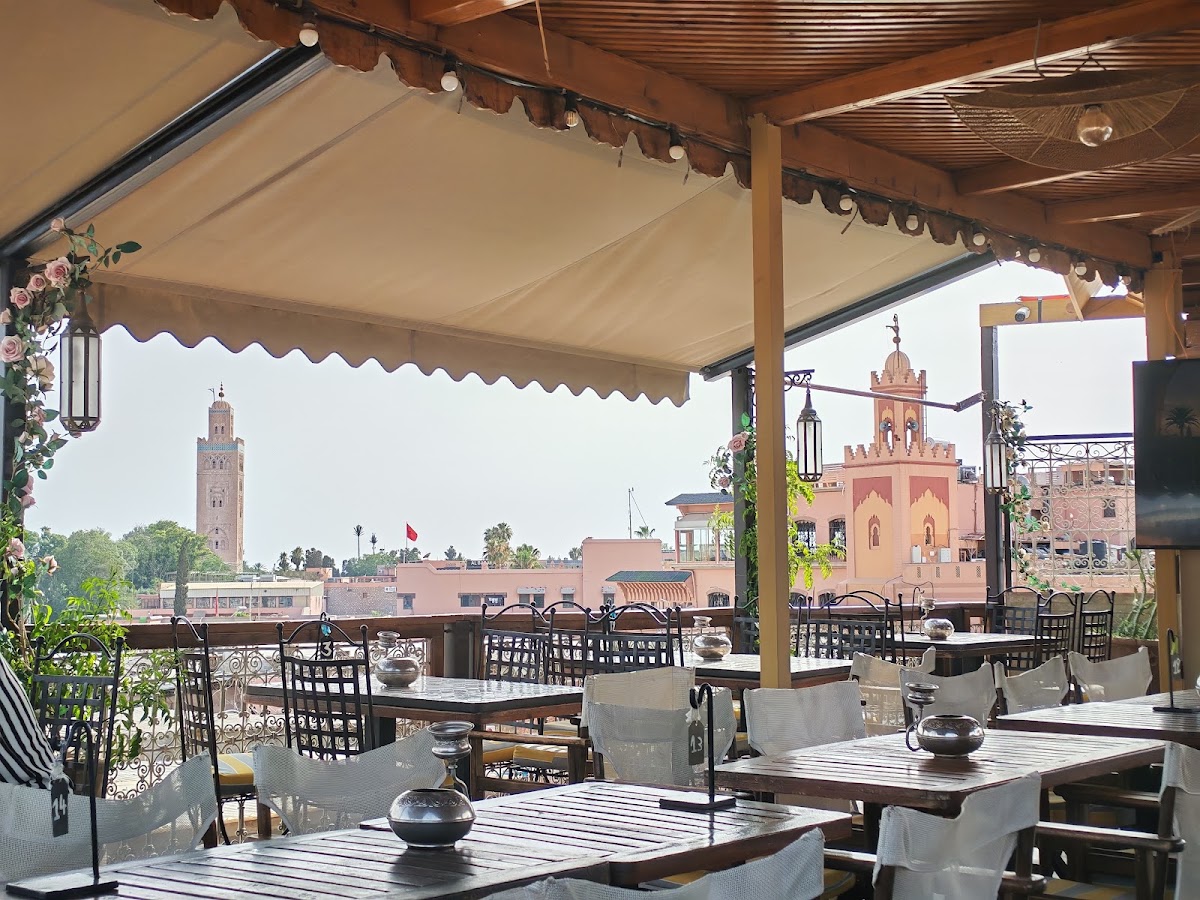
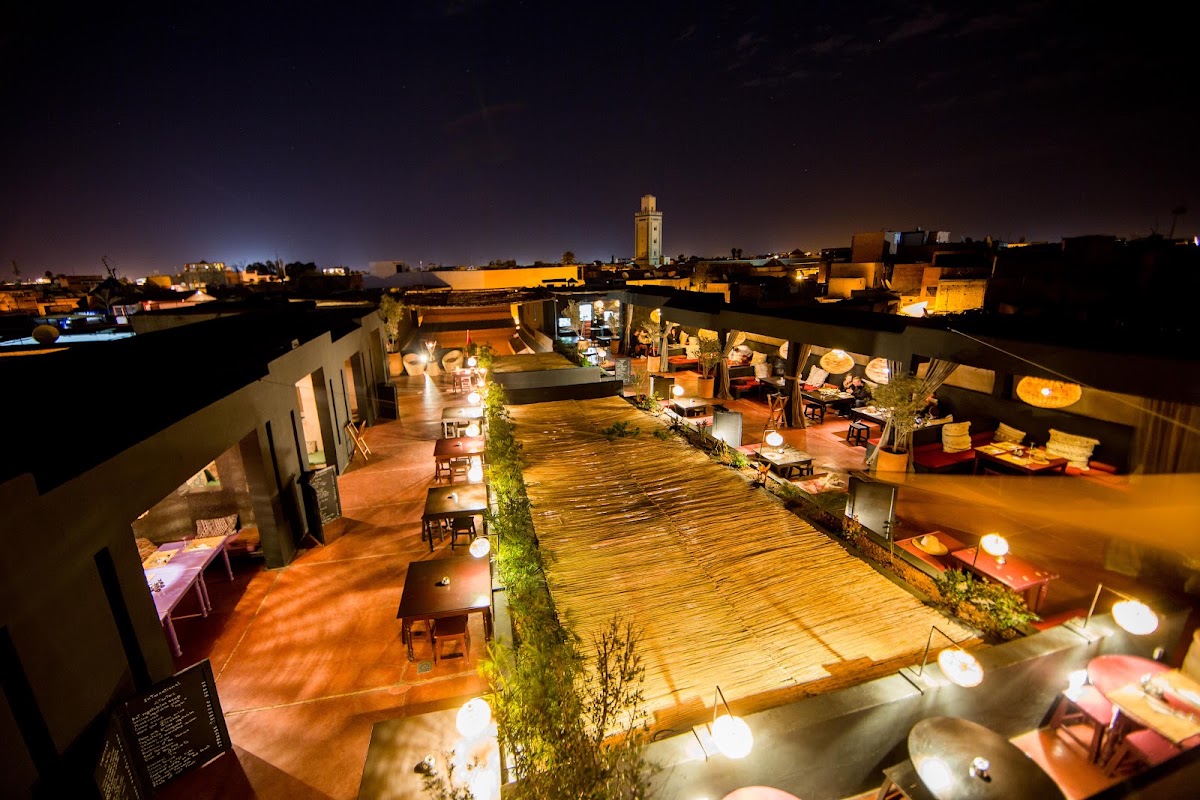
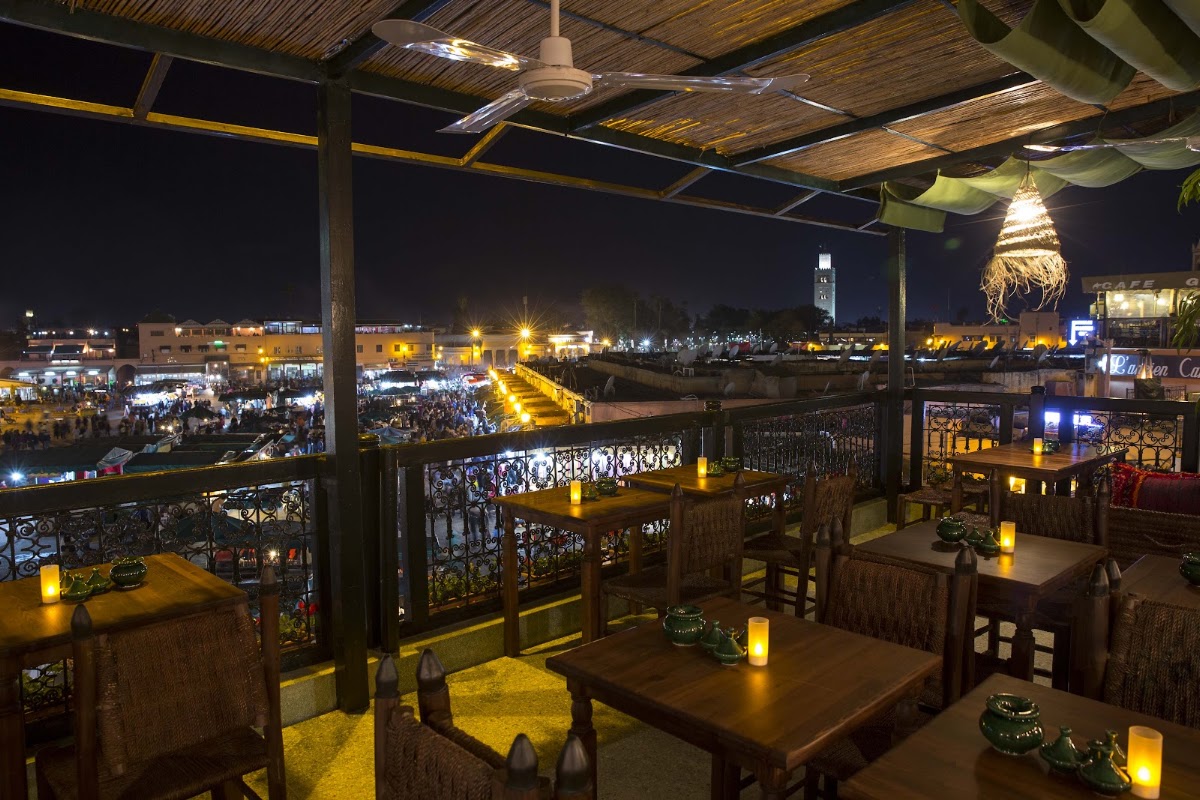
Carts roll in, crews bolt tables and benches together, and the smoke starts. This is the hour to climb to a café terrace on the square's edge and watch the city fill. You see the Koutoubia minaret, about 77 metres with its spire, turn orange.
Solar times are computed for Marrakech today; the stall hours are approximate.
After dark: storytellers, Gnawa and the halqa
Circles form round storytellers, who tell in Darija to a crowd of Moroccan men. Gnawa musicians play iron qraqeb castanets and the three-stringed guembri. If you stand and watch or take photos, drop a coin in the hat. UNESCO listed the square in 2001 for these voices.
The circles, one by one
Circles form round storytellers, who tell in Darija to a crowd of Moroccan men. UNESCO listed the square in 2001 for these voices.
Before you step in: If you stand and watch or take photos, drop a coin in the hat.
Gnawa musicians play iron qraqeb castanets and the three-stringed guembri. You hear them across the square before you find the circle.
Before you step in: If you watch a full act or take a photo, a few dirhams in the hat is normal.
Henna artists work at stools in the square and in cafés. Some start drawing before you agree, then ask a large sum.
Before you step in: Keep your hands to yourself and keep moving. If you want henna, choose a café with posted prices.
Water sellers in red with tasselled hats and brass cups now earn mostly by posing for photos.
Before you step in: Performers, Gnawa and water sellers expect a few dirhams for a photo. Agree before you lift the camera.
A handler may put an animal on you and demand payment. The Barbary macaque is endangered.
Before you step in: Keep your distance, and decline before anyone raises a camera or an animal.
Crews bolt the tables and benches together in the late afternoon, the grills light at dusk, and the stalls serve until about midnight.
Before you step in: Ask the price of everything before you sit, push away bread or olives you didn't order, and note the stall number so you can find it again.
What to eat at the Jemaa el-Fnaa night market
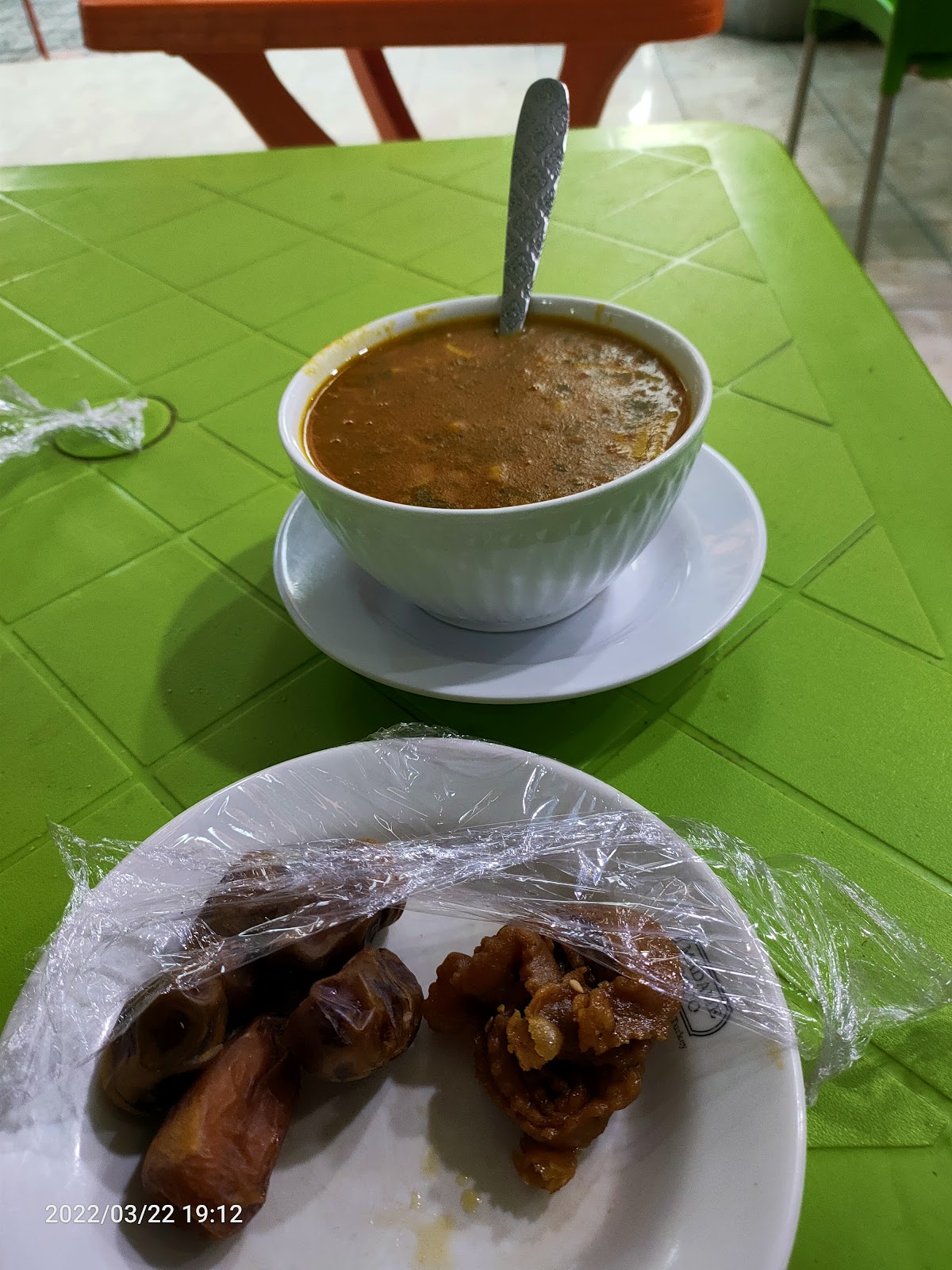
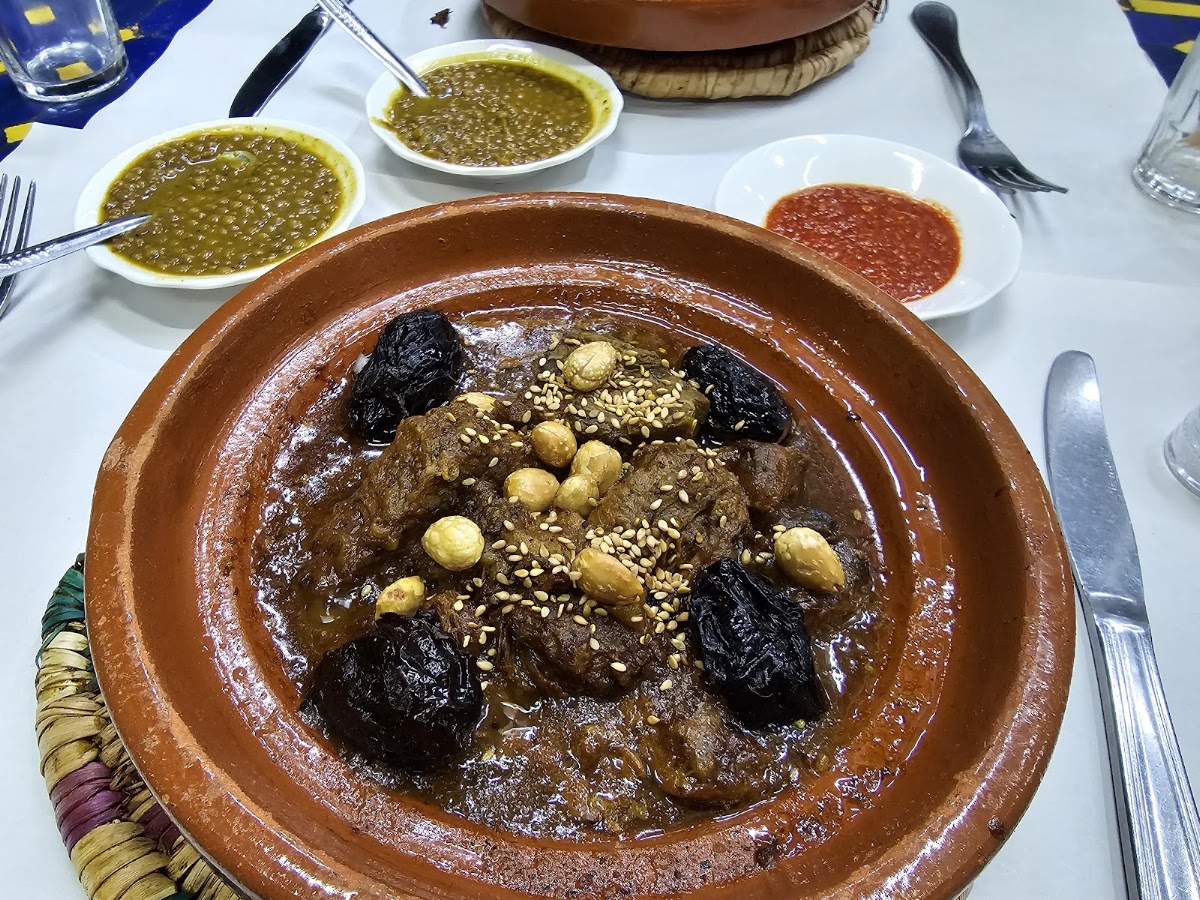
Harira with dates, about MAD 10 to 15 a bowl. Snails in a broth of aniseed, thyme and liquorice root, about MAD 10 to 20: pick them out with a toothpick, then drink the broth. Merguez off the charcoal in half a round of bread with harissa. At the sheep's head stalls, ask for the cheek first, with cumin and salt. A full meal runs about MAD 40 to 100.
Street prices, in dirhams, paid at the stall. Our evenings are quoted in writing.
Tricks and scams to avoid at night
Henna artists who grab your hand and paint before you agree. Snake charmers and monkey handlers who ask for money after a photo. Bread and olives you did not order, added to the bill. A stall worker waving you to a bench doesn't commit you; pick any stall, and note its number so you can find it again. Keep phones and wallets in front pockets in the crowds.
By midnight the stalls are packed away and the square is swept, as if none of it happened.
What changed on the square in 2026
Jemaa el-Fnaa has been repaved in sections, with a new calèche station, a tourist kiosk and accessible toilets. New food and juice carts arrived in spring 2026, and a public tender (Al Omrane 147/2026) is replacing the restaurant stands. The square stays open, but stall positions and numbers may differ from older photos and reviews.
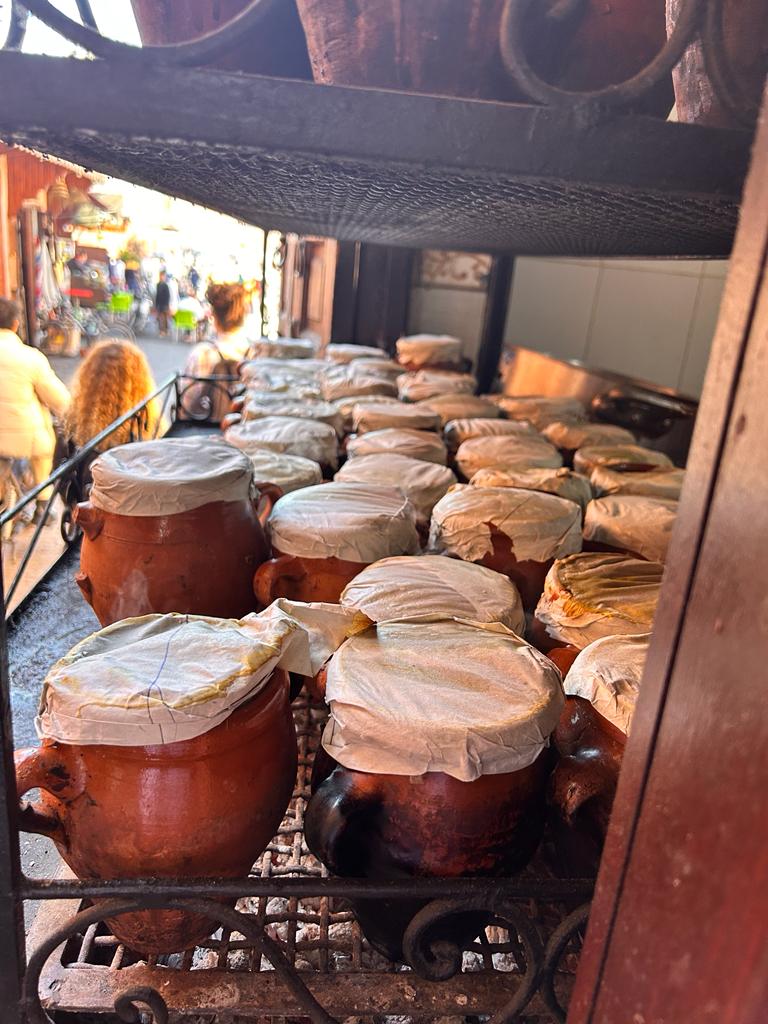
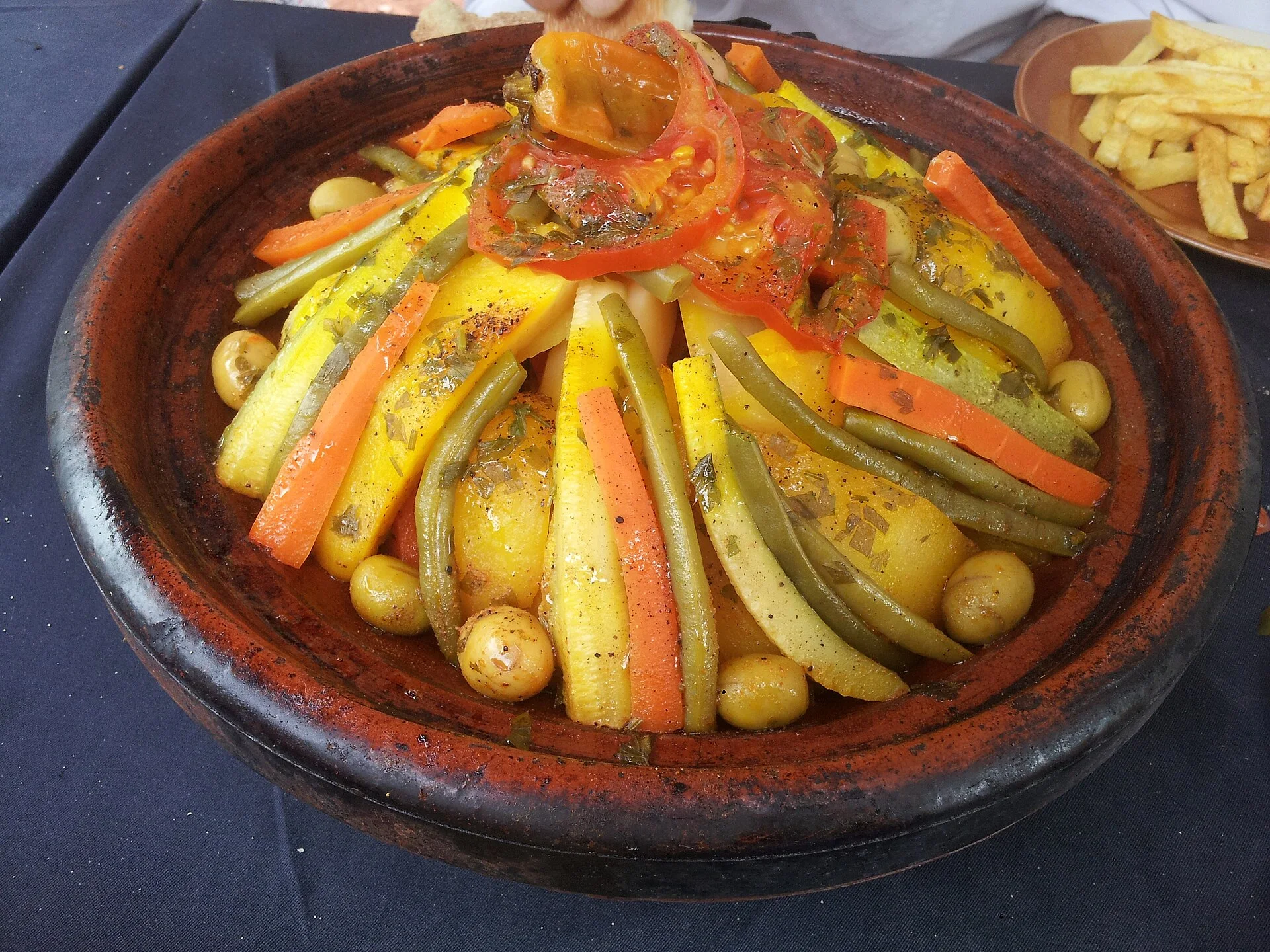
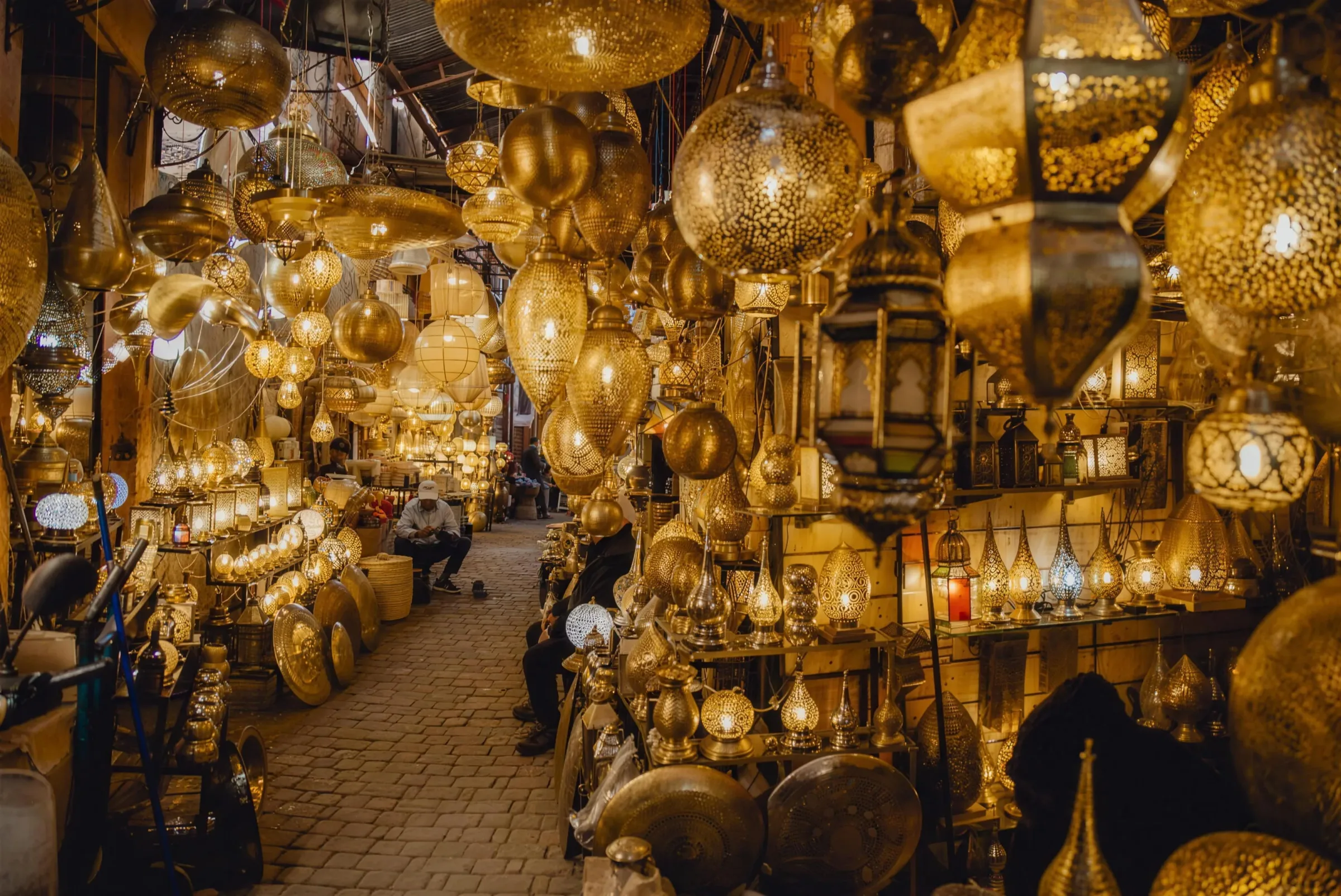
The photographs are visitor photos of the square, its terraces and its food, plus one of our own from the souk, used as stand-ins. They show the evening, not a particular stall.
Worth knowing before you go
- Henna: some women start drawing before you agree, then ask a large sum. Keep moving, and choose a café with posted prices (from about MAD 50) if you want henna.
- Snake and macaque photos: a handler may put an animal on you and demand payment. Keep your distance. The Barbary macaque is endangered.
- Pickpockets work the crowds; keep your phone in a front pocket. Tourist police patrol the square.
- If a stall worker waves you to a bench, you are free to choose another stall.
- Keep your phone in a front pocket in the evening crowds.
Plan your night at Jemaa el-Fnaa with a guide
The circles you add above are already in it. Finish the two blanks and we answer with a plan and a written quote within 24 hours. Nothing on this site has a price: every evening is quoted for your group and your date.
To Marrakech Tours, salam,
travellers, and .
Please write us a quote for:
- the evening food walk with a local, from the first grill to the last stall
Shukran.
Jemaa el-Fnaa at night: FAQ
Is Jemaa el-Fnaa safe at night?
Yes, it is crowded and policed until after midnight. The risks are pickpockets and overcharging, not violence. Keep valuables in front pockets and agree prices before you eat or take photos.
What time do the food stalls open?
Crews set up from about 16:00 to 17:00, and most stalls serve from dusk to about midnight. They keep similar hours in Ramadan but start after the sunset meal.
Do I have to tip the performers?
If you watch a full act or take a photo, yes. A few dirhams in the hat is normal. Snake and monkey handlers ask far more, so decline before you raise the camera.
Which terrace gives the best view of the square?
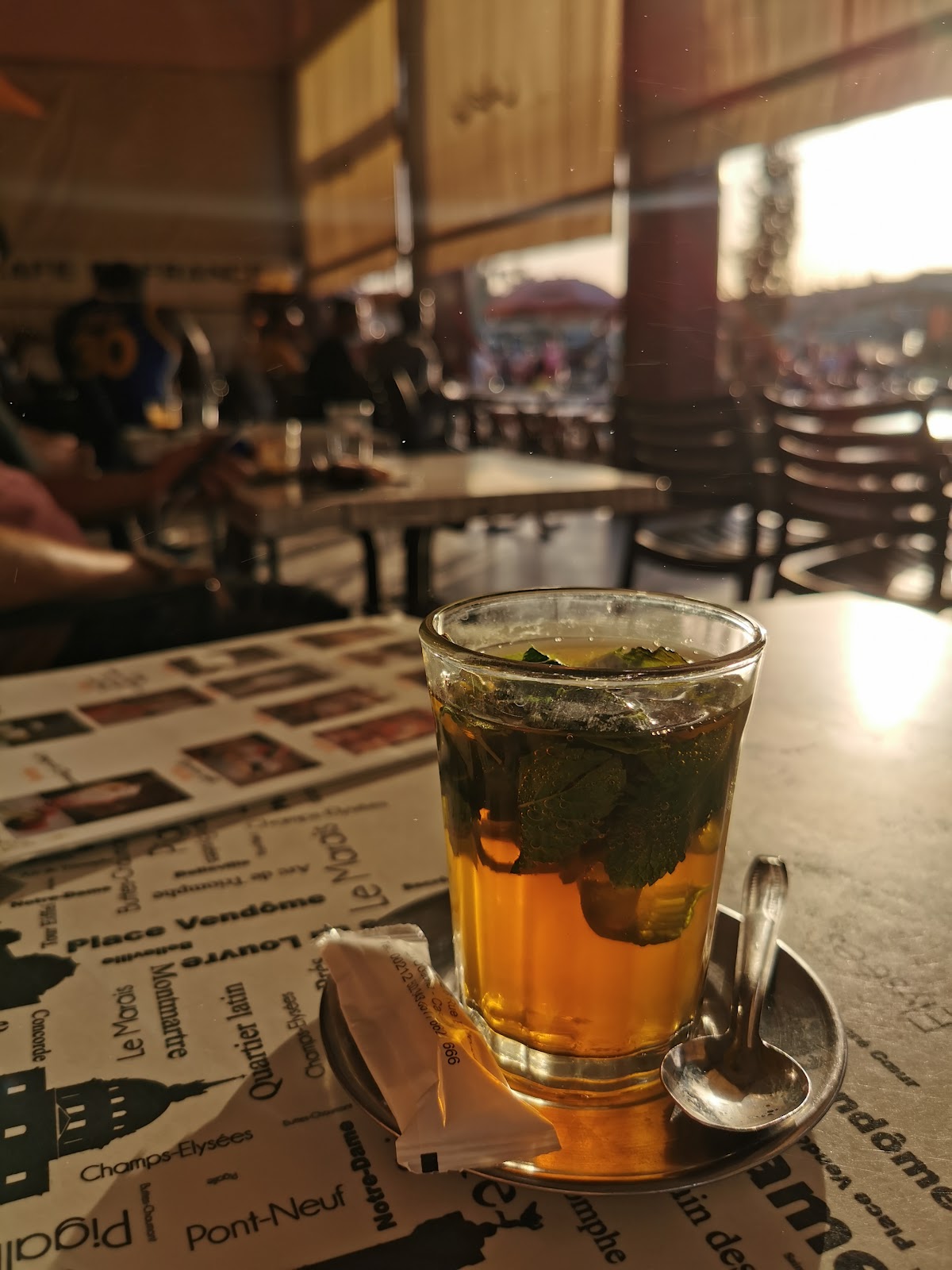
The cafés round the square's edge, Café de France and Café Glacier among them, look down from upper terraces. Order a mint tea, which buys you the seat, and arrive 30 minutes before sunset to get the front row.