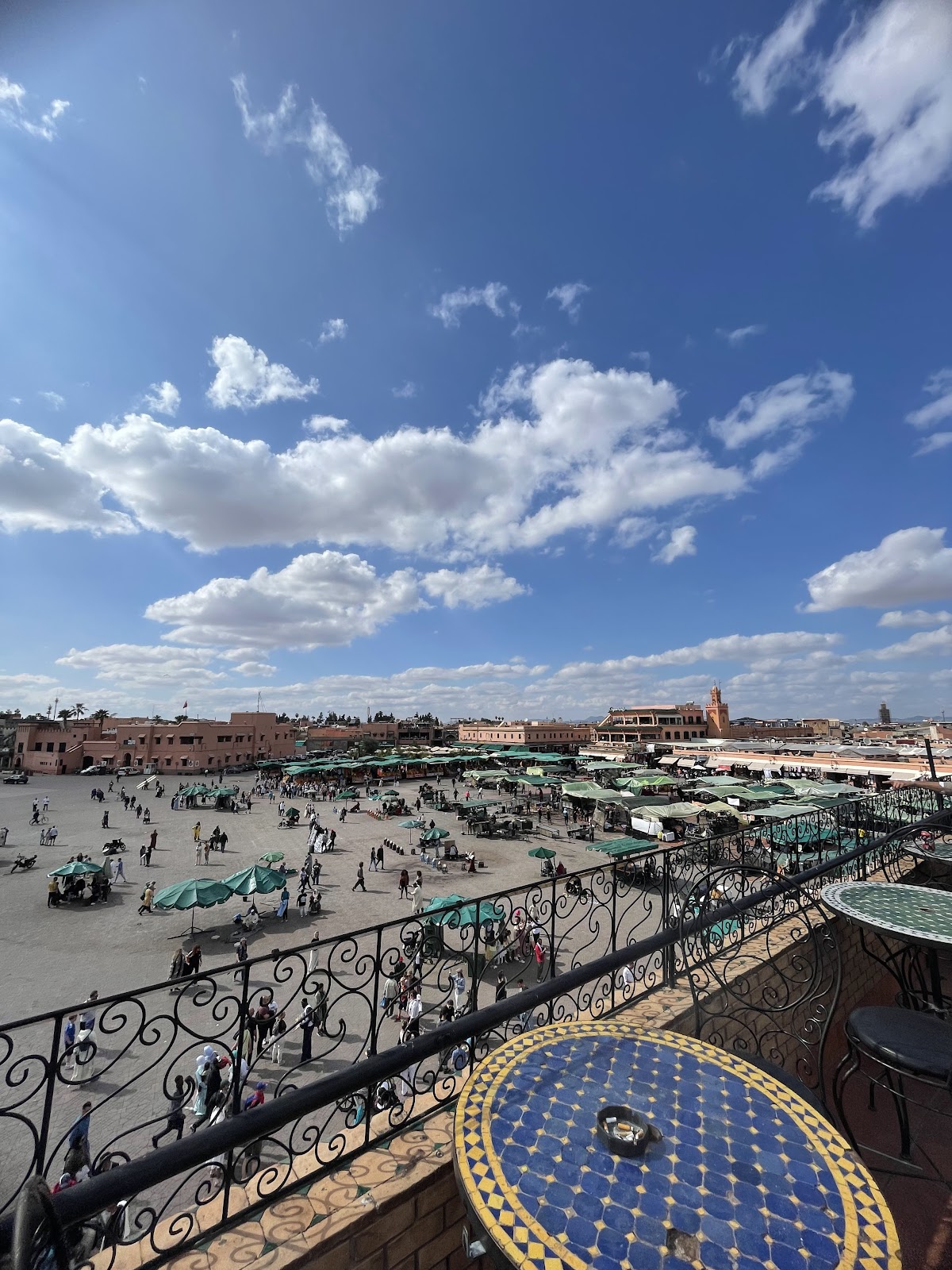
The short answer
Marrakech is famous for Jemaa el-Fnaa, the square that becomes an open-air night market with storytellers and Gnawa music; for its walled medina and craft souks; for the 12th-century Koutoubia minaret; for palaces such as the Bahia; for Jardin Majorelle, the blue garden saved by Yves Saint Laurent; and for riads, courtyard houses turned guesthouses.
In more detail
The souks are a working craft district as much as a market. Lanes are named for their trades, so Haddadine is the blacksmiths' souk and Sebbaghine the dyers', where skeins of wool hang over the lane to dry. Tanners still work hides in the pits inside Bab Debbagh.
The city's history shows in its monuments: the Almohad gate of Bab Agnaou, the Saadian Tombs, walled off for generations and only made known again to the outside world in about 1917, the ruins of El Badi palace with storks nesting on its walls, and the Ben Youssef Madrasa.
It is also famous for what is around it. The snowy High Atlas is visible from the rooftops in winter, the Agafay stone desert is less than an hour away, and the Palmeraie, a palm oasis said to date to the Almoravids, sits on the city's northern edge.
Good to know
- See Jemaa el-Fnaa after dark.
- Book Majorelle's timed tickets on the official site.
- Look up from rooftops in winter for the Atlas snow.