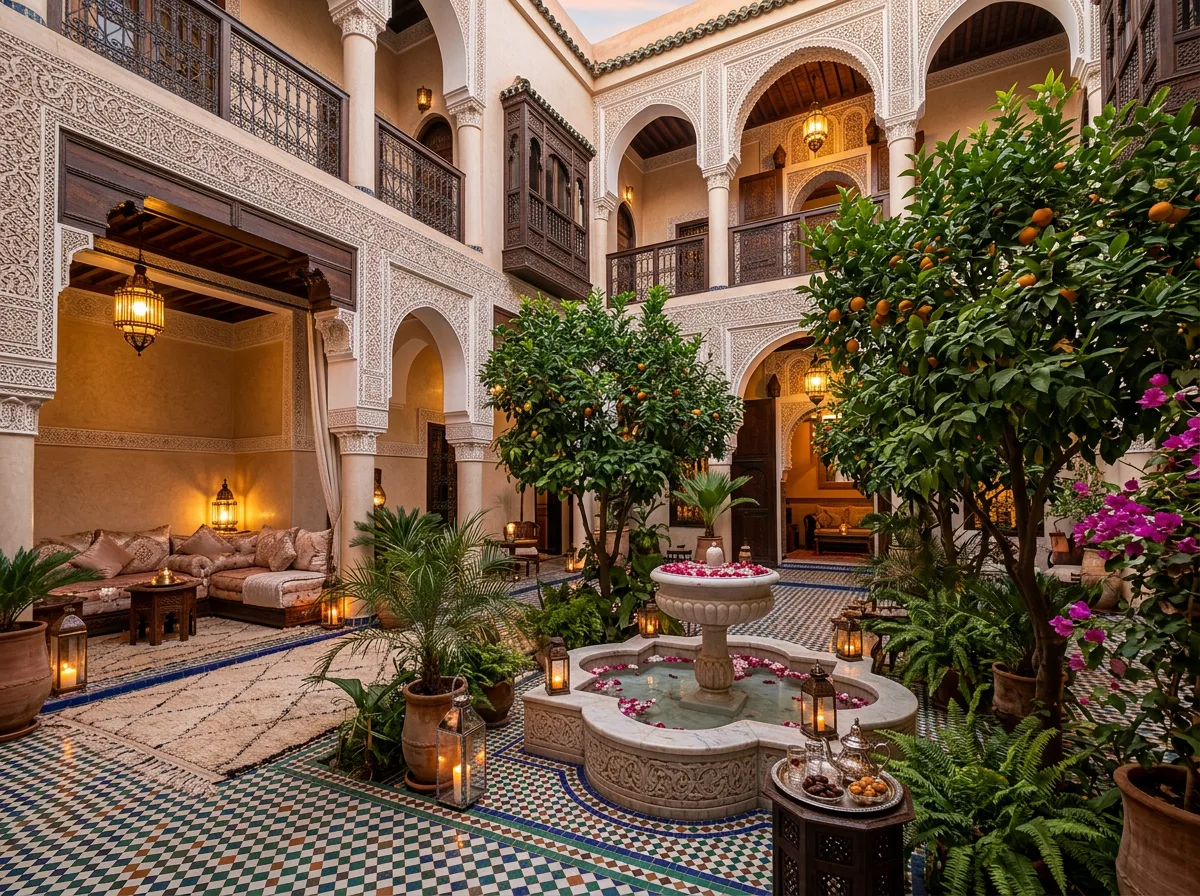
A short walk from the Bahia Palace in the southern Marrakech medina, Dar Si Said is one of the city's most rewarding quieter sights — a late-19th-century palace that now houses the National Museum of Weaving and Carpets (Musée National du Tissage et du Tapis). The house was built for Si Said, brother of the vizier behind the neighbouring Bahia Palace, and shares the same era of lavish craftsmanship: carved cedar ceilings, painted woodwork, sculpted stucco, zellij tilework and a tranquil riad-style courtyard garden. After restoration it reopened devoted to Moroccan carpets and textiles, gathering rugs and weavings from across the country's regions — the High Atlas, the Middle Atlas, the south and the Saharan fringes, and the wider world of Berber and Amazigh weaving. The result is a visit that works on two levels at once: an exquisite historic palace to wander, and a focused collection that explains the regional rug traditions Morocco is famous for. It is generally calmer and less crowded than the big palaces, which is part of its appeal. This guide covers the palace setting and its decoration, the carpet and weaving collection and the regional rug styles, who the museum suits, how long to allow, photography, and combining it with the Bahia Palace and the Mellah next door. Opening hours and admission can change, and museums here sometimes close for works, so always check current information before you go.
Dar Si Said is, first of all, a beautiful palace. Built in the late 19th century for Si Said, brother of Bou Ahmed, the powerful vizier behind the nearby Bahia Palace, it belongs to the same golden age of Marrakech domestic architecture. Rooms open off courtyards and gardens, with the layered, inward-looking layout typical of a grand medina house. Even before you reach the carpets, the building itself rewards a slow walk, and many visitors find the architecture as memorable as the collection it now holds.
02Highlight
Carved cedar ceilings and painted woodwork
Among the building's glories are its carved and painted cedar ceilings, a hallmark of the finest Moroccan craftsmanship of the period. Look up in the principal rooms to see intricate woodwork, geometric and floral motifs, and the rich colours of traditional painted ceilings. These surfaces took skilled artisans considerable time to create, and they remain one of the most photographed and admired features of the house — a reminder that the palace was conceived as a showcase of craft long before it became a museum of craft.
03Highlight
Zellij tilework, stucco and a tranquil courtyard garden
Beyond the ceilings, the palace displays the full vocabulary of Moroccan decorative arts: zellij mosaic tilework, sculpted stucco and finely worked plaster framing doors and windows. At its heart is a calm riad-style courtyard garden, a shaded, restful space that offers a pause from the bustle of the surrounding lanes. The interplay of tile, plaster, wood and greenery is exactly what makes a Marrakech palace special, and Dar Si Said lets you experience it in a setting that is usually less crowded than the larger sites.
04Story
Now the National Museum of Weaving and Carpets
Following restoration, Dar Si Said reopened devoted to Moroccan carpets and textiles as the National Museum of Weaving and Carpets (Musée National du Tissage et du Tapis). The choice suits the building well: a palace of fine craftsmanship now dedicated to one of Morocco's most celebrated crafts. The displays bring together rugs, kilims and weavings from across the country, presented so visitors can appreciate both the artistry of individual pieces and the broader traditions behind them. It is a focused, single-theme museum rather than a general collection, which gives the visit a clear thread to follow.
05Highlight
Rugs and kilims from across Morocco's regions
The collection's strength is its range across Morocco's weaving regions. Rugs and kilims here represent areas such as the High Atlas and Middle Atlas mountains, the pre-Saharan south and other parts of the country, each with its own characteristic patterns, materials and palette. Seeing them gathered under one roof makes it easy to compare styles — the thick, knotted mountain rugs against flat-woven kilims, bold geometric designs against more restrained ones — and to understand how landscape, community and tradition shaped each regional style.
06Story
Berber and Amazigh weaving traditions
Much of Moroccan rug-making is rooted in Berber and Amazigh culture, where weaving has long been a respected craft carrying meaning as well as utility. The museum gives space to these traditions, helping visitors read the symbols, motifs and techniques that distinguish different communities. Understanding that a rug can express identity, status or storytelling, not just cover a floor, changes how you look at the pieces — and at the rugs you will inevitably see for sale across the souks once you leave the museum.
07Tip
A quieter, less-crowded gem
One of Dar Si Said's quiet pleasures is that it tends to be calmer than the headline palaces. After the scale and crowds of the Bahia Palace or the bustle of Jemaa el-Fna, it offers an unhurried place to admire craftsmanship and look closely at the textiles. Visitors who value atmosphere and the chance to linger often rate it among their favourite medina stops precisely because it rewards a slower, more attentive visit rather than a quick photo stop.
08Planning
Who the museum suits
Dar Si Said appeals most to anyone drawn to Moroccan craft and design — carpet and textile lovers above all, but also travellers who enjoy historic architecture and decorative arts. It works well for those wanting a calm, substantial museum rather than a marquee monument, and for anyone planning to buy a rug who would like to understand the regional styles first. Those seeking only sweeping courtyards and grand scale may prefer the bigger palaces, but for craft, history and a peaceful atmosphere together, this is a standout.
09Planning
How long to allow
Many visitors find an hour to an hour and a half comfortable — enough to walk the palace rooms, enjoy the ceilings and courtyard, and study the carpets and weavings at a relaxed pace. Those with a keen interest in textiles may happily stay longer, while a faster walk-through is also possible. Its manageable size makes it easy to combine with neighbouring sights rather than treat as a half-day on its own. Allow a little extra margin in busy periods, and check current opening hours before you set out, as they can change.
10Tip
Photography on your visit
As at many museums, rules on photography can vary and may change, so check any current guidance at the entrance before taking pictures of the rooms and displays. The carved ceilings, zellij and courtyard are tempting subjects, and interior light in a historic palace is often soft, so a steady hand helps where photography is allowed. Whatever the rules, the detail of the woodwork and the texture of the rugs reward looking closely with your own eyes, and being mindful of other visitors in the quieter rooms is always appreciated.
11Planning
Combining with the Bahia Palace and the Mellah
Dar Si Said sits close to the Bahia Palace in the southern medina, near the Mellah, the historic Jewish quarter, which makes it easy to fold into a walking circuit of this quarter. A common plan is to pair it with the Bahia Palace next door — grand palace architecture alongside a focused craft museum — and to wander the Mellah and its spice square nearby. Each site is ticketed separately, so treat them as individual visits and confirm current hours and admission for each before you go.
12Planning
Finding it in the southern medina
The museum lies in the lanes of the southern medina, close to the Bahia Palace and towards the Kasbah and Mellah. As with many medina addresses, the entrance is relatively discreet and easy to miss, so following signs, a map or local directions for the final approach helps. Most visitors reach it on foot while exploring this part of the old city, and the surrounding alleys, with their workshops and everyday medina life, are part of the pleasure of getting there.
Frequently asked
What is Dar Si Said in Marrakech?
Dar Si Said is a late-19th-century palace in the southern Marrakech medina, near the Bahia Palace, that now houses the National Museum of Weaving and Carpets (Musée National du Tissage et du Tapis). It was built for Si Said, brother of the vizier behind the neighbouring Bahia Palace, and is admired for its carved cedar ceilings, zellij tilework, stucco and a tranquil courtyard garden. After restoration it reopened devoted to Moroccan carpets and textiles, with rugs and kilims from across the country's regions. It is generally quieter than the big palaces. Hours and admission can change, and museums here sometimes close for works, so check current information before you go.
What can I see in the carpet and weaving collection?
The museum brings together Moroccan rugs, kilims and weavings from across the country, including regions such as the High Atlas and Middle Atlas mountains and the south, along with the wider world of Berber and Amazigh weaving. Displayed together, the pieces let you compare regional styles — thick knotted mountain rugs against flat-woven kilims, and bold geometric designs against more restrained ones — and understand the patterns, materials and traditions behind each. It is a focused, single-theme museum, so it is especially rewarding for anyone interested in Moroccan craft, textiles and design.
Is Dar Si Said worth visiting alongside the Bahia Palace?
Yes. Dar Si Said sits close to the Bahia Palace in the southern medina, so the two pair naturally into one walking circuit, with the historic Mellah and its spice square nearby. Visiting both gives you grand palace architecture at the Bahia and a focused craft museum at Dar Si Said, which also tends to be quieter. Each site is ticketed separately, so treat them as individual visits and confirm current opening hours and admission for each before you go, as these can change.
How long should I spend at Dar Si Said?
Many visitors find an hour to an hour and a half comfortable, enough to walk the palace rooms, admire the carved ceilings and courtyard, and study the carpets and weavings at a relaxed pace. Those with a strong interest in textiles may stay longer, while a quicker visit is also possible. Its size makes it easy to combine with neighbouring sights such as the Bahia Palace rather than treat as a half-day on its own. Allow extra margin in busy periods, and check current opening hours before you set out.
See it with a local
Turn this into a private Marrakech trip.
We'll build a private, guided plan around the experiences you care about — with a driver, hand-picked riads and a written quote in 24 hours.