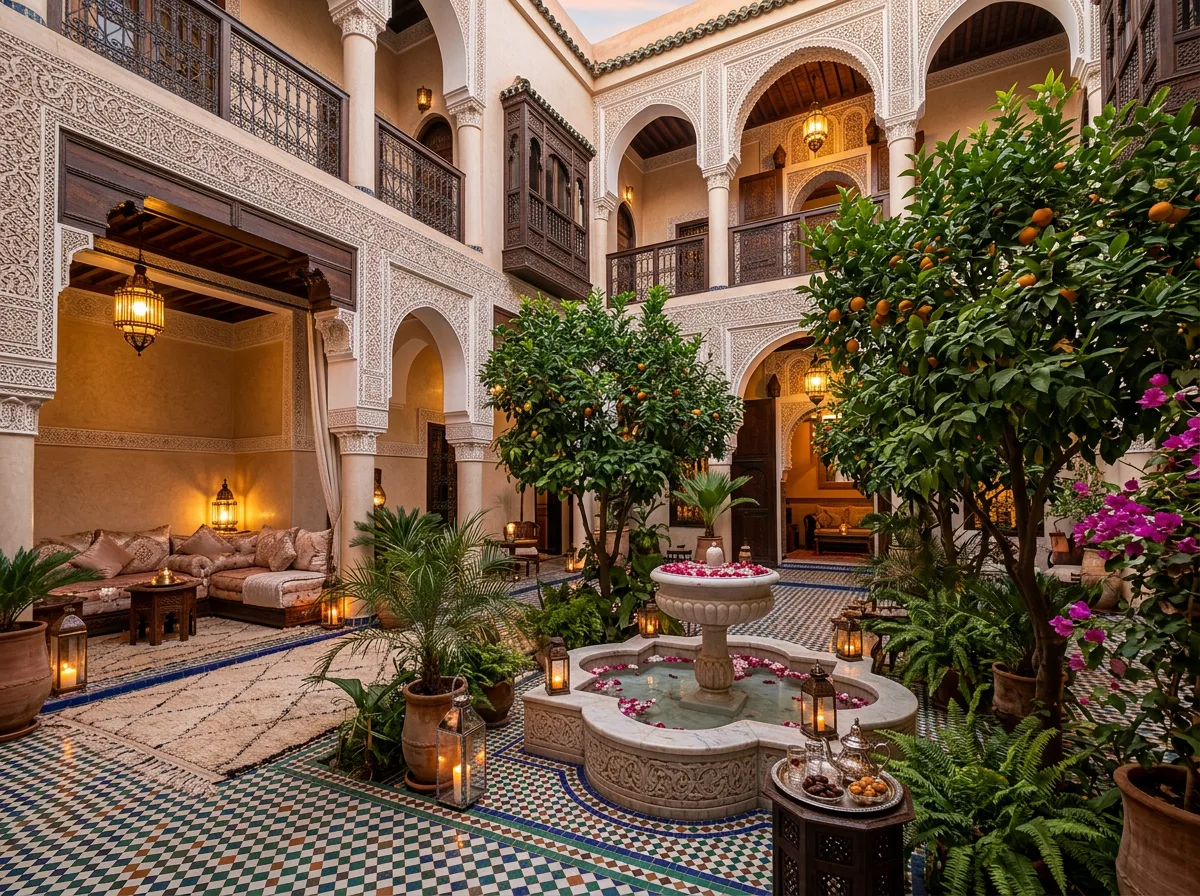
Tucked into the lanes of the northern medina, a short walk from the Ben Youssef Madrasa, the Maison de la Photographie de Marrakech is one of the city's most quietly rewarding museums. It occupies a restored riad — a traditional medina house arranged around a central courtyard — and is given over to a private collection of vintage photographs of Morocco, spanning roughly the 1870s to the 1950s. Across the rooms you find early studio portraits, scenes of Berber and city life, landscapes and street views, alongside old postcards and original glass-plate negatives, with an archive film of the Atlas often shown as part of the visit. The mood is calm and unhurried, and the building climbs to a celebrated rooftop terrace café with sweeping views over the medina rooftops towards the Atlas mountains — a lovely place to pause for mint tea or a light lunch. This guide covers the photographic collection and what it shows, the riad setting, the rooftop café and its views, how long to allow, photography, combining the visit with the Ben Youssef Madrasa and Marrakech Museum, and dress and etiquette in the medina. Opening hours and admission change, so always check current information before you travel.
The heart of the museum is a private collection of vintage photographs of Morocco, generally said to span from roughly the 1870s through to the 1950s. Displayed across the rooms of the riad, the images range from early studio portraits to candid scenes of daily life, gathered together to trace how the country and its people were seen and recorded over several decades. Because displays are curated and can be rotated, it is worth treating the exact selection on show as something to discover on arrival.
02Story
What the photographs show
The pictures broadly cover Berber and city life, early portraits, markets and trades, and landscapes and street scenes from across Morocco — from the medinas to the mountains and the south. Seen together, they offer a window onto a Morocco of the late 19th and early 20th centuries: faces, costumes, crafts and places, many of them now much changed. For visitors, the appeal is as much social and historical as artistic, a chance to slow down and look closely at another era.
03Highlight
Postcards and glass plates
Alongside the framed prints, the collection is known for historic postcards and original glass-plate negatives — the fragile photographic medium of the period before flexible film became standard. These objects show not only the subjects captured but the early craft of photography itself, and how images of Morocco circulated in postcard form. They add depth to the visit, turning it from a simple picture gallery into a small archive of how the country was photographed and shared.
04Highlight
The archive film of the Atlas
As part of the visit, the museum is well known for screening an old documentary film shot in the High Atlas, offering moving images to set beside the still photographs. It typically shows mountain communities and their way of life from earlier in the 20th century, and many visitors find it a quiet highlight. Screening arrangements can vary, so ask on arrival about where and when the film is shown so you can fit it into your visit.
05History
The restored riad setting
The museum is housed in a restored riad — a traditional Marrakech house built around an interior courtyard, with rooms opening off a central patio and stairways climbing through several floors to the roof. Moving up through the building, you pass from gallery to gallery in domestic-scale spaces, so the architecture is part of the experience as much as the photographs. It is a fine example of how a medina house can be carefully brought back to life and given a new public purpose.
06Highlight
The rooftop terrace café and its views
Crowning the riad is a rooftop terrace café, widely loved for its sweeping outlook over the medina rooftops towards the distant Atlas mountains. It is an inviting spot to stop for a glass of mint tea or a light lunch after the galleries, with a calm, away-from-the-crowds feel that many visitors remember as much as the collection itself. Menus and opening times can change, so check on the day, but the terrace is rightly one of the museum's signature pleasures.
07Tip
A tranquil escape from the souks
One of the museum's real charms is its atmosphere. After the press and bustle of the surrounding souks, the riad's quiet courtyards, soft light and unhurried galleries make it a genuine refuge in the heart of the medina. It suits anyone wanting a calm, cultural pause in a busy day of exploring — a place to slow down, look properly at the images and take a breath before heading back out into the lanes.
08Planning
Finding it in the medina
The Maison de la Photographie sits in the northern medina, close to the Ben Youssef Madrasa and the Marrakech Museum, down the narrow lanes that thread that quarter. As with many medina addresses, the entrance can be easy to miss, so following signs, a map or local directions helps. Its position makes it a natural addition to a circuit of the northern monuments rather than a detour, and the surrounding souks are part of the pleasure of reaching it.
09Planning
How long to allow
Most visitors find an hour or so comfortable to take in the galleries, watch part of the Atlas film and enjoy the rooftop terrace, though those who love photography or want a long, leisurely tea on the roof may happily stay longer. It pairs neatly with the nearby Ben Youssef Madrasa and Marrakech Museum to fill a relaxed half-day in the northern medina. Leave a little extra margin in high season, when the medina and its sights are at their busiest.
10Tip
Photography on your visit
Interior light in the riad is soft and even rather than bright, so a steady hand helps if you photograph the courtyards and stairways, while the rooftop terrace offers the most expansive views to capture. Rules on photographing the displayed works can differ from photographing the building, so check any current guidance at the entrance before snapping the collection. Being mindful of other visitors in the quiet galleries is appreciated.
11Planning
Combining with the madrasa and museum
Because it lies so close to the Ben Youssef Madrasa and the Marrakech Museum and Almoravid Koubba, the Maison de la Photographie slots easily into a single walking circuit of the northern medina. A common plan is to see the madrasa and museum cluster and then finish here, ending the morning or afternoon with tea on the rooftop. Each site is ticketed separately, so treat them as individual visits and confirm current hours and admission for each.
12Tip
Dress and etiquette in the medina
The museum is a cultural site rather than a place of worship, so visitors are welcome, but modest, respectful dress is appropriate in keeping with exploring the medina generally. Move calmly through the galleries, keep voices low in the quiet rooms, and be patient on the narrow stairways, which can be tight when busy. Treating the riad and its collection with care keeps the gentle, reflective atmosphere that makes the place special.
Frequently asked
What is the Maison de la Photographie de Marrakech?
The Maison de la Photographie de Marrakech is a museum in the northern medina, housed in a restored riad, dedicated to a private collection of vintage photographs of Morocco spanning roughly the 1870s to the 1950s. The displays include early portraits, scenes of Berber and city life, landscapes and street views, along with historic postcards and original glass-plate negatives, and an archive documentary film of the Atlas is often shown. The riad also has a celebrated rooftop terrace café with views over the medina to the Atlas. Displays are curated and hours and admission change, so check current information before you visit.
Is there a café at the Maison de la Photographie?
Yes. One of the museum's best-loved features is its rooftop terrace café, set on top of the restored riad with sweeping views over the medina rooftops towards the Atlas mountains. It is a popular spot to pause for mint tea or a light lunch after seeing the galleries, with a calm atmosphere away from the bustle of the souks. Menus and opening times can change, so check on the day, but the terrace is one of the museum's signature pleasures.
How long should I spend at the museum?
Most visitors find about an hour comfortable to take in the photographic galleries, watch part of the archive film of the Atlas and enjoy the rooftop terrace, though photography enthusiasts or anyone settling in for a long tea on the roof may stay longer. The museum sits close to the Ben Youssef Madrasa and the Marrakech Museum, so it pairs well with them for a relaxed half-day in the northern medina. Allow a little extra time in high season when the medina is busiest.
Can I combine it with the Ben Youssef Madrasa?
Yes. The Maison de la Photographie lies close to the Ben Youssef Madrasa and the Marrakech Museum and Almoravid Koubba in the northern medina, so it fits naturally into a single walking circuit of that quarter. A common plan is to visit the madrasa and museum cluster and then finish at the Maison de la Photographie, rounding off the visit with tea on its rooftop terrace. Each site is ticketed separately, so confirm current opening hours and admission for each before you go.
See it with a local
Turn this into a private Marrakech trip.
We'll build a private, guided plan around the experiences you care about — with a driver, hand-picked riads and a written quote in 24 hours.