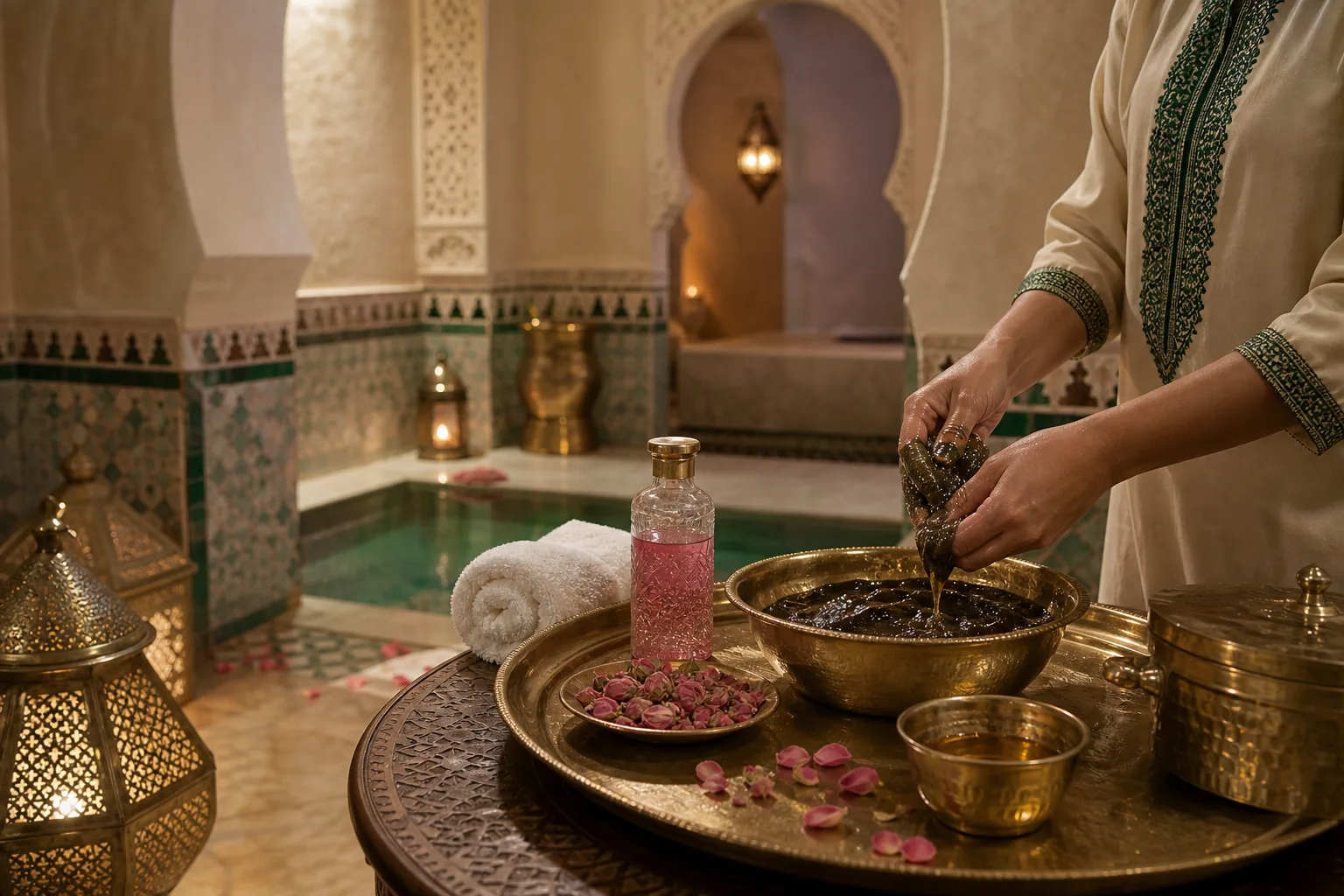
The hammam — a steam bathhouse — is one of the most deeply rooted rituals in Moroccan life, a place of cleansing, relaxation and community that long predates the modern spa. In Marrakech you can experience it two ways. A public neighbourhood hammam is the very local version: cheap, basic, gender-separated by time or space, with mostly Arabic (and Darija) spoken, where regulars bring their own kit and wash themselves over a slow, steamy hour. A private riad or spa hammam is the calmer, guided version, usually sold as a treatment package with an attendant who performs the ritual for you. Either way the heart of the experience is the same: warmth and steam to open the pores, an application of savon beldi (the olive-based 'black soap'), and then a brisk exfoliating scrub with a coarse kessa glove that lifts away dead skin, often followed by a rhassoul clay mask, a rinse and an argan-oil massage. This guide explains public versus private hammams, walks through the ritual step by step, covers what to bring and wear, etiquette and tipping, who it suits, and where to go in the medina or Gueliz. Prices, opening hours and exactly what each spa includes vary widely, so always check current details before you go.
A hammam is a traditional steam bathhouse, and for centuries it has been central to everyday Moroccan life — a place to get properly clean, to relax, and to socialise. Public hammams are woven into neighbourhood life across Marrakech, often sitting near a mosque, and visiting one is as much a cultural experience as a wash. Understanding that it is first and foremost a local ritual, rather than a tourist attraction, helps you approach it with the right mindset and respect.
02Planning
Public neighbourhood hammam vs private spa hammam
There are two broad choices. A public neighbourhood hammam is very local and inexpensive, with basic facilities, separate hours or sections for men and women, and mostly Arabic spoken; you generally wash yourself or pay a little extra for an attendant to scrub you. A private riad or spa hammam is calmer and more guided, typically sold as a treatment package where an attendant performs the ritual for you in a quieter, more comfortable setting. Public is raw and authentic; private is gentler and easier for first-timers — choose by how immersive you want it to be.
03Highlight
The ritual, step by step
The core ritual follows a clear sequence. You start in a warm, steamy room to open the pores, then savon beldi (black soap) is applied and left to soak in for several minutes. Next comes the gommage: a vigorous scrub with a coarse kessa glove that sloughs away dead skin — this is the heart of the experience. A rhassoul clay mask often follows, then a thorough rinse with warm water, and many treatments finish with an argan-oil massage. In a private spa each stage is done for you; in a public hammam you may do much of it yourself.
04Highlight
Savon beldi — the black soap
Savon beldi is a soft, dark, olive-oil-based soap, often called 'black soap', and it is fundamental to the hammam. It is smoothed over the skin and left to sit in the steam for several minutes so it softens the surface and prepares it for scrubbing. Mild and naturally derived, it leaves skin feeling notably clean and supple. You can buy it in the souks and herbalist stalls if you want to take some home or bring your own to a public hammam.
05Highlight
The kessa glove and the gommage scrub
The kessa is a coarse exfoliating glove, and the gommage is the brisk full-body scrub performed with it after the black soap has soaked in. It lifts away dead skin and leaves you feeling remarkably smooth — but be honest with yourself: the scrub is firm and energetic, and first-timers are sometimes surprised by how vigorous it is. That intensity is normal and part of the point; if it ever feels too strong, it is perfectly fine to ask the attendant to ease off.
06Highlight
The rhassoul clay mask and argan-oil finish
Many hammam treatments include a rhassoul (ghassoul) clay mask, a mineral-rich Moroccan clay applied after the scrub to cleanse and soften the skin before rinsing. A spa ritual often finishes with a massage using argan oil, the prized Moroccan oil pressed from the argan tree, which nourishes the freshly exfoliated skin. The exact combination of mask, oils and massage varies from place to place, so check what a given package includes rather than assuming.
07Tip
What to bring and what to wear
Modesty is the norm, so most people wear swimwear or underwear rather than going fully nude; in a private spa you will usually be told what to wear. For a public neighbourhood hammam you typically bring your own kit — black soap, a kessa glove, a towel, flip-flops, a change of underwear and any toiletries you want — since these are not always provided. Private and riad spas generally supply everything as part of the treatment, so you can arrive with very little.
08Tip
Etiquette and tipping
Behave with the modesty and calm that suits a shared, often gender-separated space: keep covered as expected, be considerate of others, and follow the lead of staff and regulars. If an attendant scrubs or massages you, a tip on top of the price is customary and appreciated, with the amount left to your discretion. Photography is generally not appropriate inside a hammam, out of respect for other bathers' privacy.
09Tip
Who a hammam suits — and first-time honesty
A hammam suits most travellers who want to relax and experience an authentic Moroccan ritual, and it leaves your skin wonderfully smooth. Be ready for heat, steam and a brisk scrub: the gommage is meant to be vigorous, and that is normal. If you have a medical condition, are pregnant, or are unsure whether the heat suits you, it is sensible to check with the spa or your doctor first, and to tell the attendant if anything feels too hot or too rough.
10Planning
Where to go — medina vs Gueliz
You will find hammams across the city. The medina has both very local public neighbourhood hammams and atmospheric riad and spa hammams tucked into traditional houses, ideal if you want the most traditional setting. Gueliz, the newer town, leans towards modern spas and hotel wellness centres with a more contemporary feel. Choose the medina for authenticity and atmosphere, or Gueliz for a polished, modern spa experience — and always confirm current hours, prices and whether booking is needed.
11Planning
Combining a hammam with the rest of your day
A hammam works beautifully as a way to unwind after busy days in the souks or on a day trip to the Atlas Mountains or Agafay Desert, and many travellers save it for the afternoon or early evening. Allow enough time — a full ritual with steam, scrub, mask and massage is not something to rush — and avoid scheduling anything demanding straight afterwards, since you will feel relaxed and a little drowsy. Check opening hours in advance, as public and private hammams keep different schedules.
Frequently asked
What happens during a Moroccan hammam?
You begin in a warm, steamy room to open the pores, then savon beldi (olive-based black soap) is applied and left to soak in for several minutes. After that comes the gommage — a vigorous scrub with a coarse kessa glove that removes dead skin — usually followed by a rhassoul clay mask, a warm rinse, and often an argan-oil massage. In a private spa an attendant performs each step for you; in a public neighbourhood hammam you often do much of it yourself.
What is the difference between a public hammam and a spa hammam?
A public neighbourhood hammam is very local and inexpensive, with basic facilities, separate hours or sections for men and women, mostly Arabic spoken, and regulars who bring their own soap, glove and towel. A private riad or spa hammam is calmer and more guided, usually sold as a treatment package where an attendant carries out the ritual in a quieter, more comfortable setting and provides the products. Public is more authentic and raw; private is gentler and easier for first-timers.
What should I bring and wear to a hammam?
Modesty is normal, so most people wear swimwear or underwear rather than going nude. For a public hammam you usually bring your own kit: black soap, a kessa exfoliating glove, a towel, flip-flops, a change of underwear and any toiletries, since these are not always provided. Private and riad spas generally supply everything as part of the treatment, so you can arrive with very little. If you are unsure, ask what is provided when you book.
Does the hammam scrub hurt, and is tipping expected?
The gommage scrub with the kessa glove is brisk and energetic, and first-timers are often surprised by how vigorous it is — that intensity is normal, and you can always ask the attendant to ease off if it feels too strong. It is not meant to be painful, and afterwards your skin feels very smooth. If an attendant scrubs or massages you, a tip on top of the price is customary and appreciated, with the amount left to your discretion.
See it with a local
Turn this into a private Marrakech trip.
We'll build a private, guided plan around the experiences you care about — with a driver, hand-picked riads and a written quote in 24 hours.