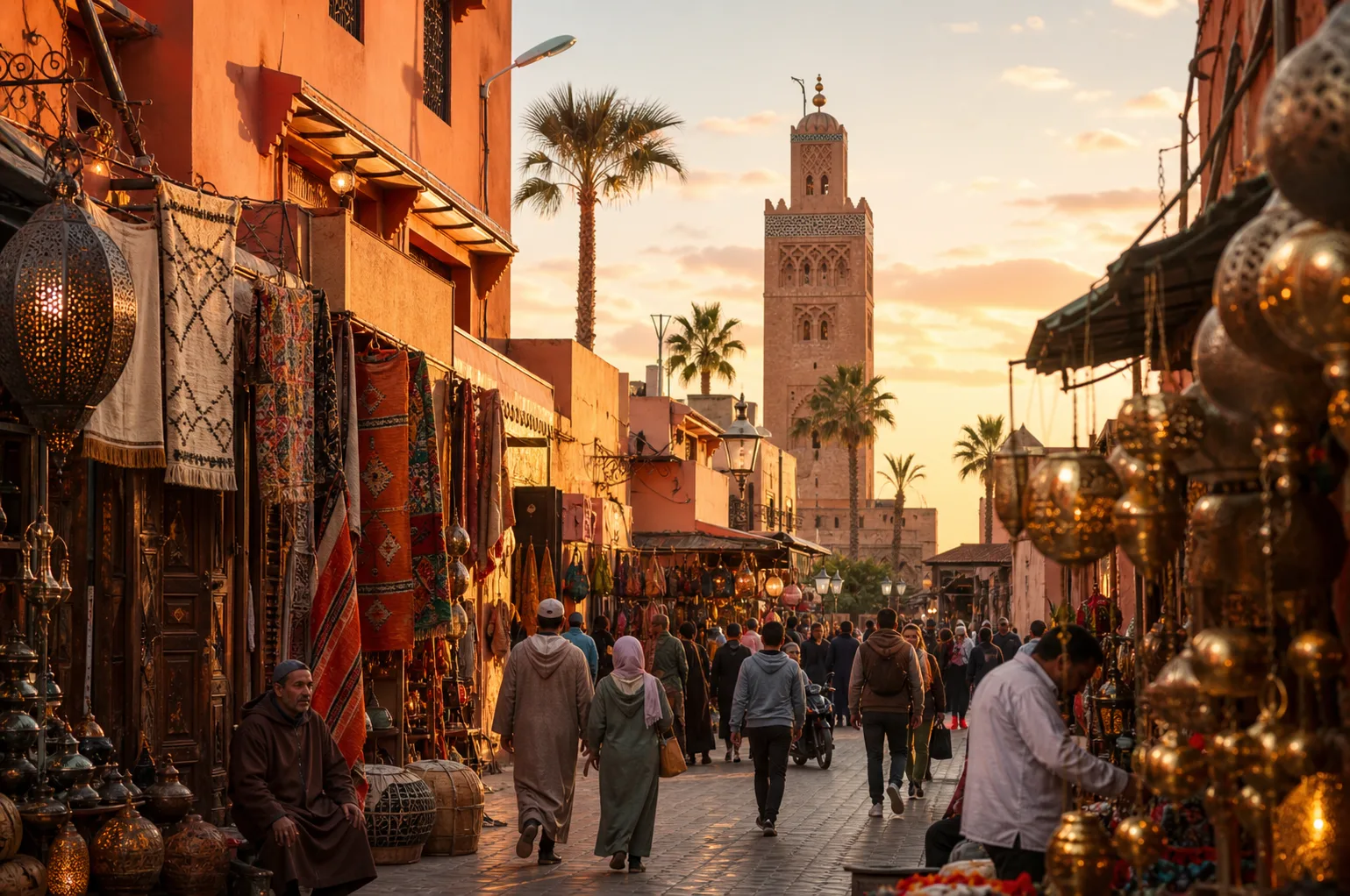
The Saadian Tombs are a small but exceptional 16th-century royal necropolis in the Kasbah quarter of the Marrakech medina, beside the Kasbah Mosque. Built during the Saadian dynasty, the burial ground holds members of the ruling family in a pair of richly decorated mausoleums set around a garden scattered with graves. After the dynasty fell, the site was largely walled off and faded from public view for centuries, before being rediscovered and opened to visitors in the early 20th century — commonly dated to around 1917. Its masterpiece is the Chamber of the Twelve Columns, with Carrara marble columns, intricately carved cedar and stucco and muqarnas vaulting, sheltering the tomb of Sultan Ahmad al-Mansur. This guide covers what to see, the main chamber, the garden graves, how to handle the crowds and narrow entrance, how long to allow and how to combine the visit with the Kasbah, Bahia and El Badi. Ticket prices and opening hours change, so always check current information before you travel.
The undisputed masterpiece of the site, this domed mausoleum takes its name from the twelve columns of imported Italian Carrara marble that frame it. Beneath an elaborate carved-cedar dome and muqarnas (honeycomb) vaulting, the walls layer carved stucco and zellige tilework into one of the finest interiors of Saadian-era Morocco. At its centre lies the tomb of Sultan Ahmad al-Mansur, the dynasty's most powerful ruler, surrounded by the graves of his family.
02History
The tomb of Sultan Ahmad al-Mansur
Ahmad al-Mansur, who reigned in the late 16th century, was the wealthy and ambitious sultan under whom the Saadian dynasty reached its height — and who is associated with the grand El Badi Palace nearby. He is buried in the central chamber, and the lavishness of the marble, cedar and stucco around his tomb was intended to signal the prestige of his line. Standing here ties the necropolis directly to the city's wider Saadian monuments.
03Highlight
The Chamber of the Three Niches
The second main mausoleum, the Chamber of the Three Niches (sometimes called the Hall of the Three Alcoves), is smaller but still richly worked, with carved stucco, tiled dados and a decorated ceiling. It holds further graves of the royal household. Together with the Twelve Columns chamber it forms the decorated core of the site, and it rewards a slow look at the craftsmanship even though it is easy to overlook beside its more famous neighbour.
04Garden
The garden and the graves
Around the mausoleums lies a modest planted garden dotted with many tombs, marked by carved and tiled grave-slabs at ground level. These open-air graves hold soldiers, servants and members of the wider household, and the greenery and quiet make this a calmer counterpoint to the busy chambers. Wander the paths to take in the scale of the necropolis as a whole rather than only its two showpiece interiors.
05Story
A site sealed for centuries, then rediscovered
When the Saadian dynasty was supplanted, the tombs were largely walled off and effectively hidden for a long period, which is part of why their decoration survived so well. The site was brought back to public attention and opened to visitors in the early 20th century, a date commonly given as around 1917. Knowing this history adds to the visit: you are walking through a complex that spent generations out of sight.
06Tip
The narrow entrance passageway
Access is via a single narrow passageway leading in from beside the Kasbah Mosque, a legacy of the site having been sealed off in the past. Because everyone enters and exits through this tight corridor, it can become a pinch point, and queues form here at busy times. Factor the entrance into your planning — at peak hours the wait to get in and to reach the chambers is often the slowest part of the visit.
07Tip
Expect queues at the main chamber
The Chamber of the Twelve Columns is viewed from a railed vantage point rather than entered, so visitors bunch up to look in and photograph it. With the famous interior and limited viewing space, a line typically forms here even when the rest of the site is quiet. Be patient, let the group ahead take their photos, and you will get your turn at the best vantage point without the crush.
08Tip
Go early to beat the crowds
The necropolis is compact and one of the Kasbah's most visited sights, so it fills quickly once tour groups arrive. The calmest visits are usually right at opening, before the coach and walking tours build up at the narrow entrance and the main chamber. Arriving early also gives you softer light in the garden and a better chance to appreciate the chambers without a queue behind you.
09Tip
Photography in the chambers and garden
The carved cedar, stucco and tilework of the chambers are highly photogenic, but light inside is dim and the viewing points are crowded, so a steady hand and patience help. The garden and grave-slabs photograph well in gentle morning light. Be considerate at the railed vantage to the Twelve Columns chamber where everyone wants the same shot, and check any current rules on tripods or professional shoots at the entrance.
10Planning
How long to allow
The site itself is small, and many visitors spend roughly thirty to forty-five minutes once inside, taking in the two chambers and the garden. The real variable is the wait: at busy times the queue at the narrow entrance and the main chamber can add significantly to your visit. Allow extra time in high season, or go early, so the queues do not eat into the rest of your day in the Kasbah.
11Planning
Combining with the Kasbah, Bahia and El Badi
The tombs sit in the Kasbah quarter at the southern end of the medina, beside the Kasbah Mosque and within easy walking distance of the El Badi Palace and the Bahia Palace. Many visitors string these together into a single half-day of Saadian and palace history, often adding a wander through the Kasbah and the Mellah. Doing them in one loop makes sense geographically; check each site's current hours so you can sequence them without backtracking.
Frequently asked
What are the Saadian Tombs and who is buried there?
They are a 16th-century royal necropolis of the Saadian dynasty in the Kasbah quarter of Marrakech, beside the Kasbah Mosque. The burial ground holds rulers and members of the royal household across two decorated mausoleums and a garden of graves. The most famous tomb is that of Sultan Ahmad al-Mansur, the dynasty's most powerful ruler, who lies in the marble-columned main chamber.
Why were the Saadian Tombs hidden, and when did they open?
After the Saadian dynasty was supplanted, the site was largely walled off and effectively sealed for a long period, which helped preserve its decoration. It was rediscovered and opened to the public in the early 20th century, a date commonly given as around 1917. That long concealment is part of why the carved cedar, stucco and tilework survived in such good condition.
How long should I spend at the Saadian Tombs, and are there queues?
The site is small, so the chambers and garden themselves take most visitors about thirty to forty-five minutes. Because access is through a single narrow passageway and the famous Chamber of the Twelve Columns is viewed from a railed vantage point, queues often form at the entrance and the main chamber. Going early, or in quieter periods, keeps the waiting time down.
What can I combine with a visit to the Saadian Tombs?
The tombs are in the Kasbah quarter beside the Kasbah Mosque, within walking distance of the El Badi Palace and the Bahia Palace. Many visitors do all of these as a single half-day of Saadian and palace history, often adding a wander through the Kasbah and the nearby Mellah. Always check current opening hours and ticket prices for each site before you set out so you can sequence them efficiently.
See it with a local
Turn this into a private Marrakech trip.
We'll build a private, guided plan around the experiences you care about — with a driver, hand-picked riads and a written quote in 24 hours.