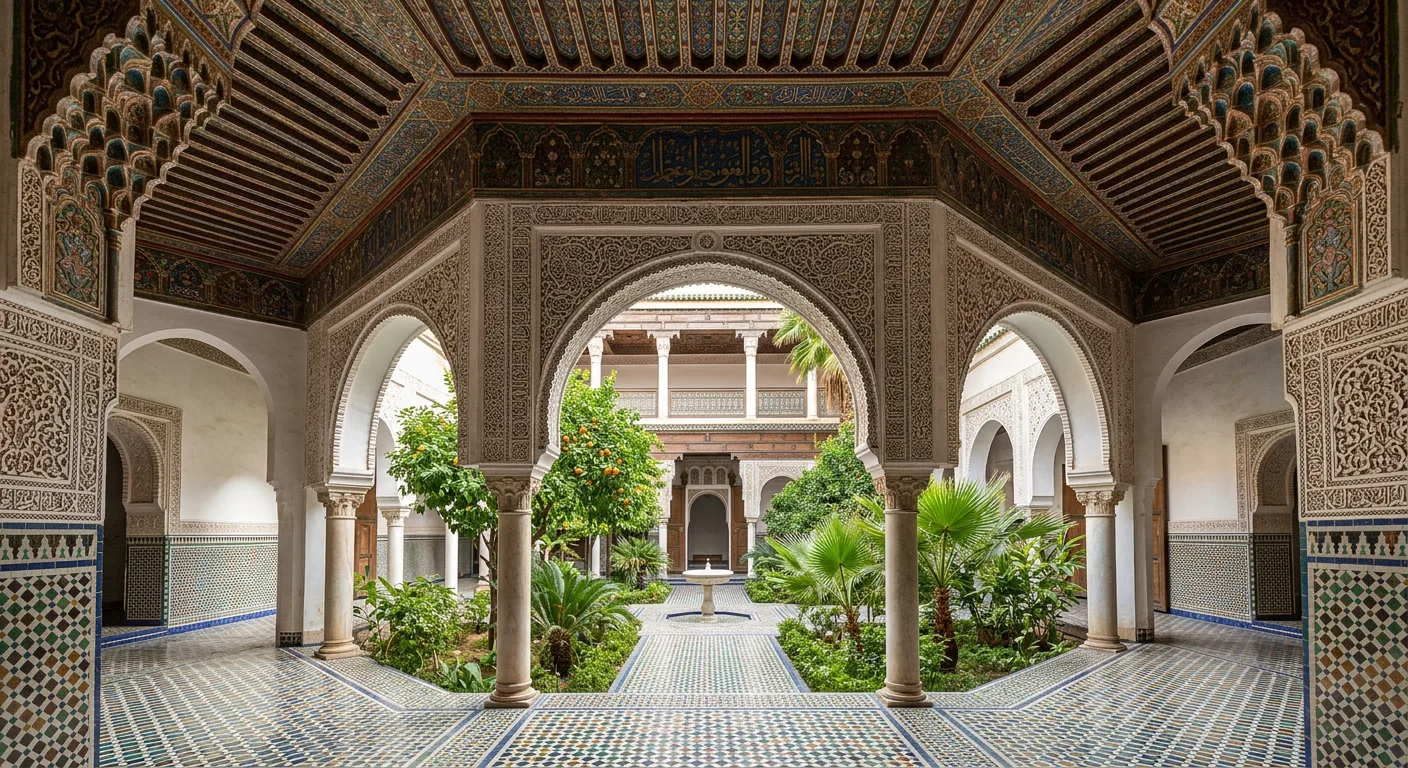
Two of Marrakech's most visited palaces stand only a short walk apart in the Kasbah and Mellah quarter, but they could hardly be more different. The Bahia Palace is a restored, intact palace built in the late 19th century, conceived as one of the grandest of its day: you walk through richly decorated rooms and tranquil courtyards, past intricate zellij tilework, painted and carved cedar ceilings and finely worked stucco, with a riad-style garden at its heart. Its name is usually translated as 'the beautiful', and the palace lives up to it through sheer ornament and craftsmanship. El Badi Palace tells the opposite story. Built in the late 16th century under the Saadian dynasty as a palace of legendary splendour, it was later stripped, and today survives as monumental ruins — an enormous sunken courtyard set with sunken orange groves and reflecting pools, ringed by towering pisé (rammed-earth) ramparts where storks nest, with underground passages below and the restored Koutoubia minbar displayed in a pavilion. One palace is intact and decorated; the other is vast, ruined and atmospheric. Many visitors, given how close they sit, simply do both.
Option A
Bahia Palace
An intact, richly decorated late-19th-century palace — zellij, painted cedar and tranquil courtyards
Best for
Visitors who want ornate interiors, craftsmanship and walkable, decorated rooms
Option B
El Badi Palace
A vast 16th-century Saadian palace now in monumental ruins — sunken courtyard, ramparts and storks
Best for
Visitors drawn to grand open-air ruins, atmosphere, ramparts and rooftop views