The desert tour from Marrakech — over the Tizi n'Tichka pass, through the kasbahs and gorges, and out to the Sahara at Merzouga — is one of the world's great overland journeys. This guide covers every stage, from day-trip to five-day circuit, with real timings and practical advice.
Itineraries · Updated June 2026 · 6 min read
How long does a desert tour from Marrakech take?
The distance from Marrakech to Merzouga (Erg Chebbi dunes) is approximately 560 km one-way via the N9 Tizi n'Tichka pass and Ouarzazate. A full circuit — Marrakech out, Merzouga, return via a different route — covers roughly 1,100–1,200 km. The standard tour runs three to five days; three days is the bare minimum to reach the dunes and return without the journey feeling entirely rushed.
Most travellers choose either a private driver-guide for full flexibility or a small-group shared tour departing daily from Marrakech's Djemaa el-Fna area. Private tours allow you to control stops and pacing; shared tours are more economical and fine for solo travellers comfortable with a fixed itinerary.
- 1-day: dunes not reachable — only Ouarzazate and Aït Ben Haddou are feasible.
- 2-day: reaches Merzouga but the return journey is punishing with no overnight in the dunes.
- 3-day: the standard — Marrakech → Aït Ben Haddou → Dades → Merzouga → Marrakech.
- 4–5 day: adds Todra Gorge, Drâa Valley, Erg Chigaga or proper Atlas trekking.
What is the route from Marrakech to the Sahara?
The classic outbound route crosses the High Atlas via the Tizi n'Tichka pass (2,260 m), the highest paved mountain pass in Morocco. The road climbs through Berber villages and pine forests before descending into the pre-Saharan plains around Ouarzazate. After an optional stop at the UNESCO-listed ksar of Aït Ben Haddou — a mud-brick fortified village used as a film set for Gladiator, Game of Thrones and Lawrence of Arabia — the route follows the Valley of a Thousand Kasbahs south-east through Skoura, the Dadès Gorge and the Rose Valley towards Merzouga.
Many tours take a different return route via Rissani, Er Rachidia and the Ziz Valley, avoiding repetition and offering a different perspective on the Moroccan south. Some operators extend the circuit to include Erg Chigaga (reached via M'Hamid, to the west of Merzouga), a more remote and less-visited dune field that requires a 4WD for the final piste approach.
What should you expect at the Sahara?
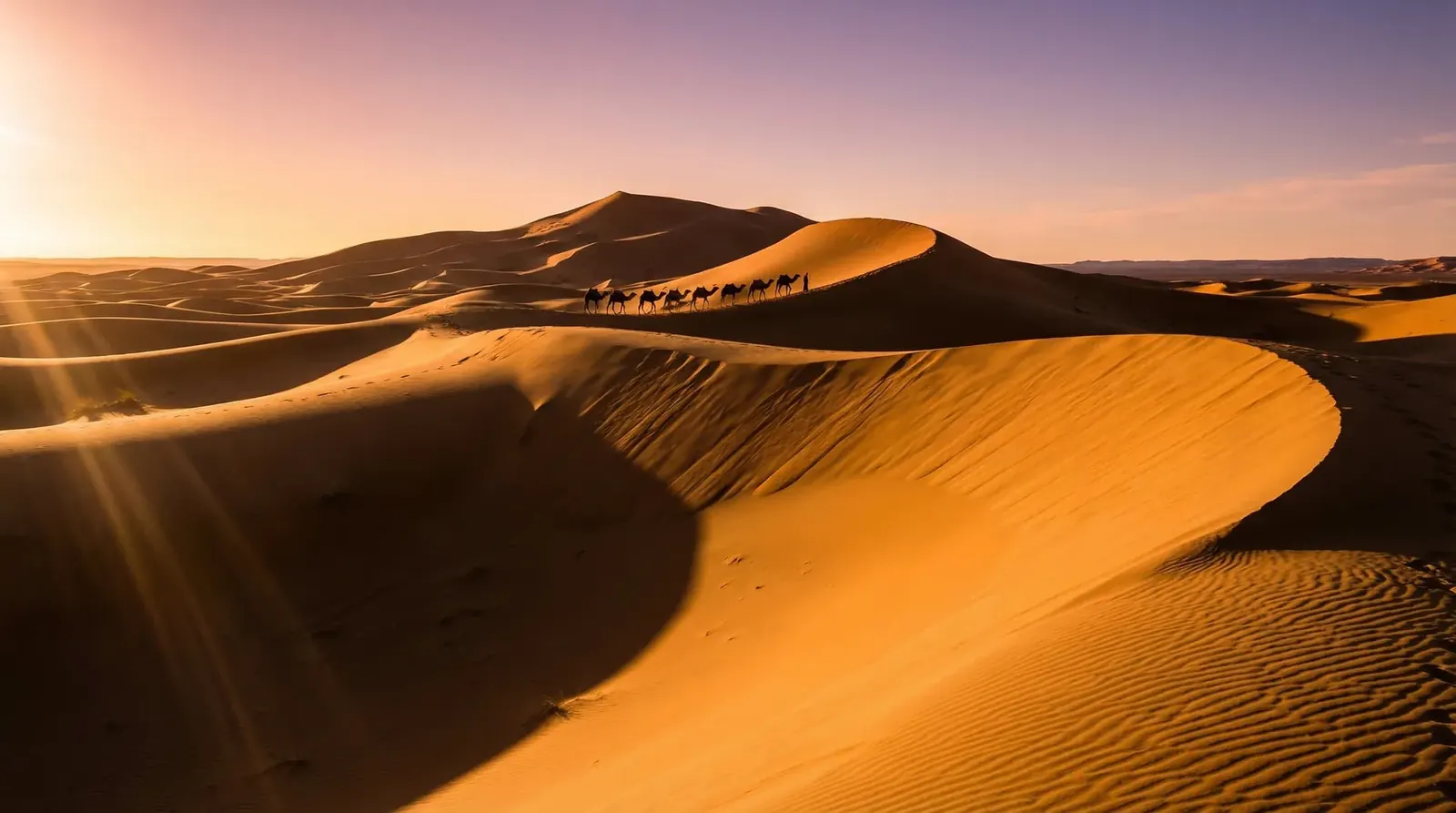
At Merzouga, the Erg Chebbi dune field rises directly from the flat hammada (stony desert) to a height of up to 150 m. The main activity is a late-afternoon camel trek to a desert camp, where dinner and live Gnaoua drumming fill the evening under a spectacular star canopy. Sunrise from the top of a dune — before the wind rises and the heat builds — is the moment most travellers cite as the highlight of their Morocco trip.
Camps range from basic tented affairs to luxury glamping with private ensuite tents, heated showers and gourmet tagines. The choice of camp significantly affects the experience; a private driver-guide can advise on which camp suits your group. In midsummer (July–August), daytime temperatures in Merzouga exceed 45°C and the experience is physically demanding; October to April is the ideal Sahara window.
- Sunrise or sunset dune climb: 30–60 minutes each way on foot; the view from the crest is worth it.
- Camel trek: 45–90 minutes each way; dromedaries (one hump) are comfortable for most adults.
- Sandboarding: basic boards available at most camps; conditions vary by wind.
- Quad biking: widely offered but noisy and disruptive to the dune environment — a personal choice.
What does a desert tour from Marrakech cost?
Private 3-day tours with a driver-guide, accommodation (2 nights in guesthouses or riads en route + 1 desert camp night) and all breakfasts are priced on request, with a written quote within 24 hours; four- and five-day private tours add a more comfortable camp and extra stops. Budget shared-group tours from other operators using mid-range guesthouses cost around US$150–200 per person for three days.
Luxury options — private driver-guide, boutique kasbahs for accommodation and a top-tier luxury camp at the dunes — are quoted the same way: tell us the dates and the camp you want, and you get one written, all-in price.
Practical tips for the Marrakech desert tour
Book your Marrakech accommodation flexibly: a reputable riad in the medina will hold your bags while you are on the desert circuit and let you check back in on your return without requiring a booking for each night. Bring cash in local currency for guesthouses that do not accept cards and for any roadside stops. ATMs at Ouarzazate and Zagora are reliable; Merzouga village has a basic ATM that sometimes runs low on cash.
Pack a scarf or shemagh for the desert — sand gets into everything. A head torch is essential for navigating camp in the dark. Leave valuables locked in your car or the riad safe; there is no security risk at camps but there is no need to carry them.
- Depart Marrakech early (07:00–08:00) to reach Aït Ben Haddou before midday crowds.
- Tizi n'Tichka pass closes in heavy snow (Jan–Feb) — check conditions in winter.
- The road from Ouarzazate to Merzouga is fully paved; no 4WD needed on the standard route.
- Book the desert camp in advance for October–March — demand is high during peak season.