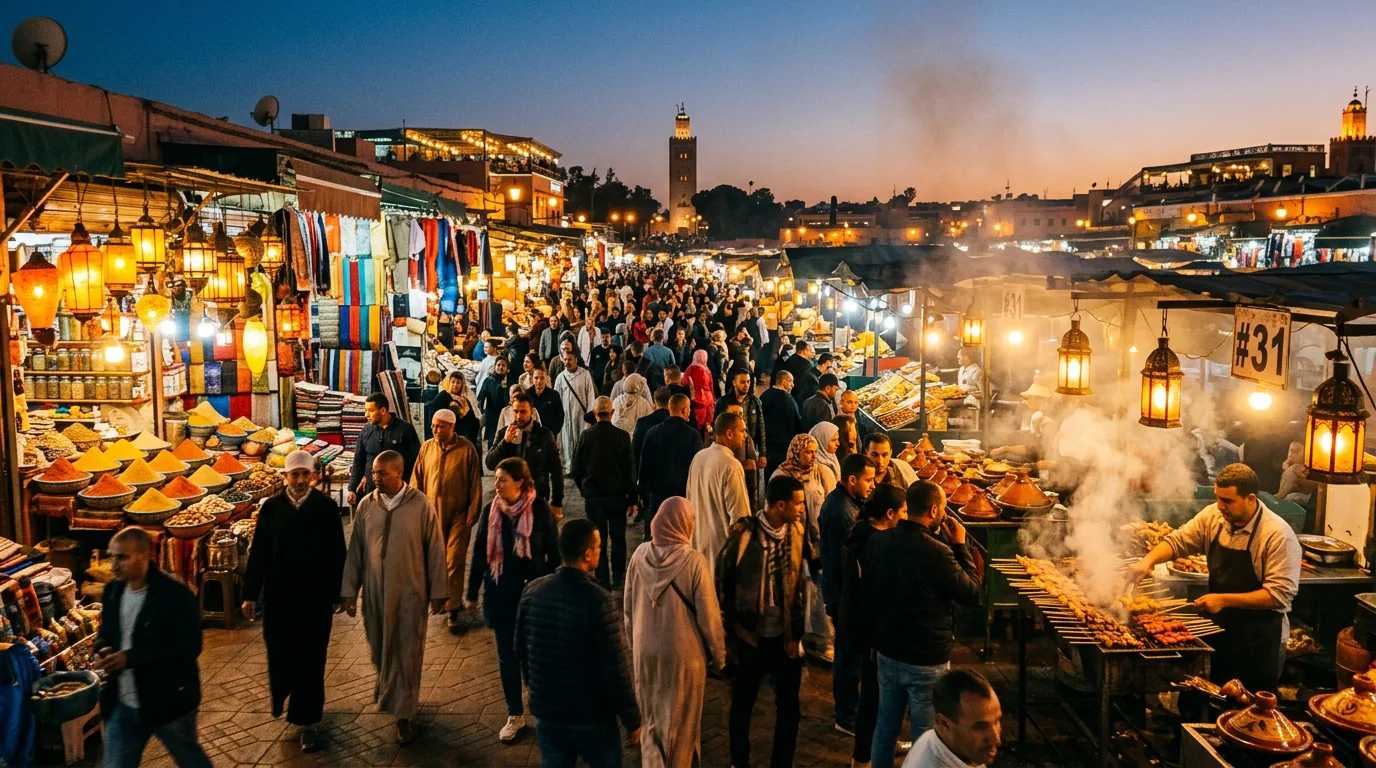
Huge numbers of women travel to Marrakech solo and in small groups every year. The city is safe, but the attention in the souks is real — knowing what to expect and how to handle it is the difference between a wearing trip and a thoroughly rewarding one.
In this guide
The honest reality of harassment
Solo women in the Marrakech medina — especially in the souks north of Jemaa el-Fna — will almost certainly meet unsolicited attention: comments, men attaching themselves as unofficial 'guides', and persistent shopkeepers. It is tiring, and it is harassment. It is, however, rarely threatening, and the overwhelming majority of Marrakchis are warm and respectful. In terms of violent crime, the medina, Gueliz and Hivernage are genuinely safe.
Confidence and purpose are your best tools: walk as though you know exactly where you are going (even when the souk has you completely turned around), meet eye contact briefly and move on, and say 'la shukran' (no, thank you) once without engaging further. A long reply — friendly or sharp — tends to encourage rather than deter.
Dress and behaviour
Covering shoulders and knees in the medina, the souks and on day trips into the Atlas villages is both respectful and practically effective — it noticeably reduces unwanted attention. A lightweight scarf that can drape over the shoulders is the single most useful thing you can pack. You do not need to cover your hair, and in Gueliz and Hivernage plenty of Marrakchi women dress in contemporary western styles.
On day trips to Essaouira or at a poolside riad or an Agafay camp, dress codes relax considerably. Save the swimsuit for the riad plunge pool or the beach, and throw something over it for the walk back into the medina or town.
Practical strategies for solo travel
Pre-booking a licensed private driver and guide removes most of the friction: no petit-taxi haggling, no false-guide approaches at the souk entrances, no arrivals-hall scrum at RAK airport. For exploring the medina, hiring a female guide gives you company, context and a natural social buffer through the busiest lanes. Ask your riad to arrange one — vetted female guides are well established in Marrakech.
Getting out to other cities by train is comfortable and well used by local women; the Marrakech–Casablanca–Rabat line is fast and frequent. Book an air-conditioned first-class carriage — the reserved seats and mixed clientele make it especially easy. For Essaouira and Agadir, the Supratours and CTM coaches from near the train station are equally reliable.
Female guides and women-led experiences
Marrakech has a growing community of licensed female guides. A woman guide threads the souks fluidly, can take you into spaces a male guide sometimes cannot — a henna artist's workshop, the women's side of a neighbourhood hammam, a family kitchen for a cooking class — and offers a very different read on daily life in the medina. We are always happy to match clients with a female guide on request.
Frequently asked
Is Marrakech safe for solo female travellers?
Yes, in the sense that violent crime against women tourists is rare and the city is thoroughly set up for international visitors. Verbal harassment and persistent attention in the souks is real, though. Most women who travel Marrakech solo come away positive — the trick is managing expectations and leaning on practical strategies (private transport, a licensed guide, modest dress) rather than steering clear of the city.
What should women wear in Marrakech?
Loose, breathable clothing that covers shoulders and knees is the practical baseline for the medina, the souks and Atlas day trips. A scarf is invaluable. Poolside riads, Agafay camps and Essaouira are more relaxed. You do not need to cover your hair.
Can I get a female guide in Marrakech?
Yes. Licensed female guides work throughout Marrakech and increasingly on Atlas and Ourika excursions. Ask your riad or tour operator to arrange one — in many situations they make for a richer experience.
Is it safe to walk alone in the Marrakech medina?
During the day, the main souk lanes and Jemaa el-Fna are perfectly safe — thousands of women tourists walk them daily. The deep, quiet residential derbs are easy to get lost in; stick to the main routes or take a guide. After dark, use an arranged transfer rather than picking through unlit alleys.
What is the best way to deal with unwanted attention?
Say 'la shukran' (no, thank you) once, calmly and clearly, then keep walking without further engagement. Avoid extended eye contact, do not shout back, and do not feel obliged to justify yourself. Confidence and a purposeful stride are highly effective.
Planning a trip?
Let a Marrakech atelier handle the details.
Tell us your dates and style and we'll send a written itinerary and a transparent quote within 24 hours.
Request an itineraryKeep reading
Planning
Is Morocco Safe to Visit?
Yes — Marrakech is a well-trodden, welcoming city with a tourism industry built around visitors. The realistic day-to-day concerns are petty scams and the famous medina hustle around Jemaa el-Fna and the souks, both easily managed once you know the patterns.
Practical
What to Pack for Morocco
Pack light, modest and layered. A Marrakech trip swings from hot medina days to cool rooftop dinners and genuinely cold Agafay or Atlas nights, so breathable layers, broken-in walking shoes and one warm top cover almost everything.
Culture
Morocco Etiquette & Customs
A little cultural awareness goes a long way in Marrakech. Dress modestly for the medina, greet warmly, ask before photographing people in the souks, use your right hand, and lean into the unhurried rhythm of mint tea and conversation.