Travelling Morocco on your own is rewarding, easy on the wallet and entirely doable — countless people set off solo every year. It asks for slightly sharper awareness than a group trip, but the freedom to set your own pace, and the encounters that follow, simply cannot be bought on a coach tour.
Planning · Updated June 2026 · 6 min read
Is Morocco safe for solo travellers?
Among North African countries Morocco is one of the easiest for independent travellers, and a huge number arrive alone each year. Serious crime against visitors is uncommon. What you will run into are the familiar medina rhythms that catch every first-timer — the unasked-for 'guide', the helpful stranger steering you somewhere, the vendor who will not let go — but these are friction, not danger. A bit of confidence, a little awareness and a handful of practical habits defuse almost all of it.
Women travelling alone draw extra attention: comments, the odd follower through the souks. It is wearing and it is real, though rarely threatening. Booking your transport ahead, hiring licensed guides and dressing on the modest side all dial it down noticeably. Men travelling solo tend to be approached less and move through the lanes more freely. Either way, the rewards open up the moment you slip past the tourist-facing crust of a place like the Marrakech medina.
What are the best places for solo travellers in Morocco?
Essaouira is the one nearly every solo traveller falls for: a medina small enough to never truly lose you, a gentle pace, and a salty-air sociability that throws strangers together easily. Chefchaouen is much the same — walkable, friendly, full of guesthouses where the shared table does the introductions for you. Fes pays back anyone who hires a licensed guide; its labyrinth defeats the unaccompanied, but those who commit usually call it the most absorbing city in the country.
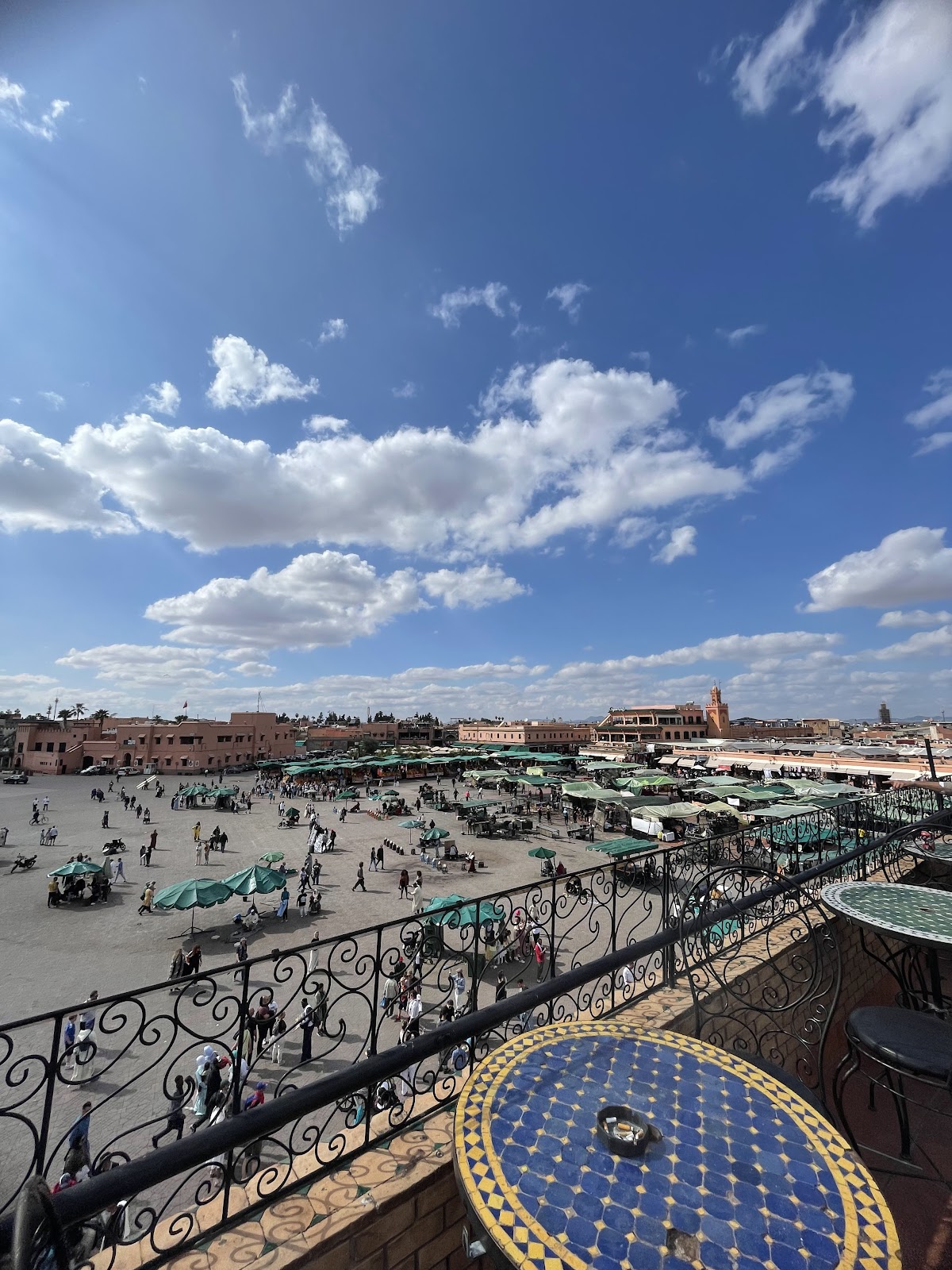
Marrakech is a superb solo city that simply demands a little recalibration. The Jemaa el-Fna is high-voltage, the medina lanes coil back on themselves, and the density of touts around the headline sights runs higher than anywhere else. Give it a day to find your feet, though, and it turns into a wonderful place to wander alone — the quieter quarters off the main drag hold endless reward once the initial overwhelm fades.
- Essaouira: the gentlest solo base — compact medina, easy traveller community, safe.
- Chefchaouen: unhurried mountain town with excellent, affordable guesthouses.
- Fes: the deepest solo experience — but hire a licensed guide for the medina.
- Marrakech: intense at first; tricky to navigate alone day one, hugely rewarding once oriented.
- The High Atlas (Imlil): solo trekking works well with a licensed guide; the Berber villages are warm.
How do you manage accommodation as a solo traveller in Morocco?
A riad is the natural solo home: the communal breakfast and the rooftop terrace do the social work for you, and the staff — who often double as your unofficial guide to the neighbourhood — quickly learn your name. Plenty of riads keep single rooms at rates below their doubles, so always ask specifically for the single price rather than assuming you are stuck paying for two.
If you are on a tight budget, look at the hostel scene that has grown up across Marrakech and Fes — dorms and shared lounges make going solo both cheaper and more sociable, and several of the best have opened inside converted riad buildings, marrying old courtyards to modern bunk-room comforts. For the Sahara, joining a small-group run (four to eight people) for the desert leg is the economical move; the single supplement on a fully private desert tour is steep.
How do you get around Morocco alone?
The ONCF railway — linking Tangier, Rabat, Casablanca, Fes, Meknes and Marrakech — is the solo traveller's spine: safe, cheap, air-conditioned and bookable online in minutes. Beyond the rails, CTM is the dependable long-haul coach operator for the south. Grand taxis (shared between towns) cover the shorter gaps — they gather at a rank and leave once full, which feels chaotic for about a day and then becomes second nature.
For the desert and the mountains you have two sensible routes. Either join a small-group tour — operators in Marrakech and Fes run 3–5 day desert circuits, usually US$200–350 a head all-in at the budget-to-mid end — or hire a private driver to yourself, pricier but yours to shape, and very often the source of the best conversations of the whole trip.
- Train: book on the ONCF site or at the counter; first class costs a little more and is air-conditioned.
- CTM coach: reliable; reserve ahead online for the desert runs.
- Grand taxi: cheaper than CTM; leaves when full; handy for short town-to-town legs.
- Small-group desert tours: 3–5 days; almost any Marrakech guesthouse can set one up.
- Private driver: the priciest but most flexible option, ideal if you have a fixed itinerary in mind.
What does solo travel in Morocco cost?
For its part of the world, Morocco is gentle on a solo budget. A backpacker in a dorm, eating from medina stalls and riding CTM coaches, can get by on US$40–60 a day all-in. Step up to a mid-range trip — a good riad, sit-down dinners, a licensed guide here and there, a private car for the desert leg — and you are looking at roughly US$100–180 a day. The one real solo penalty is losing the share-the-car economy: a private vehicle from Marrakech to the Sahara costs a lone traveller exactly what it costs a group of four.