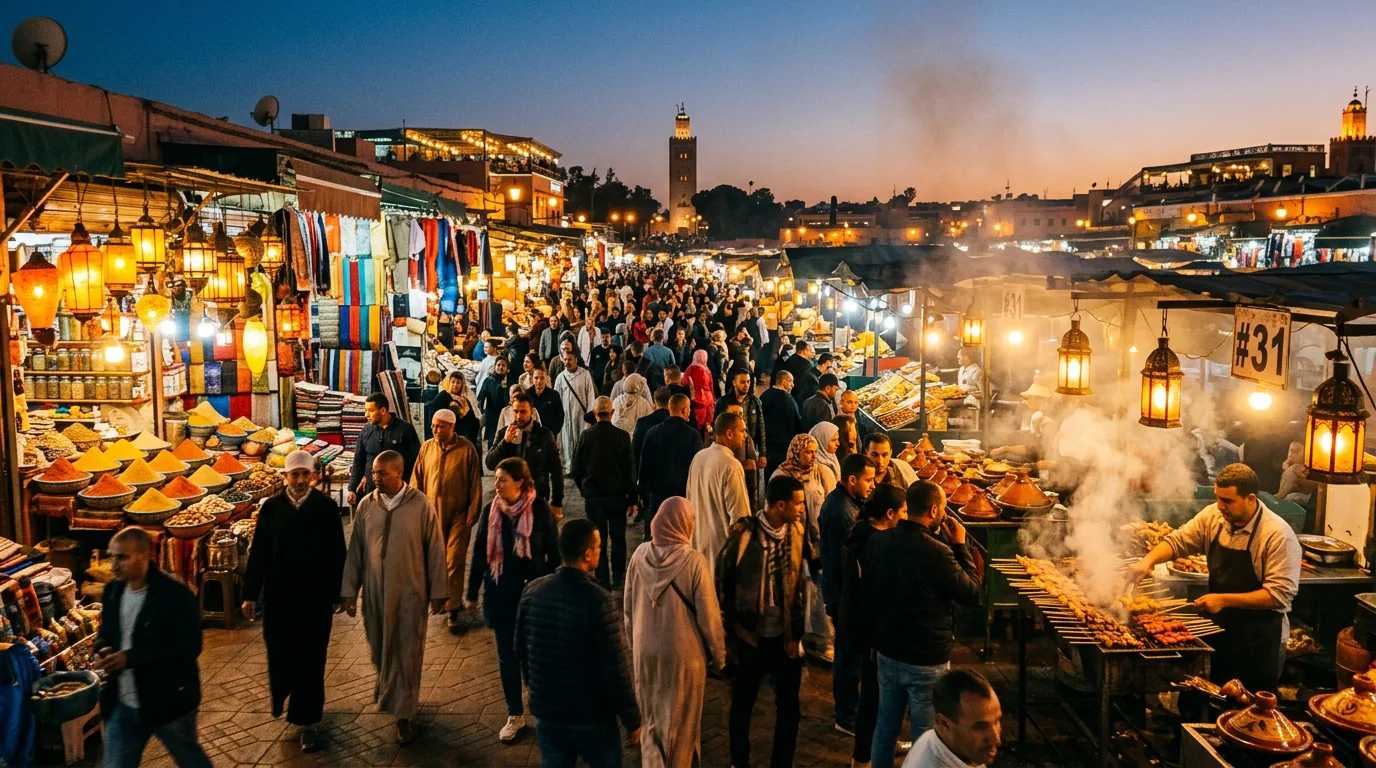
Let us be honest up front: Marrakech in July and August is hot. Daytime highs frequently sit in the high 30s°C and can top 40°C in a heatwave. But it is a dry desert heat rather than a sticky, humid one, the evenings cool down beautifully, and summer happens to be low season — which means a quieter medina, easier riads and often noticeably better value. Plenty of travellers have a wonderful trip in high summer. The trick is simple: plan your day around the sun rather than through it. Here is exactly how we tell guests to do it.
What summer actually feels like
June eases the city into the heat, but July and August are the peak. Expect long, cloudless, intensely bright days where the early afternoon is genuinely fierce and the pavement radiates warmth. Because the air is dry, the shade makes a real difference and the heat is more manageable than the same temperature would be on a humid coast. The single best thing about a Marrakech summer is the evening: as the sun drops the temperature relents, the light turns golden, and the long, balmy nights are made for rooftop dinners and a slow wander through the souks. The figures here are typical, approximate norms — a heatwave or a cooler spell can sit well outside them.
Stay somewhere with a pool — this is the big one
If you book one thing carefully for a summer trip, make it a riad or hotel with a pool. In high summer a pool stops being a luxury and becomes the thing that makes the middle of the day liveable. A shaded riad courtyard helps, and traditional riads are built thick-walled and inward-facing precisely to stay cool — but being able to slip into water during the worst of the afternoon is what lets you head back out refreshed in the evening. Air conditioning in the bedrooms is worth confirming too.
Split your day: early, midday break, evening
The locals' rhythm is the answer. Don't try to power through the heat of the day — work around it:
- Sightsee early. Be out by around 8am for the medina, the gardens and the monuments while it is still cool and the light is soft. Mornings are the best part of a summer day.
- Take a long midday break. Retreat to your pool or a shaded courtyard through roughly 1pm to 5pm — a swim, lunch and a proper siesta, exactly as the city does.
- Come back out in the evening. After about 5pm the temperature drops, Jemaa el-Fna and the souks come alive, and the city is at its most magical.
Shade, souks and the squares
Not all of the medina is equal in summer. The covered souks are shaded by their reed-and-slat roofs and stay surprisingly walkable even at midday, with thin shafts of light falling across the stalls. Open spaces are a different story — Jemaa el-Fna at noon is brutal, with little shade and a lot of reflected heat, so save the great square for the evening when it transforms into its famous night market. Gardens like the Majorelle and Menara give you greenery and shade; visit them first thing rather than in the afternoon.
Hydrate, cover up, and respect the sun
The heat is very manageable if you treat it seriously. A few simple habits make all the difference:
- Drink water constantly — far more than you think you need — and carry a refillable bottle.
- Wear high-SPF sunscreen, a wide-brimmed hat and sunglasses, and reapply through the day.
- Choose loose, breathable linen and cotton in light colours, which also suit the medina's modest-dress norms.
- Seek shade by default, slow your pace, and don't be shy about ducking into a café for a cold drink or a mint tea.
- Keep an eye on children and older travellers, who feel the heat sooner.
Cooler escapes: Essaouira and the High Atlas
One of the joys of a summer base in Marrakech is how easily you can leave the heat for a day. Two escapes are worth building into any July or August trip:
- Essaouira — the breezy Atlantic coast, around 2.5 hours away, stays markedly cooler than inland Marrakech thanks to a constant sea breeze. It makes a perfect summer day trip or overnight: ramparts, a working fishing port, grilled fish and fresh air. See our Essaouira weekend guide.
- The High Atlas — the Ourika valley or Imlil sit at altitude, so they run cooler than the city, with shade, running water and mountain air. An easy day trip and a real change of temperature. See our Atlas mountains day trip guide.
The upside: low season, quiet city, long evenings
For all the talk of heat, summer has genuine advantages. It is low season, so the medina is calmer, the famous riads are easier to book, and flights and rooms are often cheaper than in the spring and autumn rush. And those long, warm evenings — dinner on a rooftop as the call to prayer drifts across the city, the souks lively well after dark — are one of the most romantic things about Marrakech. Come in with a plan for the middle of the day, and the heat becomes a footnote rather than the story.
A note on Ramadan
Because the Islamic calendar is lunar, Ramadan shifts about eleven days earlier each year and moves steadily through the seasons — which means in some years it falls in the summer months. During Ramadan the city's daytime rhythm changes: some cafés and restaurants keep reduced daytime hours, and the evenings come alive once the fast is broken. It can be an atmospheric, rewarding time to visit, but always check whether it overlaps your travel window before booking, and build in a little extra flexibility around daytime meals if it does.
For the wider seasonal picture, see our month-by-month guide to the best time to visit Marrakech, and browse our private tours and day trips to build a summer trip around your dates.
Frequently asked
How hot does Marrakech get in summer?
Summer in Marrakech is genuinely hot and dry. In July and August, daytime highs frequently sit in the high 30s°C and can top 40°C in a heatwave. It is a dry desert heat rather than a humid one, which makes it more bearable in the shade, and evenings cool down noticeably — but the midday sun is fierce. Plan your day around the heat rather than fighting it, and a hot Marrakech summer becomes very enjoyable.
Is it worth visiting Marrakech in July and August?
Yes, with the right approach. Summer is low season, so the city is quieter, riads and flights are often cheaper, and the long balmy evenings are a real pleasure. The trade-off is the midday heat. If you stay somewhere with a pool, sightsee early and after about 5pm, and take a proper midday break, you can have a wonderful — and better-value — trip.
Do I need a hotel or riad with a pool in summer?
We strongly recommend it. In high summer a pool stops being a luxury and becomes the thing that makes the middle of the day liveable. A shaded riad courtyard helps, but being able to cool off in water during the 1pm–5pm peak is what lets you go back out refreshed in the evening. If you book one thing carefully for a summer trip, make it a property with a pool.
What are the best times of day to sightsee in summer?
Early morning and late afternoon into the evening. Be out and about by around 8am for the medina, gardens and monuments while it is still cool and the light is soft. Then retreat for a long midday break, and come back out after about 5pm when the temperature relents and Jemaa el-Fna and the souks come alive. The covered souks are shaded and walkable even at midday, but open squares like Jemaa el-Fna at noon are brutal.
Where can I escape the heat near Marrakech in summer?
Two easy escapes. Essaouira on the Atlantic coast (around 2.5 hours away) stays markedly cooler thanks to a constant sea breeze and makes a perfect day trip or overnight. For altitude rather than coast, the High Atlas — the Ourika valley or Imlil — is cooler than the city and an easy day trip, with shade, water and mountain air. Both let you swap the Marrakech furnace for something gentler.
Could my summer trip overlap with Ramadan?
It can in some years. Because the Islamic calendar is lunar, Ramadan shifts about eleven days earlier each year, so over time it moves through the seasons — and in some years it falls in the summer months. During Ramadan the city's daytime rhythm changes, with some cafés and restaurants on reduced hours and the evenings coming alive after the fast is broken. Always check the dates for your travel window before booking.
Travelling in summer?
We'll shape a trip that works with the heat.
Tell us your dates and we'll plan early starts, a midday pool break, evening sightseeing and a cool escape to Essaouira or the Atlas — plus current conditions from the ground.
Request an itinerary