The Marrakech souks are not a market in any tidy sense. They are a city folded inside the city — some 3,000 shops and workshops threaded through a maze and sorted by craft, much as they have been since the eleventh century. Wandering in without a plan is half the pleasure. Wandering in without a clue is how you end up with a "camel-leather" bag that starts shedding before your flight has finished boarding.
What is actually worth buying?
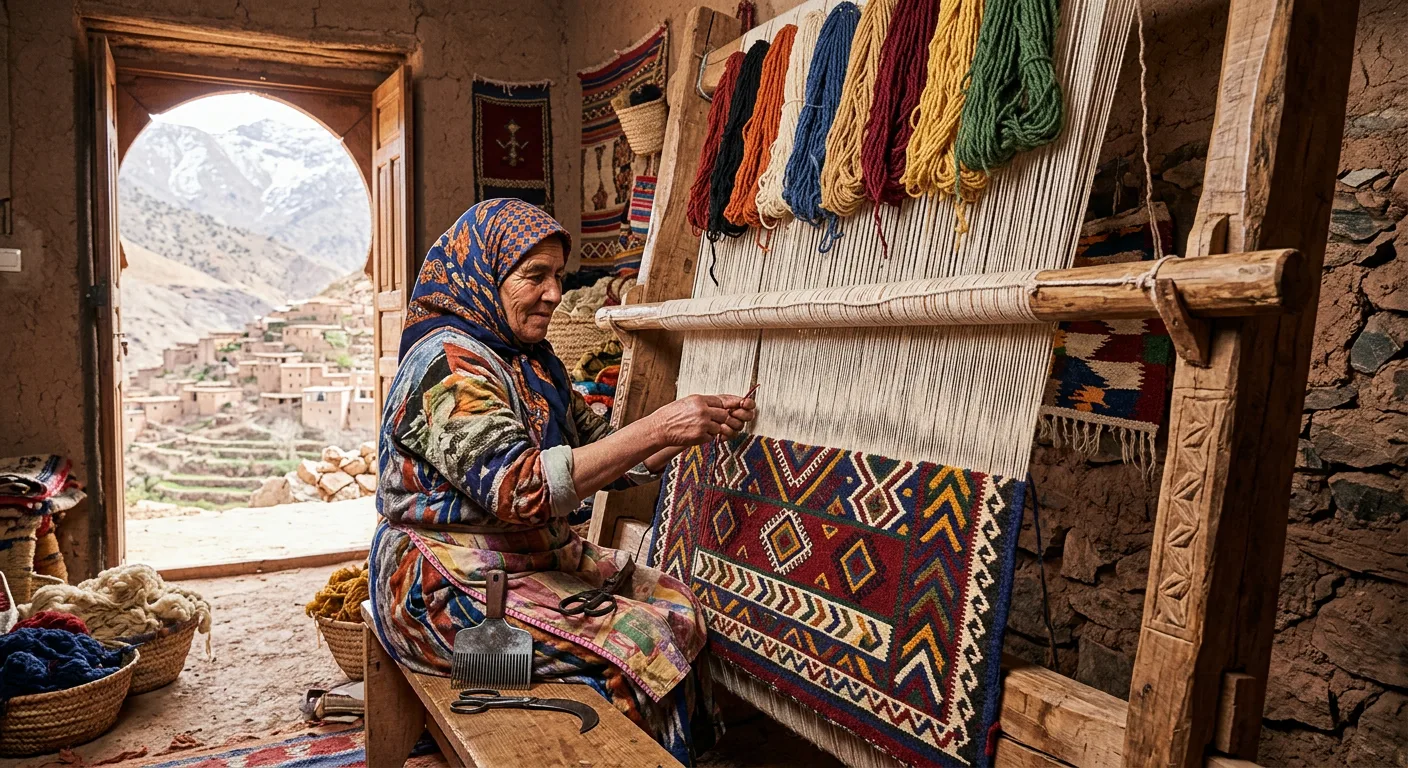
The good buys are the ones rooted in living craft. Babouche slippers in natural goatskin are a safe opener — soft, light, and stitched a few derbs from where you are standing. Berber rugs and kilims off the High Atlas looms have been changing hands in this medina for centuries; a decent flat-weave kilim runs US$80–300 by size and density. Copper and brass lanterns beaten by hand in the Haddadine make lovely things — reckon US$20–60 for a medium pendant. Argan oil, pressed from the tree that grows only in Morocco's Souss, is the real thing cold-pressed and best bought in 100 ml amber bottles from a women's cooperative. For cloth, hunt out embroidered kaftans, block-printed Marrakchi cotton, and the resist-dyed scarves hanging in the dyers' lane.
Approach these with one eyebrow raised: mass-made ceramics shipped in from China and painted to pass as Moroccan, "leather" with a chemical reek, and "antique" Berber jewellery that is really white metal out of a Casablanca workshop. The surest defence is simple — watch a thing being made before you hand over a dirham for it.
Which quarter for which craft?
The craft quarters fan out roughly north to south from Jemaa el-Fna. Souk Semmarine, the main spine, is where textiles, kaftans and djellabas hold the floor. Cut left into Souk el-Kebir for leatherwork and babouches. Keep north to Souk Cherratine, the proper leatherworkers' quarter, where saddles, belts and made-to-order bags are still cut by hand. The souk des teinturiers (dyers' souk) is best in the morning, when freshly dyed skeins hang dripping and vivid against the walls — more a photograph than a purchase. Follow the ring of hammering to Souk Haddadine for iron and copper lanterns. And the Mellah, the old Jewish quarter by the Royal Palace, holds the finest old Berber silver — Amazigh fibulas, enamelled brooches and amber beads carried up from the Sahara's edge.
So how does the bargaining really work?
The medina runs on two prices: an opening figure for the visitor and a closing figure settled by negotiation. There is no deceit in it — it is a centuries-old social ritual, and taking part with good grace is simply expected. A handful of rules we pass to every guest:
- Open at 40–50% of the first figure and creep up slowly from there.
- Never let on what you are willing to spend; make the seller move first, every time.
- Keep it warm. Bargaining is social, not a duel — if the mood turns, walk.
- The genuine walk, actually heading for the lane, is the sharpest tactic there is and nearly always pulls a better number after you.
- Once you have shaken on a price, honour it. Backing out after agreeing reads as rude.
- The fixed-price cooperatives dotted through the medina are marked as such — treat them as your reference point for what a thing should fairly cost.
How do you get the big pieces home?
The established rug and furniture dealers — including many of the larger carpet shops near the Bahia Palace — have worked with international freight agents for years. A rolled Berber rug to London or New York usually costs US$150–250 and lands within two to four weeks. Flat-packed copper lanterns and zellige panels ship at US$80–150 a box. Always take a detailed receipt — item, dimensions, material, agreed price — and photograph it. Anything genuinely antique, over a hundred years old, needs a Moroccan export declaration; the serious dealers handle that paperwork as routine.
For the smaller things, DHL and FedEx both keep offices out in Gueliz and will take packages over the counter. La Poste Maroc is cheaper but slow, and best kept for textiles that cannot break in transit.
And the tanneries — worth a look?
Marrakech keeps its own tanneries out by Bab Debbagh, where raw hides are soaked, scraped, dyed and dried in the open air — the same trade Fès is more famous for. The viewpoints above are reached through a leather shop, and while it is not exactly a hard sell, buying stays optional. The best of what those shops carry is the plainest: babouches in natural tan, burgundy or midnight navy; undyed goatskin coin purses; and simple satchels without fussy stitching. Sidestep anything pitched as "camel leather" — that is marketing; it is almost always goat or sheep.
Why walk the souks with a guide?
A good local guide changes the whole experience. We pull our guests off the main artery into the working derbs — the lane where a zellige master is chipping and setting tiles by hand, or where a weaver threads an eight-colour warp across a floor loom. These workshops sell direct, at honest prices, and you actually grasp what you are buying. Our private medina guides are licensed and independent — not a dirham of commission from any shop, which means they walk you toward the quality rather than the margin. See our Marrakech destination guide for the broader picture, or browse our private tours that include a curated souk morning.
Frequently asked
What is actually worth buying in the Marrakech souks?
The pieces tied to living craft: babouche slippers, bags and belts in goatskin; Berber rugs and kilims off the High Atlas looms; argan oil and rose water; hand-hammered copper and brass; zellige tilework; embroidered kaftans; and saffron carried up from the Taliouine fields. All are genuinely Moroccan-made and carry real artisan value rather than airport-shop filler.
Do you have to bargain in the Marrakech medina?
Yes — in the souks the opening price is almost never the closing one. A calm, good-natured counter at 40–60% of the first figure is entirely normal. Only nod when you are genuinely happy with the number; stepping away is completely acceptable and frequently coaxes out a better offer before you reach the corner.
How do you avoid buying junk in the souks?
Buy where you can watch the work happen — a cooperative or a workshop, not a stall stacked with identical pieces. For a rug, ask to see the knot density and heft the weight in your hands. Real goatskin leather carries a faint animal smell; the synthetic stuff smells of chemicals. Cosmetic-grade argan should run golden-green, never a watery pale yellow.
Can you ship big purchases home from Marrakech?
Yes. The established carpet and furniture dealers work with international freight agents as a matter of course. A rolled rug to Europe or North America typically runs US$150–400 and arrives in two to four weeks. Always take a receipt listing the item, its dimensions and the agreed price, and photograph it before you leave the shop.
Which Marrakech souk sells what?
The souk des teinturiers (dyers' souk) is the place for dyed wool and skeins. Souk Cherratine is the leatherworkers' quarter. Souk Haddadine, the smiths' district, is where the copper and iron lanterns are hammered. Souk Semmarine is the main textile spine. And the Mellah silver market, over near the Royal Palace, is best for old Berber jewellery.
Do the souks take cards, or is it cash only?
Most small stalls are cash only. The bigger shops and the fixed-price cooperatives increasingly take Visa and Mastercard, though some tack on a 2–3% surcharge. Carry dirhams (MAD) for the market stalls; there are ATMs around Jemaa el-Fna and along the edges of the medina.
Shop the medina the smart way
Walk it with a guide who earns nothing from your purchases.
Our licensed Marrakech guides lead you to the craftspeople behind the work, not the pass-through tourist shops — and never take a cut of what changes hands.
Request an itinerary