Moulay Bousselham

Atlantic coast · Northern Morocco

Moulay Bousselham, Morocco

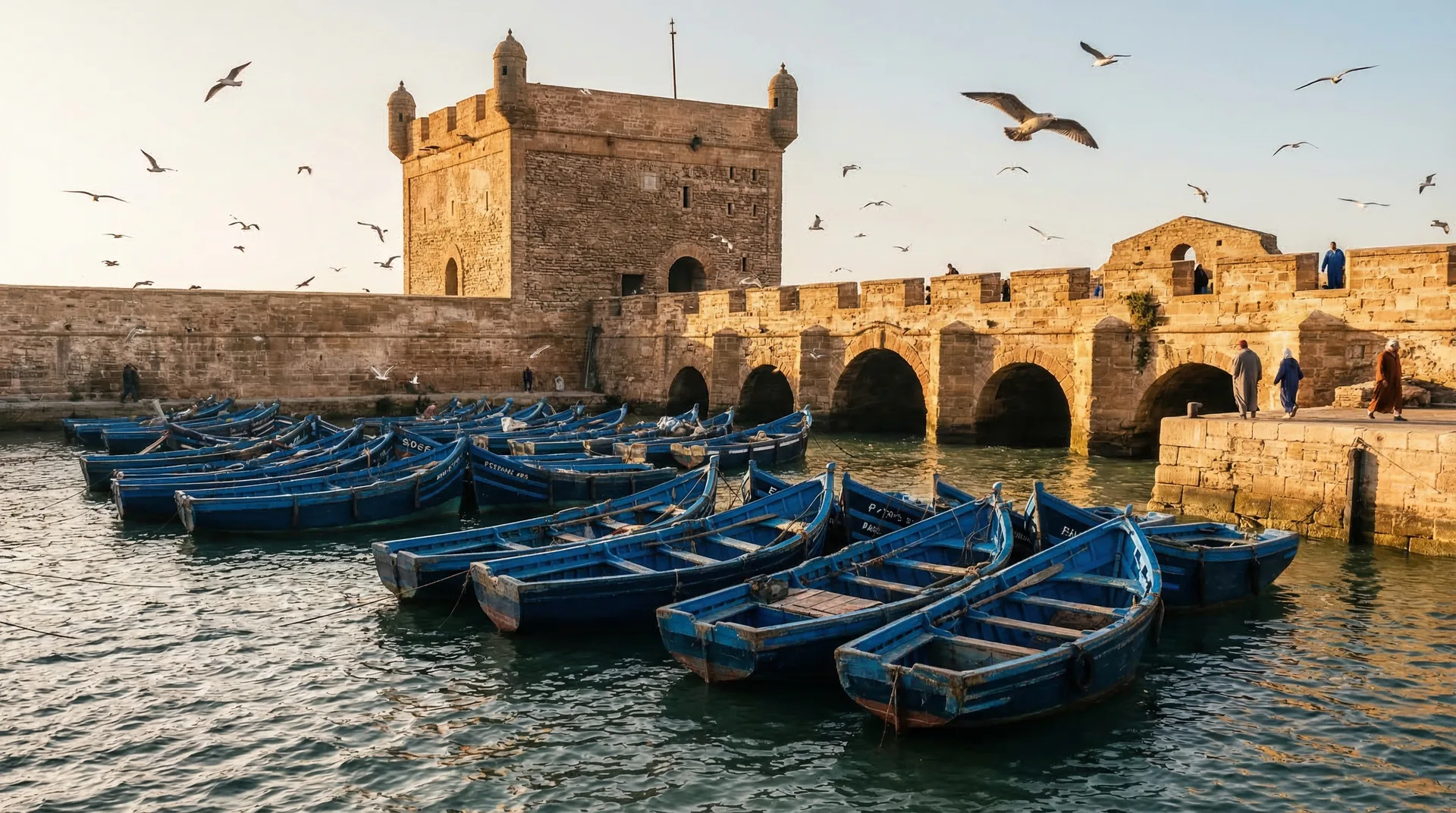
Moulay Bousselham is Morocco's foremost birdwatching lagoon — the Merja Zerga wetland pulls tens of thousands of wintering waterbirds to a sleepy fishing village between Rabat and Tangier.

Best time

November–March for peak birdwatching; June–September for the beach and moussem

Recommended

1 night

Airport

Rabat-Salé (RBA) + 1h30 drive, or Tangier Ibn Battouta (TNG) + 2h30 drive

Region

Atlantic coast · Northern Morocco

Why Moulay Bousselham

Moulay Bousselham is a small coastal village and pilgrimage settlement of about 10,000 on Morocco's northern Atlantic coast, roughly 80 km north of Rabat and 230 km south of Tangier. It overlooks the Merja Zerga ('blue lagoon' in Darija) — a 7,000-hectare coastal wetland and national park that ranks among the most important waterbird sites on the East Atlantic Flyway, holding tens of thousands of wintering waders and wildfowl and listed as a Ramsar wetland of international importance. From November to March the lagoon hosts greater flamingos, spoonbills, Audouin's gulls, marbled ducks and the only significant wintering population of the critically rare slender-billed curlew recorded in recent decades on this stretch of the flyway. A slim sand spit divides the lagoon from the open Atlantic; on its ocean side a broad beach curves for several kilometres, all but empty outside summer, with consistent beach-break surf. The village is presided over by the white sanctuary of the 10th-century Sufi saint Moulay Bousselham, whose August moussem draws pilgrims from across northern Morocco.

What to see

Highlights of Moulay Bousselham.

01

Why is Merja Zerga so important for migratory birds?

Merja Zerga lies on the East Atlantic Flyway — the corridor used by tens of millions of birds shuttling between northern European and Arctic breeding grounds and West African wintering sites. The lagoon's shallow, food-rich water and sheltered position north of Rabat make it a vital stopover and wintering ground. Peak counts run to 10,000–15,000 greater flamingos, 2,000–3,000 Eurasian spoonbills and nationally significant numbers of ducks, waders and terns. It's on the Ramsar register of internationally important wetlands.
02

Flat-bottomed boat birding on the lagoon

Local fishermen run traditional flat-bottomed barques on the Merja Zerga, letting you approach flamingo flocks, breeding heron colonies and wader roosts far more closely than from the shore. A two-hour lagoon circuit at dawn or dusk is the definitive Moulay Bousselham outing.

03

Atlantic beach and surf

The outer beach on the Atlantic side of the spit is one of the longest empty beaches on Morocco's northern coast — several kilometres of consistent beach-break surf with virtually no development. The waves peak October–April; summer brings calmer water and Moroccan families from Kenitra and Rabat.

04

Sanctuary of Moulay Bousselham

The white-domed sanctuary of the 10th-century Sufi saint surveys the lagoon from the village headland. Non-Muslim visitors may approach and photograph the exterior. The annual moussem — a multi-day pilgrimage and festival in August — is one of the most important Sufi gatherings on the northern Atlantic coast.

Itineraries

Our Moulay Bousselham tours.

Every itinerary below is privately operated, fully customisable, and includes a deep stop in Moulay Bousselham. Click any tour for the day-by-day plan, the map, dates and pricing.

1 day

Merja Zerga birdwatching dawn circuit

A private dawn boat trip on the Merja Zerga lagoon: flamingos, spoonbills and waders at close range, followed by a fresh-fish lunch in the village.

from $240Enquire →
3 days

Northern Morocco coastal loop

A private three-day Atlantic circuit from Rabat north through Moulay Bousselham, Asilah and Tangier — Morocco's unhurried northern coast.

from $920Enquire →

Before you go

Practical notes.

  • Getting there: About 1h30 (80 km) north of Rabat on the N1 and then the P4406 coastal road; 2h30 south of Tangier
  • Boat birding: Local barque operators run 2-hour lagoon circuits at dawn and dusk — arrange through the village the previous evening; cost is approximately 150–200 MAD per person
  • Best birding months: November through March for peak waterbird numbers; April sees the last flamingos before departure; July–August is quiet for birds but busy with beach visitors
  • Best combined with: Asilah (40 km north) and Larache for a northern Atlantic coast itinerary; Rabat and Kenitra to the south

Concierge

Have your Moulay Bousselham trip designed by a local

Tell us your dates, group size and pace. We'll send back a written proposal within 24 hours — private guides, transfers, riads, the lot.

Request a proposal

FAQ

Moulay Bousselhamcommon questions.

Is Moulay Bousselham suitable for non-birdwatchers?+

Yes — the lagoon and beach are beautiful beyond their ornithological importance. The boat trip, the fresh-fish lunch, the empty Atlantic beach and the Sufi sanctuary make for a rewarding stop even for travellers with no specialist interest in birds. It is one of the most peaceful places on the northern Moroccan coast.

What birds can I reliably see at Merja Zerga in winter?+

Between November and February you can reliably expect: greater flamingos (flocks of several thousand), Eurasian spoonbills, grey herons, little egrets, Audouin's gulls, sandwich terns, dunlin, ringed plover and several duck species including gadwall and teal. Lucky observers may see osprey, marsh harrier and, rarely, slender-billed curlew.

How far is Moulay Bousselham from Rabat?+

About 80 km north — approximately 1h30 on the N1 coastal road via Kenitra. It makes an easy day trip from Rabat but is far more rewarding as an overnight, allowing a dawn boat trip on the lagoon before the light flattens.

Read more

From the journal.

Stories, guides and practical tips to help you plan your time in Moulay Bousselham and beyond.

Book now