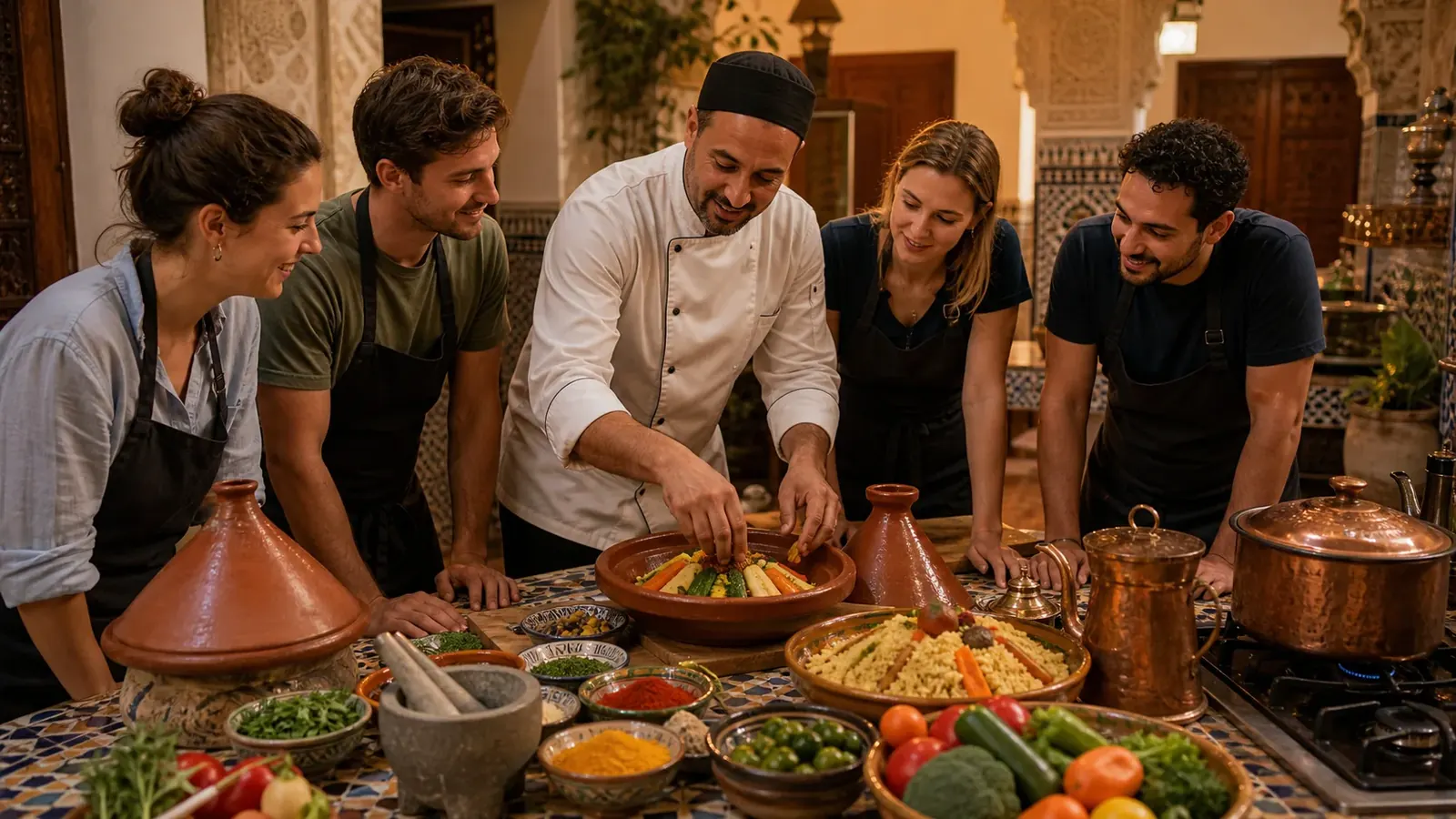
A Moroccan cooking class is one of the most immersive ways to connect with the country's culture — shopping in a souk for saffron and preserved lemons, then slow-cooking a tagine over charcoal. This guide covers what you will learn, how to choose the right class and what the experience actually involves.
Culture · Updated June 2026 · 6 min read
What do you learn in a Moroccan cooking class?
A well-structured Moroccan cooking class typically covers three to five dishes over a three to four hour session: a tagine (often chicken with preserved lemon and olives, or lamb with prunes and almonds), a couscous dish, Moroccan salads (zaalouk, taktouka or makouda), pastilla (the savoury-sweet pigeon or chicken pie in warka pastry) and msemen (layered flatbread). Classes that include a souk visit add a spice lesson — how to identify and use ras el hanout, cumin, turmeric, ginger, paprika and saffron, and where to buy them at fair prices.
Most classes end with a communal meal of what you cooked, with mint tea and seasonal fruit. You leave with a printed or emailed recipe booklet. The better classes teach technique — how to build a chermoula marinade from scratch, how to layer a tagine so it does not dry out, how to roll couscous by hand — rather than simply following pre-measured ingredients.
Where are the best places for cooking classes in Morocco?
Marrakech has the highest concentration of cooking schools and riad-based classes. The most reputable operate out of traditional riads in the medina, using wood-fired clay ovens and charcoal braziers. Classes in Fes tend to be smaller and more intimate, often run by local women's associations or family homes — the Fassi (Fes) culinary tradition is considered by many Moroccans to be the most refined in the country. Essaouira, Chefchaouen and Ouarzazate also offer classes with regional character.
In Marrakech, classes range from tourist-oriented group sessions (10–15 people, a commercial kitchen feel) to intimate riad experiences with a maximum of four to six guests cooking alongside the host family. The latter is considerably more valuable and costs only modestly more.
- Marrakech: widest choice, riad or school-based, groups of 2–15 people.
- Fes: smaller, more local, often women's co-operative run — Fassi cuisine speciality.
- Essaouira: Atlantic seafood focus; fish tagine, chermoula and coastal salads.
- Chefchaouen: mountain Rif cuisine; bean stews, kefta and herbs.
What does a Moroccan cooking class typically include?
Most classes in the mid-to-upper price range include a souk shopping tour of one to two hours, during which your instructor buys fresh ingredients and explains the spice market. The cooking session then takes three to four hours and covers multiple dishes. A communal meal of everything you cooked follows. Some classes offer a recipe booklet; the better ones include a follow-up email with adapted recipes for a home kitchen (where a clay tagine and a wood fire are unavailable).
Classes targeted specifically at vegetarians, vegans or those with dietary restrictions exist in Marrakech and Fes — request this when booking. Moroccan cuisine is naturally rich in vegetable dishes; a vegetarian class is not a compromise.
- Included in most: souk tour, all ingredients, cooking session, communal meal, mint tea.
- Often included: printed recipe booklet, apron to keep.
- Check ahead: vegetarian/vegan options, children's participation policy, class size.
- Not included as standard: alcohol (Morocco is a Muslim country; wine is available in some tourist-oriented riads on request).
How much does a Moroccan cooking class cost?
Group classes (6–15 people) in Marrakech cost US$35–60 per person including the souk tour and communal meal. Private classes for one to two people from a riad host or specialist school cost US$80–150 per person for the same programme. Specialist classes focusing on pastilla, bread making or a full Moroccan feast for a larger private group range from US$120–200 per person.
Classes marketed to day-trippers and organised through large hotels tend to be more expensive (US$80–120 per person for a group session) and less authentic in feel; booking directly with a riad or a local food tour operator is usually both cheaper and more intimate.
Tips for getting the most from your cooking class
Book early: the best small-group and private classes in Marrakech fill up two to four weeks ahead during high season (March–May, October–November). Ask the instructor what the class ratio of instruction to hands-on cooking is — the best classes have you doing the chopping, mixing and seasoning, not watching. If you have specific dietary restrictions, mention them at booking and confirm again the day before.
Wear clothes you do not mind getting splattered: tagine sauce and turmeric are both enthusiastic. Arrive hungry — the meal at the end is substantial.