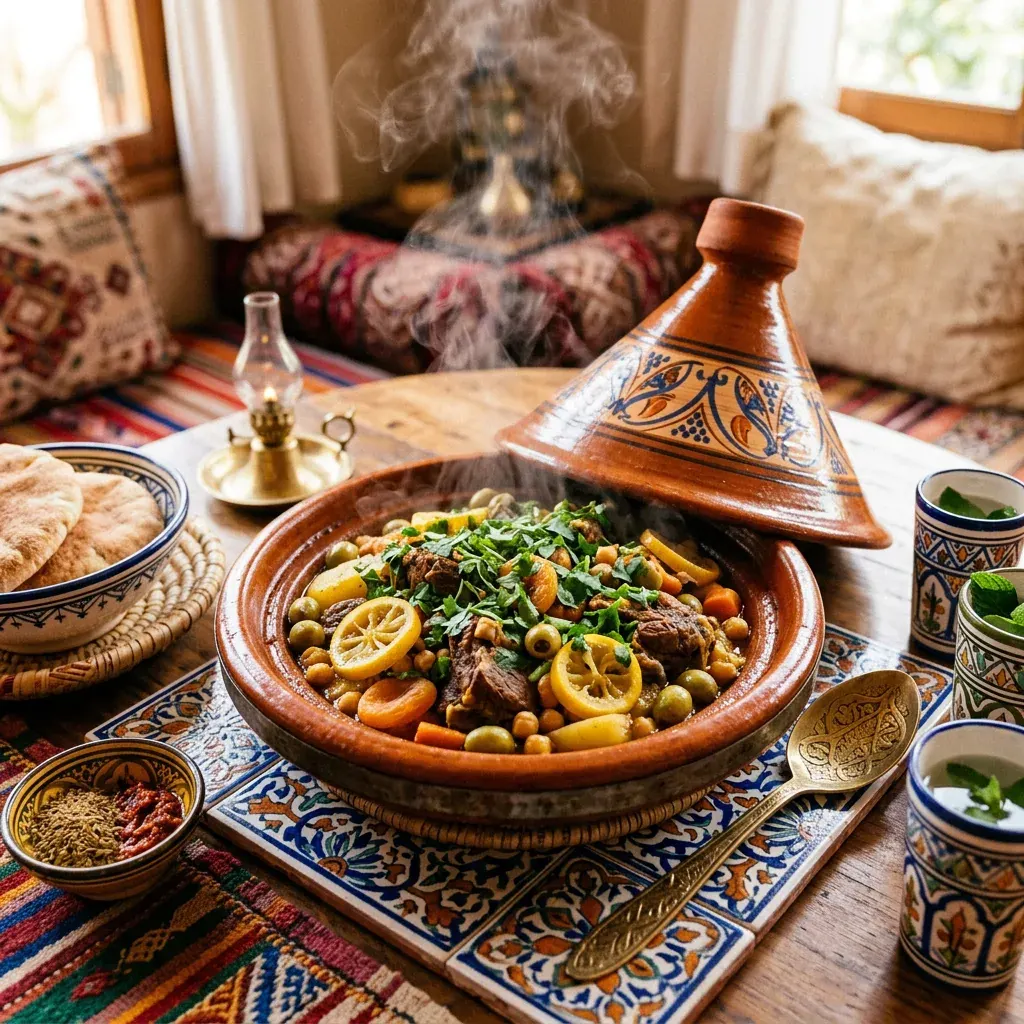
Marrakech is one of the great eating cities of North Africa: slow-cooked tagines in the medina, the legendary food stalls of Jemaa el-Fna at dusk, rooftop dinners over the Koutoubia, and the endless ritual of sweet mint tea.
Culture · Updated June 2026 · 2 min read
Dishes to seek out in Marrakech
Beyond the famous tagine and couscous, a few specialities reward a curious eater working through the medina and the night market.
- Tagine — slow-cooked stews (lamb with prunes, chicken with preserved lemon and olives, kefta with egg), the staple of every medina kitchen.
- Couscous — traditionally the Friday family meal, steamed with seven vegetables and worth seeking out at week's end.
- Tangia — Marrakech's own dish: meat slow-braised for hours in a clay urn in the embers of the hammam furnace, a true local specialty.
- Pastilla — a sweet-savoury pie of pigeon or chicken under crisp warqa pastry and icing sugar.
- Jemaa el-Fna stalls — harira soup, grilled brochettes, snail broth, msemen pancakes and a glass of fresh orange juice as the square fills with smoke at sundown.
The mint tea ritual
Mint tea — green tea, fresh mint and plenty of sugar, poured from height to raise a froth — is the thread running through every Marrakech encounter. A shopkeeper offers it as you browse the souks; a rooftop café serves it at sunset; a riad welcomes you with it on arrival. Accepting graciously is part of the experience.
Eating well and safely
Morocco is largely Muslim, so pork is rare and alcohol is served mainly in licensed restaurants, hotels and rooftop bars in Gueliz, Hivernage and the design riads rather than everywhere. Skip the tap water for drinking — choose bottled. On Jemaa el-Fna, the busiest stalls with the fastest turnover are the safest and tastiest bet. Vegetarians do very well here: vegetable tagines, couscous, lentil soups and big platters of salads are on every menu.