Marrakech is a wonderful, slightly overwhelming city, and the people who love it most are usually the ones who arrived knowing roughly what to expect. It is loud, colourful, deeply hospitable and, in places, a touch chaotic — and almost none of that is a problem once you understand the rhythm of it. This is the honest, friendly briefing we'd give before you go: a handful of cultural notes, a few common surprises, and the small etiquette that turns the hustle into a story you'll happily tell later. None of it is meant to put you off — quite the opposite.
The medina is intense — lean into it
The old walled medina is a feast for the senses: narrow lanes, the smell of spice and mint and grilled meat, calls from stallholders, hammering from the metalworkers' souk, and a sense that something is happening down every alley. It is also busy and a little disorienting, and that's normal. Expect some hustle — friendly persistence is the local sales style — and expect to get lost at least once. Download an offline map before you arrive, drop a pin on your riad, and treat the wandering as part of the experience rather than a problem to solve.
One practical surprise: the medina is alive with motorbikes and scooters that thread through the same narrow lanes you're walking, often faster than you'd think and with a quick beep for warning. Keep to the side, stay aware, and shepherd children and bags. It looks like chaos at first and quickly becomes second nature.
The faux-guide hustle (and how to handle it)
The most common bit of medina theatre is the unofficial "guide". Someone clocks that you look unsure, then tells you the lane ahead is closed, that there's a festival or market on "today only", or that the tannery or square is "this way" — and offers to show you. The destination is usually a shop where they earn a commission, or a request for a tip at the end. It's a nuisance, not a danger.
The handling is simple: a polite, firm "la, shukran" (no, thank you) while you keep walking with an air of knowing where you're going. Don't stop to argue, and don't feel rude — declining is completely normal here. If you'd genuinely like guiding, arrange a licensed guide through your riad or with us, and you'll get the history and the back lanes without the sales pitch.
Haggling is the norm in the souks
In the souks, bargaining is expected and often there's no marked price at all — it's a friendly ritual, not a confrontation. Ask the price, offer well below it, and work toward the middle over a few good-humoured rounds. Staying relaxed and smiling gets you further than playing hardball, and walking away is completely fine — it's a normal part of the dance and sometimes brings a better price as you go. Decide what something is worth to you and don't be pressured into a sale. Just remember that fixed-price shops, supermarkets, pharmacies and most restaurants aren't places to haggle. For the full method, see our guide to how to haggle in the souks.
Carry cash — dirham is king
Bring cash. The currency is the Moroccan dirham, and across the medina — souk stalls, food stands, small cafés, petits taxis and tips — cards are often not accepted. Bigger hotels, riads, smarter restaurants and shops in Guéliz are more likely to take cards, but you can't rely on it day to day. ATMs are plentiful in Guéliz and the new town and scarcer deep in the medina, so withdraw what you need and keep a supply of small notes and coins for taxis, tips and market stalls. The dirham is a closed currency, so most travellers pick theirs up on arrival.
Dress modestly — it's appreciated
Marrakech is fairly relaxed and there's no strict rule for visitors, but modest dress is appreciated and will help you blend in and feel comfortable. Covering shoulders and knees is a sensible default for everyone, and loose, breathable clothing makes far more sense in the heat anyway. You don't need to cover your hair. Around riad pools and in Guéliz things are more casual. Think of it as courtesy rather than a dress code — it's usually returned with warmth.
Jemaa el-Fna transforms at night
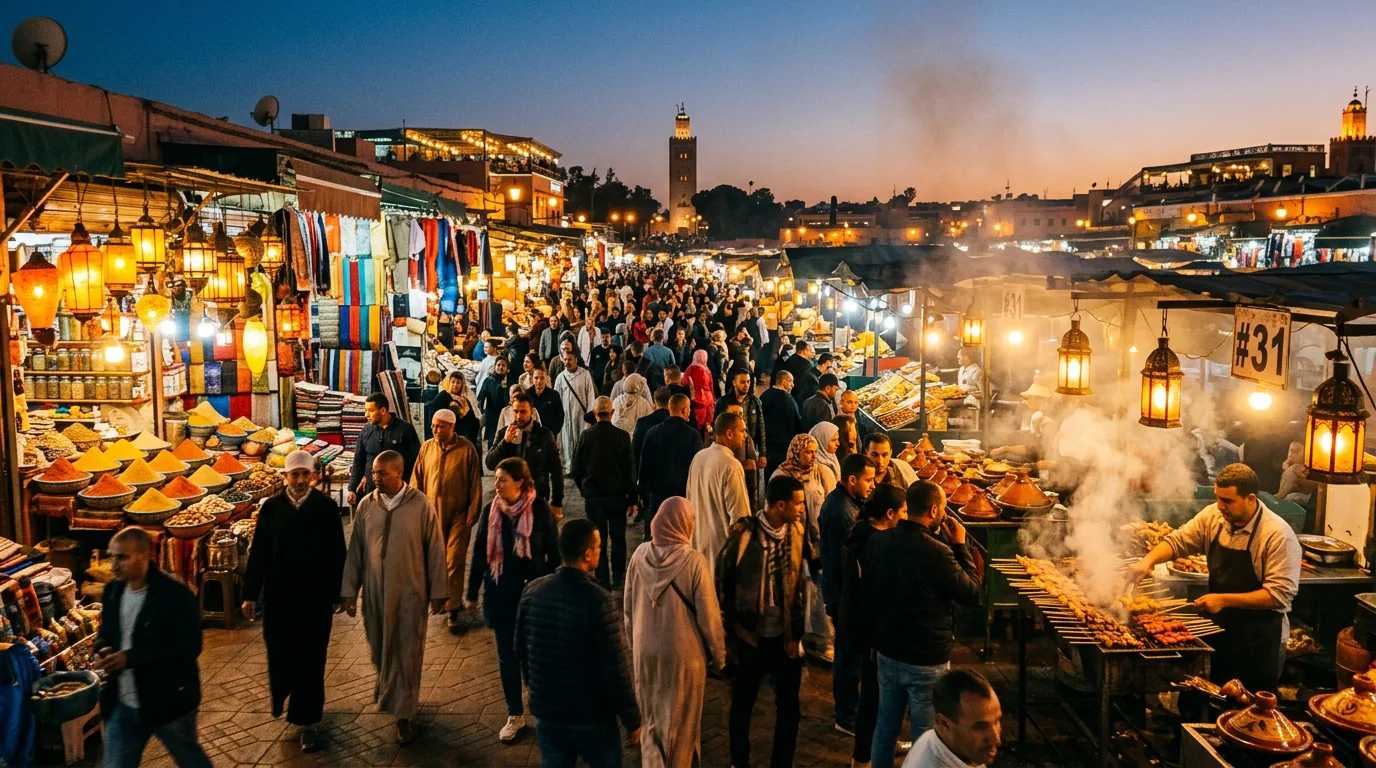
The great central square is two places in one. By day it's open and fairly calm; after dark the food stalls roll in and the musicians, storytellers, henna artists and animal handlers gather, and it becomes a swirl of smoke, lanterns and sound — a highlight for many. The thing to know: anything you photograph or watch is expected to come with a small payment. Snake charmers, monkey handlers, henna artists and musicians will ask for money, sometimes firmly. There's nothing wrong with that — just agree any photo or henna price first, not after, keep small change ready, and feel free to simply soak up the atmosphere and move on.
The heat is real — plan around it
In summer Marrakech gets very hot, and the midday sun can flatten an ambitious sightseeing plan. The locals' rhythm is the smart one: be out early and again in the late afternoon and evening, and treat the middle of the day as time for a long lunch, a shaded café or a riad and pool break. Carry water, wear a hat and sunscreen, and don't try to power through the heat of the day. For when to come and what each month feels like, see our best time to visit Marrakech guide.
Fridays, tipping and the hammam
A few smaller customs round things out. Friday is the main day of communal prayer, and the city is a little quieter around midday — some smaller shops and businesses pause, and Friday is traditionally the day for couscous, which many restaurants serve. Tipping is common and woven into daily life: small change for a café, a few dirham for someone who carries your bag or parks a car, a little extra for good service. It's modest and appreciated rather than obligatory, which is another reason to keep coins handy.
The hammam (steam bath) is worth experiencing, and there's a little etiquette to it. Public hammams are a local, communal ritual — you'll typically bring or buy black soap and a kessa glove, and bathers usually keep underwear on; visitor-friendly riad and spa hammams are gentler, more private and a relaxed place to start. Either way it's cleansing, social and a lovely antidote to a dusty day in the souks. For how much to give and when, our guide to tipping in Morocco spells it out.
Safe and welcoming — just stay aware
For all the talk of hustle, Marrakech is a safe and deeply hospitable city, and the warmth of the people is what most visitors remember. The sensible precautions are the ordinary ones: keep your bag zipped and in front of you in tight lanes and in the crowds around Jemaa el-Fna at night, don't flash valuables, agree taxi fares before you ride, and trust your instincts. Go with an open mind and a little patience for the theatre of it all, and the city tends to reward you generously. For a fuller, honest assessment, read our honest look at safety in Morocco.
Frequently asked
Is Marrakech safe for tourists?
Broadly, yes — Marrakech is a welcoming city and most visitors have a wonderful, trouble-free trip. The hassle you'll meet is overwhelmingly commercial rather than threatening: persistent shop touts, unofficial "guides", and people trying to steer you somewhere for a commission. Serious crime against tourists is uncommon, but the medina is dense and crowded, so use the same street sense you would in any busy city — keep your bag zipped and in front of you in tight lanes and around Jemaa el-Fna at night, don't flash valuables, and trust your instincts. None of this should put you off; it just helps to know what to expect so the hustle feels manageable rather than overwhelming.
Do I need to haggle in the souks?
In the souks, yes — haggling is normal, expected and part of the culture, and many stalls don't display fixed prices. The friendly approach works best: ask the price, offer well below it, and settle somewhere in the middle through a few rounds of good-humoured back-and-forth. Staying relaxed and smiling gets you further than being aggressive, and walking away is completely acceptable — sometimes it even brings a better final price. Decide what an item is worth to you and don't feel pressured. Note that fixed-price shops, supermarkets, pharmacies and most restaurants are not places to bargain. For a deeper walk-through, see our guide to haggling in the souks.
What should I wear in Marrakech?
Marrakech is fairly relaxed by Moroccan standards and there's no strict dress code for visitors, but modest dress is appreciated and will make you feel more comfortable, especially in the medina and away from tourist hotspots. As a general guide, covering shoulders and knees is a sensible default for both men and women; loose, breathable clothing also makes more sense in the heat. You don't need to cover your hair. Around riad pools and in the newer Guéliz district things are more casual. Dressing with a little modesty is less about rules and more about courtesy — it tends to be met with warmth.
Can I use credit cards, or do I need cash in Marrakech?
Carry cash. The local currency is the Moroccan dirham, and in the medina — souks, food stalls, small cafés, petit taxis, tips — cash is king and cards are often not accepted. Larger hotels, riads, smarter restaurants and shops in Guéliz are more likely to take cards, but you shouldn't rely on it for day-to-day spending. ATMs are easy to find in Guéliz and the new town, less so deep in the medina, so withdraw what you need and keep a stash of small notes and coins for taxis, tips and market stalls. The dirham is a closed currency, so most travellers get theirs on arrival rather than beforehand.
What is the "this way is closed" scam, and how do I handle it?
It's the classic medina hustle. As you walk, someone may tell you the lane ahead is closed, that there's a festival or market on "today only", or that the tannery or square is this way — then offer to guide you. The aim is usually to lead you to a shop where they earn commission, or to ask for a tip at the end. It's annoying rather than dangerous. The simplest defence is a polite, firm "la, shukran" (no, thank you) while you keep walking with a confident, knowing-where-you're-going air. Carry an offline map with your riad pinned so you don't need to ask, and if you genuinely want a guide, arrange a licensed one through your riad or with us.
When does Jemaa el-Fna come alive, and should I tip the performers?
Jemaa el-Fna, the great central square, transforms after dark. By day it's open and fairly calm; in the early evening the food stalls roll in and the musicians, storytellers, henna artists and animal handlers gather, and it becomes a swirl of smoke, light and sound — the highlight of many people's trip. The thing to know is that anything you photograph or watch is expected to come with a small payment: snake charmers, monkey handlers, henna artists and musicians will all ask for money, sometimes assertively. There's nothing wrong with that, but agree any photo or henna price first rather than after, keep small change handy, and feel free to simply enjoy the atmosphere and move on if you'd rather not engage.
Arrive ready
Let us smooth the first few days.
Airport pickup, a riad in the right part of the medina, a licensed guide for the souks and an itinerary built around the heat — tell us how you like to travel and we'll handle the logistics so the only thing you have to navigate is the fun part.
Request an itinerary