Marrakech is really several cities stacked together: the walled medina with its riads and souks, the French-built new town of Guéliz, the hotel-and-garden strip of Hivernage, and the palm groves of the Palmeraie out beyond the ramparts. Where you sleep shapes the whole trip — how much you walk, how much you spend on taxis, and whether you wake to the call to prayer or to birdsong by a pool. Here's an honest read on each area and who it suits.
The Medina — character on your doorstep
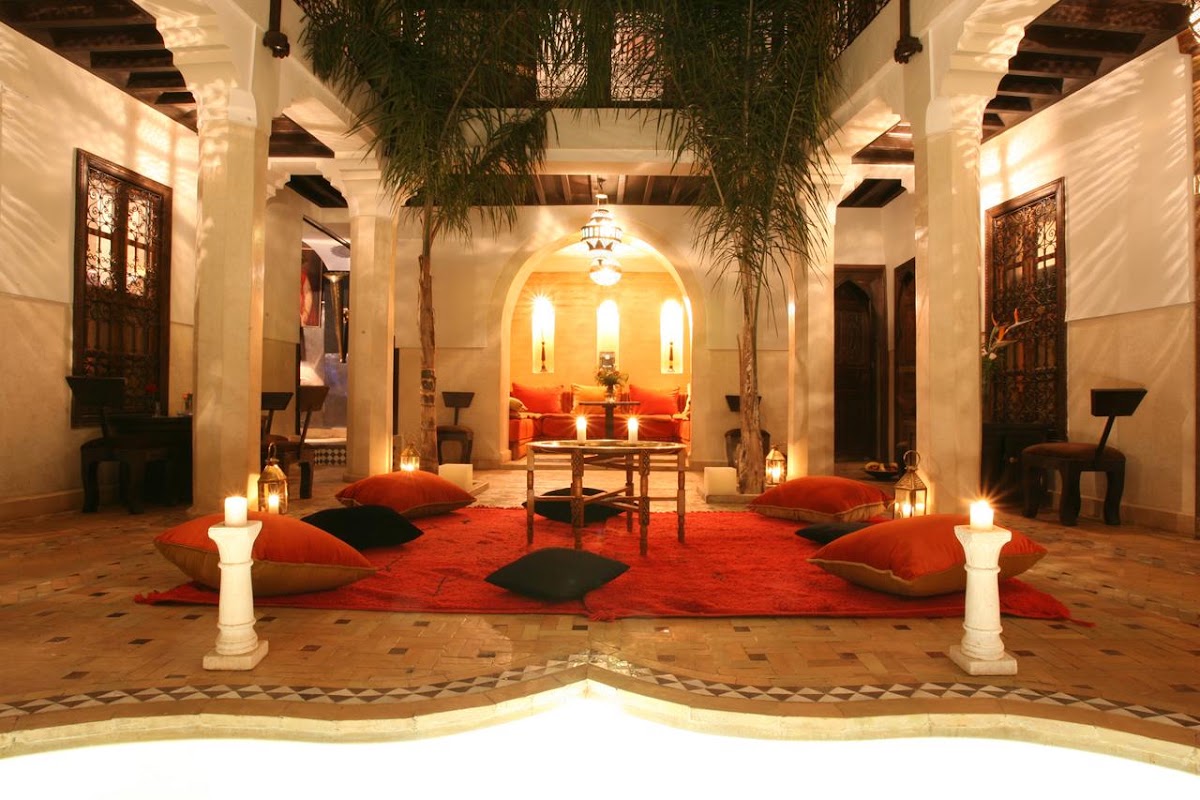
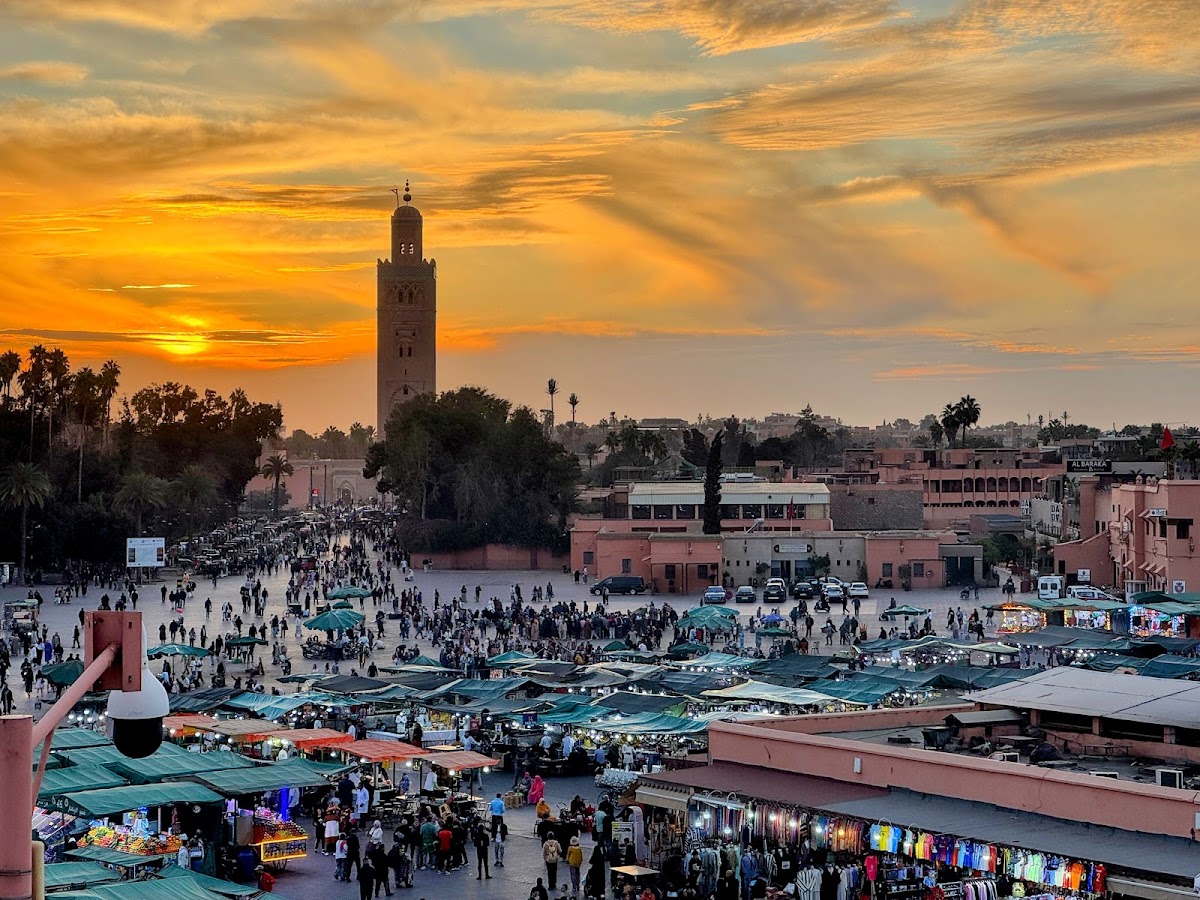
The medina is the old walled heart of Marrakech, and for many people it is the city. Stay here, almost always in a riad, and you're a short walk from Jemaa el-Fna, the souks and most of the historic sights. The atmosphere is unmatched — courtyards open to the sky, rooftop terraces over the rooftops, lantern-lit lanes, and a sense of being inside something old and alive rather than beside it.
The honest downsides: the medina is car-free in its depths, so taxis drop you at a gate and you (or a porter with a cart) walk the rest down narrow derbs. Those alleys are genuinely disorienting at first, and the streets near the square can be noisy late into the night. It's the obvious choice for first-timers who want character and walkability and don't mind a little chaos. If you want to weigh it directly against the modern alternative, see our comparison of the Marrakech medina vs Guéliz.
Guéliz & the Ville Nouvelle — modern comfort
Guéliz is the new town the French laid out in the 1910s, a grid of wide boulevards, cafés, modern shops, galleries and restaurants. Staying here means proper hotels and apartments with lifts, reliable parking and taxis on every corner — none of the luggage-down-a-derb routine. It's calmer and more orderly than the medina, with a more cosmopolitan, everyday-Moroccan feel.
The trade-off is atmosphere: you lose the storybook medina backdrop, and you'll take a short taxi ride (roughly 10–15 minutes) to reach Jemaa el-Fna and the souks. Guéliz suits travellers who value comfort, accessibility and a modern hotel over old-city romance, as well as repeat visitors who've already done the medina experience.
Hivernage — upscale and walkable
Hivernage sits between Guéliz and the medina walls, a leafy district of larger hotels, gardens, manicured avenues and much of the city's nightlife — clubs, bars and casinos. It's the most polished part of the new town, and a real plus is that it's close enough to walk into the medina near the Koutoubia and Jemaa el-Fna, while still offering modern hotels with pools and spas.
It leans upscale, so it's a good fit if you want a comfortable hotel base with easy access to both worlds and don't mind paying for it. Light sleepers should note that the nightlife can carry; pick a hotel set back from the bar strip if quiet matters.
Marrakech is really several cities stacked together: the walled medina with its riads and souks, the French-built new town of Guéliz, the hotel-and-garden strip of Hivernage, and the palm groves of the Palmeraie out beyond the ramparts.
The Palmeraie — pools, quiet and space
The Palmeraie is a historic palm grove about 15–20 minutes north-east of the centre, now dotted with resort hotels and private villas. This is where you go for big pools, gardens, calm and room to spread out — it's the natural choice for families, for travellers who want to relax, and for anyone planning a swim-and-unwind trip rather than dawn-to-dusk sightseeing.
The obvious catch is distance: you're out of town, so every excursion into the medina means a taxi or a hired car, and there's nothing to wander to on foot. It works beautifully if you treat the property as the destination and make occasional runs into the city, less well if you want to drift in and out of the souks all day.
The Kasbah & Mellah — the quieter old city
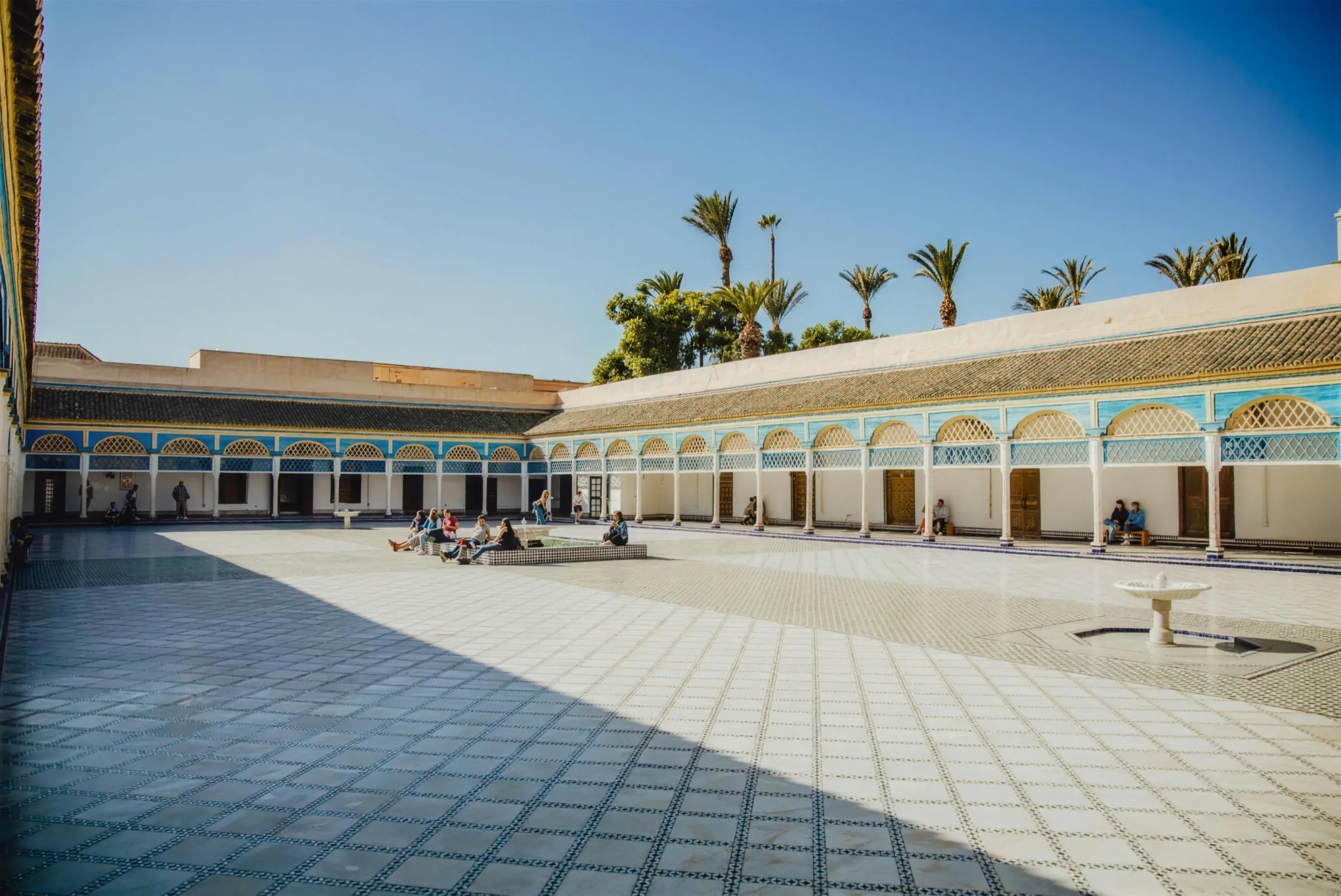
In the southern medina lie the Kasbah, the old royal quarter, and the Mellah, the historic Jewish quarter. These areas are noticeably quieter than the streets around Jemaa el-Fna, yet still firmly inside the old city, and they put you right by some of Marrakech's best sights — the Bahia Palace, the Saadian Tombs, the El Badi ruins and the Mellah's spice and jewellery lanes.
Staying here gives you a riad's character with a calmer feel and a short walk to the headline monuments, while the square and main souks are still reachable on foot — a little further, but pleasantly so. It's a strong pick for repeat visitors, or first-timers who want the medina experience without sleeping on top of the busiest part of it.
Riad or hotel — the honest trade-off
A riad is a small traditional courtyard house, almost always in the medina. You get character, personal service, a rooftop terrace and a genuine sense of place — but cars can't reach the door, rooms and layouts vary from house to house, big pools and lifts are rare, and the medina setting brings noise and the odd navigational headache. A hotel, usually in Guéliz, Hivernage or the Palmeraie, trades some of that romance for predictable comfort: reception, lifts, proper pools, spas and easy taxi access.
There's no single right answer, and plenty of travellers combine the two — a couple of nights in a medina riad for the atmosphere, then a hotel or Palmeraie resort to decompress. If you'd rather not pick blind, tell us your dates, group and what matters most and we'll match the base to the trip. Start with our Marrakech destination guide and our private tour options.