The short answer
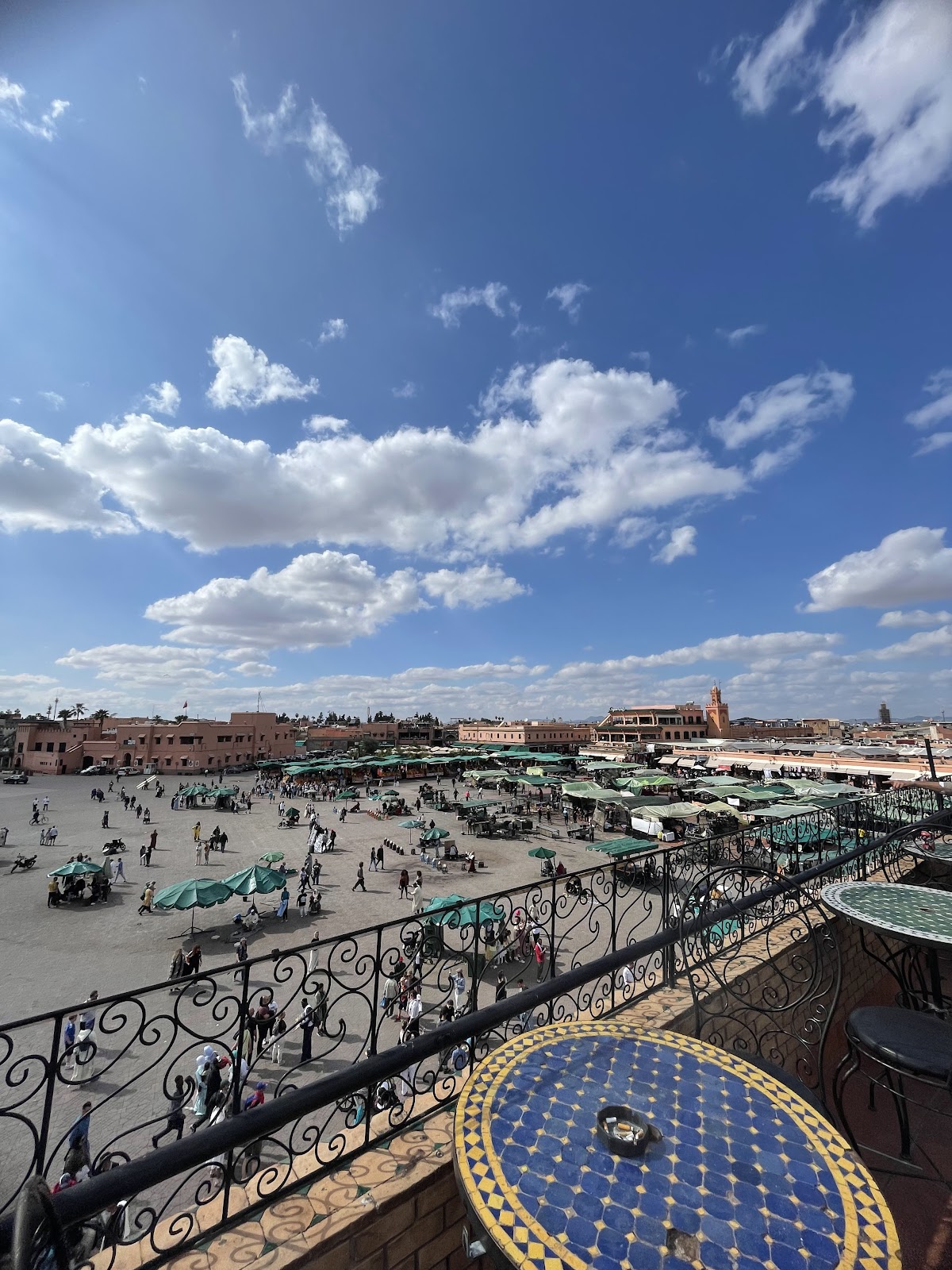
Jemaa el-Fnaa is the great square at the centre of Marrakech's medina. By day it has juice carts and a few performers; from about 16:00 the food stalls go up and storytellers, Gnawa musicians and acrobats draw circles of listeners until around midnight. UNESCO recognised its oral culture as a Masterpiece of Intangible Heritage in 2001.
In more detail
The square is free and always open. Its best hours start about an hour before sunset, when handcarts roll in with poles, benches and grills and the first circles, called halqa, form round a storyteller or a band.
The UNESCO recognition came after the writer Juan Goytisolo campaigned against a plan to build next to the square. It honours the performers, not the paving: the storytelling, music and street theatre that still happen here every night.
Expect to pay for what you watch or photograph. Performers, water sellers and snake charmers live on tips, and anyone who poses for a photo will ask for coins. Agree a price first, keep small change handy, and feel free to just watch from the edge and move on.
Good to know
- Go twice: late afternoon and after 21:00.
- Ask the price at a food stall before you sit.
- Watch your phone in the crowd; keep it in a front pocket.
- Mechoui Alley, at the northeast corner, sells slow-roast lamb at midday.