The short answer
Tanjia is Marrakech's own dish: beef or lamb sealed in a tall clay urn with preserved lemon, garlic, cumin, saffron and smen, then cooked for hours in the ashes of a hammam furnace. You can eat it cooked to order in Mechoui Alley by the spice market, or at restaurants such as Le Tanjia in the Mellah.
In more detail
The name belongs to the pot as much as the food. A tanjia is a tall, narrow clay jar. The meat goes in with the spices and aged butter, the neck is sealed with paper and string, and the jar goes to the farnatchi, the man who keeps the fire going under a neighbourhood hammam. He buries it in the hot ashes for hours. When it comes out, the meat falls apart and the lemon and cumin have cooked down into the sauce.
It is traditionally a dish made by men, for men. Workmates or friends fill the urn in the morning, drop it at the furnace door and collect it hours later for a shared lunch, eaten straight from the pot with bread.
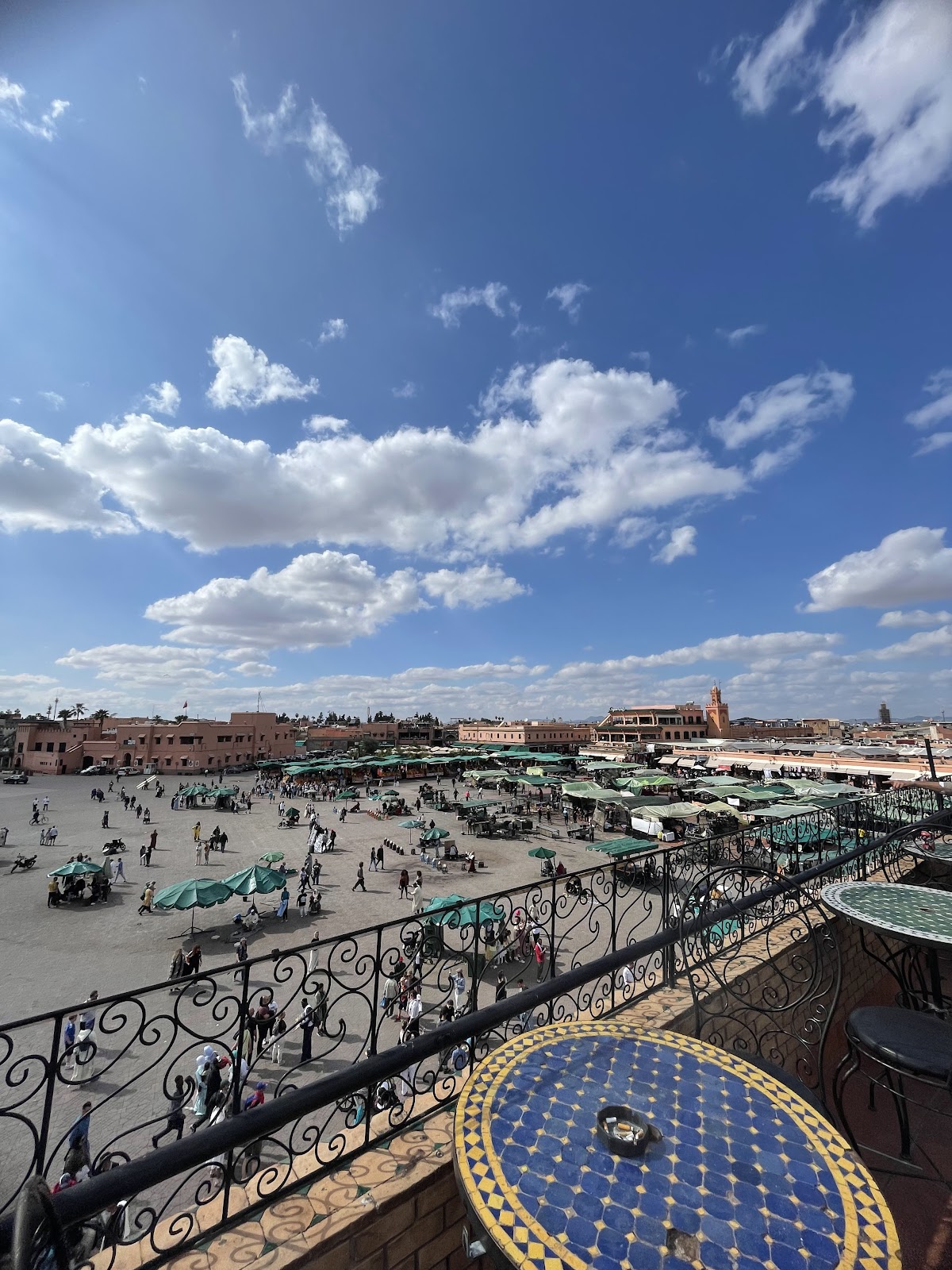
Mechoui Alley, the short lane of roasting stalls beside the spice market off Jemaa el-Fnaa, cooks tanjia to order next to its pit-roasted lamb. Le Tanjia, spread across three floors of a restored riad in the Mellah, serves it from a rooftop that looks over the Badii and Bahia palaces. La Maison Arabe in Bab Doukkala also serves lamb tanjia in its courtyard salons. In the residential lanes, some people still take their own urn to the farnatchi's door beside a hammam.
Eat it the local way: bread as your spoon, right hand only, from the part of the dish in front of you.