The short answer
Marrakech is known for tanjia, its own slow-cooked beef or lamb dish, and for mechoui lamb roasted in pit ovens, tagines, Friday couscous and the evening food stalls of Jemaa el-Fnaa. Breakfast is msemen and baghrir with honey, and sweet mint tea runs through the whole day. Most of it is simple food, cooked slowly.
In more detail
The dish Marrakech calls its own is tanjia. Beef or lamb goes into a tall clay urn with preserved lemon, garlic, cumin, saffron and smen, an aged butter. The urn is sealed and left for hours in the hot ashes of a hammam furnace. It is traditionally a men's dish, filled in the morning and collected for a shared lunch.
Midday belongs to mechoui. In Mechoui Alley, at the edge of the spice market off the northeast corner of Jemaa el-Fnaa, whole lambs roast in clay ovens under the street and are sold by weight with cumin, salt and bread. Elsewhere you find tagine in every kitchen: chicken with preserved lemon and olives, lamb with prunes, kefta with egg. Couscous is traditionally the Friday family meal, and pastilla, a sweet and savoury pie under crisp pastry, is the dish for a special dinner.
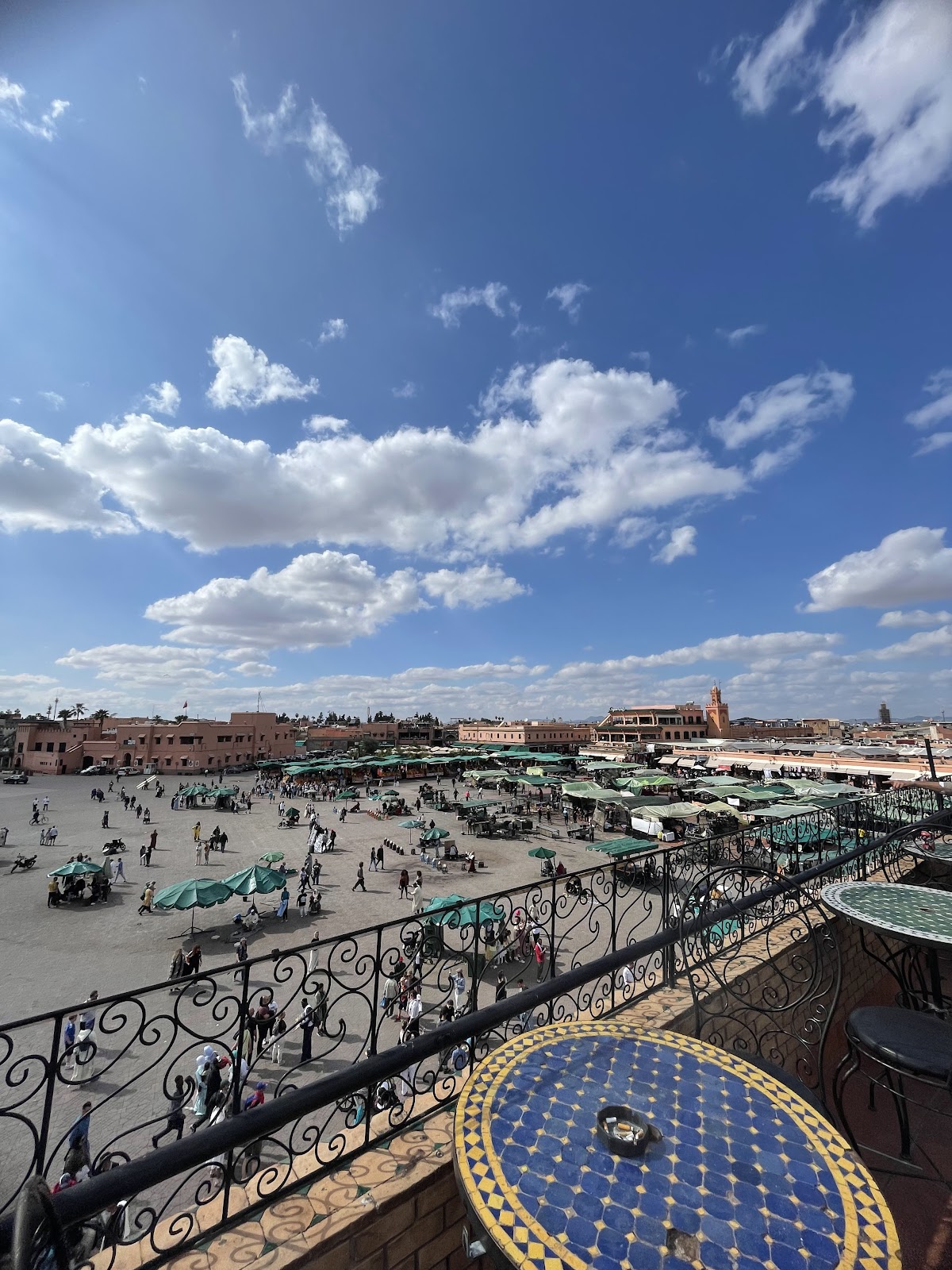
From about 16:00 the stalls go up in Jemaa el-Fnaa and serve harira soup, grills, merguez, snail soup and fried fish until about midnight. Mornings start at the breakfast counters with msemen, a folded flatbread, and baghrir, a semolina pancake cooked on one side only, both eaten with honey.
Good to know
- Go to Mechoui Alley before about 14:00; when the lamb is gone, it is gone.
- Look for couscous on a Friday, when Moroccan families eat it.
- Try harira and snail soup at the night stalls, not just the grills.
- Accept at least one glass of mint tea when it is offered.