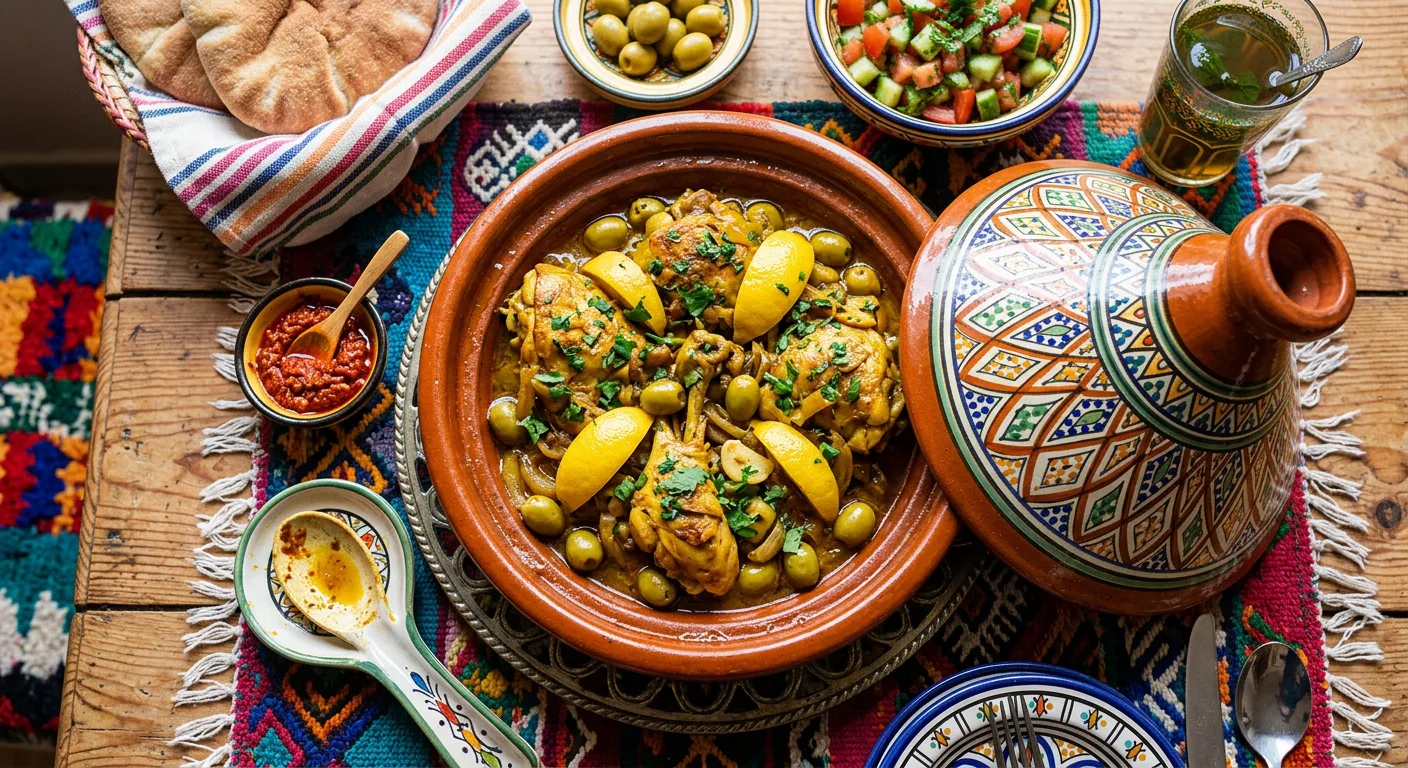
Marrakchi food rarely matches the expectation visitors bring. The tagine and couscous you met in restaurants back home are real enough — but here they share the table with dishes that almost never leave the country: lamb braised slow under aged butter and honey, warka pastry packed with pigeon and almond, and a bread culture so woven into the day that the ovens are still going past midnight. This is where to start.
The dishes worth hunting down
Pastilla (b'stilla) is the one guests most often call a revelation — a broad pie of paper-thin warka, packed with braised pigeon or chicken shredded through egg, cinnamon and almond, then dusted with icing sugar. The sweet-savoury pull of it is pure Andalusian inheritance. It is feast food, seldom made at home, and a fair test of whether a kitchen is serious.
Mrouzia is lamb shoulder braised down with smen — that sharp, aged butter — plus honey, almonds and a layered spice blend. It belongs to Eid al-Adha by tradition but holds a place on the good medina menus all year. The sweetness is gentler than it sounds; the smen lends a depth nothing else in the repertoire quite reaches.
Mechoui — whole or half lamb roasted slow in a clay pit until it slides off the bone — is the speciality of the mechoui cellars off Rahba Kedima, carved through the afternoon before the evening rush. You buy by weight, eat with your fingers and a dish of cumin salt, and wash it down with cold water. Few meals in Morocco satisfy more. Our guides know exactly which cellar to point you toward.
The Jemaa el-Fna grills after dark
The square's food stalls assemble at dusk and run past midnight, and the whole thing is a performance — numbered pitches, vendors hollering, charcoal smoke, trays of raw kefta, merguez and brochettes laid out under the lamps. Ordered straight and at a price you have agreed, the food is honestly good. Grilled kefta — minced lamb with parsley and cumin — with flatbread and a smear of harissa is the order to measure the rest against.
Wave off the set tourist menus pushed at new arrivals; per-item the prices stay fair once you say exactly what you want. Snail soup ladled from steaming cauldrons and makouda (potato fritters) are the local fast bites — a few dirhams, filling, and worth a go at least once.
The medina kitchens — and the riad table
The medina's best sit-down rooms cluster around Mouassine, along Rue Riad Zitoun el-Qedim and down the lanes off Bab Doukkala. A useful tell: skip the places with a photo menu propped at the door. More often than not, a kitchen that needs to picture its tagine is fishing for foot traffic rather than feeding regulars.
The riad dinner is a different thing altogether. Many riads put on a set evening meal cooked in-house — usually not by a chef but by a woman from the surrounding derb who has made these dishes her whole life. The result frequently outshines any restaurant: a proper harira, couscous rolled by hand, a tagine that has been ticking over since noon. Reserve ahead, always. We build a riad dinner into every private itinerary.
Bread, the ferran and argan
Bread carries real reverence here — a leftover loaf is never binned but set on a ledge for whoever needs it. The neighbourhood ferran, the communal wood-fired oven, still bakes the morning dough that families carry round on wooden boards. You will see almost no tourists at one; your guide can walk you in.
Culinary argan oil — pressed from roasted nuts — runs deep and nutty over warm bread or a mound of couscous. Its finest form is amlou, a thick paste of argan, almond and honey eaten at breakfast, Morocco's answer to peanut butter. Buy it from a women's argan cooperative in the Mellah or the souks; what the street sellers offer is a lottery.
What to drink: atay, coffee, juice
Moroccan atay is gunpowder green tea steeped with fistfuls of spearmint and a serious amount of sugar, poured from a height to put a head on it. Accepting a glass is a social gesture; turning one down in someone's home reads as faintly rude. In a souk café a glass runs 5–10 MAD and rents you the table for as long as you like.
The juice carts ringing Jemaa el-Fna press orange, pomegranate and mixed fruit to order at 8–15 MAD a glass — the orange, squeezed in front of you, is exceptional. Morocco is largely dry: alcohol appears in tourist restaurants and hotels but not in the local medina cafés. Read our full Marrakech destination guide.
Frequently asked
What one dish should you not leave Marrakech without trying?
Mrouzia — lamb shoulder braised slow with smen (the pungent aged butter), honey and a deep ras el hanout — is the one. It rarely surfaces outside Marrakchi homes and the better medina kitchens. Pastilla, that flaky dome of pigeon or chicken with almonds, egg and icing sugar, is the other dish guests most often come back describing as a small revelation.
Is the Jemaa el-Fna street food safe to eat?
By and large, yes. The food cooks to order over fierce charcoal and the stalls turn over fast, so it rarely sits. The real risk is the bill, not the bacteria — settle a price before you sit, and make clear you are not taking the tourist set menu unless you actually want it. The grilled kefta, merguez and brochettes are genuinely good.
Which medina quarters are best for eating in Marrakech?
For sit-down kitchens, the lanes around Mouassine and Rue Riad Zitoun el-Qedim deliver. The Mellah, the old Jewish quarter by Place des Ferblantiers, fries some of the best fish in the city. And Rue Bab Doukkala hides a run of honest local eateries the tour groups have not found yet.
Does Marrakech do vegetarian food well?
Very well — Moroccan cooking leans vegetable-forward by nature. Zaalouk (smoked aubergine), taktouka (tomato and roasted pepper), bissara (a thick broad-bean soup off the Bab Doukkala carts in winter) and the spread of little salads called 'salade marocaine' are all meat-free and excellent. Vegetable tagines turn up on every menu in the medina.
Should you buy argan oil in Marrakech, and what kind?
Argan oil is pressed from the nut of the argan tree, which grows only in Morocco's south-west. The roasted, culinary version is nutty and rich over couscous or bread; the unroasted, cosmetic one is for skin and hair. Buy from a women's cooperative in the Mellah or a reputable grocer rather than a street seller — quality and price swing wildly between them.
When do people actually eat in Marrakech?
Later than northern Europe. Lunch runs roughly 12:30 to 3 pm; dinner opens around 8 pm, with Marrakchis often sitting down at 9 or 10. Many of the best riads serve an evening meal by reservation only, opening at 7:30 pm for the earlier tourist crowd. During Ramadan, kitchens stay shut until iftar at sunset, then fill in minutes — book ahead.
Eat the way Marrakchis do
Our food walks reach past the restaurants — into homes, cooperatives and the ferran.
Marrakech Tours shapes half- and full-day food experiences across the medina for guests who would rather understand a plate than simply photograph it.
Enquire about a food experience