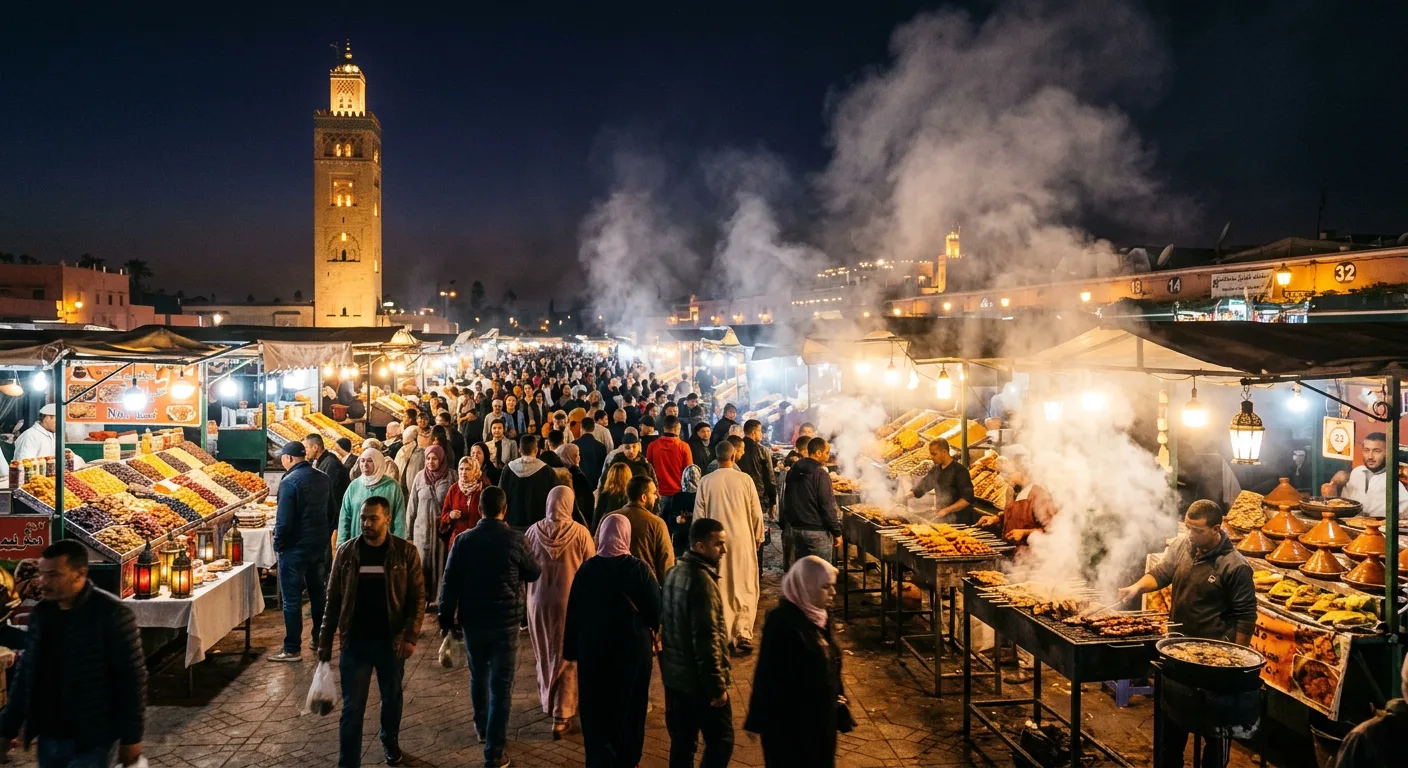
Here is the honest short answer. Most “scams” in Marrakech are pushy sales tactics and small overcharges, not crime — the medina is busy and safe to walk by day, and violent crime against visitors is rare. The patterns are predictable: unofficial guides, the “this way is closed” redirection, the henna and animal-photo ambush around Jemaa el-Fna, taxi overcharging, and gentle pressure in the souks. Knowing them in advance turns them from stressful into completely manageable.
The honest version up front
This is hassle, not danger. We have written it plainly rather than fearfully, because the worst thing you can do is arrive braced for a fight — most Marrakchis are warm, helpful and proud of their city, and the hustle is the work of a small, persistent few in the tourist zones. We have not printed prices, because they move and vary; the fixes here are about behaviour, not numbers.
First, the mindset that defeats most of it
Nearly every Marrakech hustle relies on the same two things: your instinct to be polite, and your reluctance to look rude in a conversation someone else started. The single most useful habit is a calm, friendly, unbothered no — and then to keep walking. You are not obliged to engage, explain yourself, or accept help you did not ask for. Said with a smile, “la, shukran” (no, thank you) and a steady pace ends almost every approach within seconds. Treat unsolicited “free” help as the opening line of a sale, because it usually is.
The “this way is closed” redirection
The most common one by far. A friendly stranger tells you the souk, the square, the tannery or a monument just ahead is closed — for prayer, for a holiday, “only open today” — and offers to walk you to “the real way,” a viewpoint, or a workshop instead. It almost always ends at a shop, or with a hand out for a tip. Main medina routes rarely close, so treat any unprompted “it’s closed, follow me” as your cue to thank them, decline, and carry on along the line you were already walking. If you are genuinely unsure of the way, ask a shopkeeper standing in their own doorway, or a family, rather than someone who approached you.
Faux guides and “free” help
Closely related: the unofficial guide. Someone falls into step beside you, points out a couple of harmless facts, perhaps walks you toward something you were heading to anyway, and then expects payment — and can become insistent about the amount. Children sometimes offer to lead you out of the maze for a coin. None of this is dangerous, but it is easier avoided than unwound. If you want guiding, use a licensed guide arranged through your riad or a tour operator; their badge, fixed rate and local standing make the faux-guide problem disappear. A friendly “no thank you, I know the way” — even if you don’t quite — is the cleanest exit.
The Jemaa el-Fna ambushes: henna, monkeys and snakes
The great square is the heart of Marrakech and absolutely worth your evenings — but it is also where the most physical hustles cluster. Some henna artists will reach for your hand and start drawing before you’ve agreed anything, then ask for far more than the going rate; the Barbary-macaque and snake handlers will drape an animal on you or thrust it into a photo and then demand payment. The fix is the same for all of them: keep your hands and your camera to yourself, don’t let anyone place anything on you, and decline before contact is made. If you genuinely want henna, choose a seated, established stall and agree the design and price out loud first. Quite apart from the cost, animal photos help keep wild animals on the square, which is reason enough to wave them off.
Taxi overcharging
The most common money friction. Petits taxis are metered and genuinely cheap, but a driver may claim the meter (compteur) is broken and quote a flat tourist price instead. Two simple defences: insist politely on the meter, or agree the full fare out loud before you get in — and have a rough idea of the fair amount first, which your riad will happily tell you. If you don’t like the number, just wait for the next cab; there is no shortage. For arrival, when you’re tired and don’t yet know the rates, a pre-booked private transfer removes the negotiation altogether. Our getting-around guide covers taxis, calèches and the medina on foot in more detail.
Souk pressure and the “special price”
This is less a scam than a culture clash: haggling is the norm, and the first price is an opening, not an insult. The pressure tactics to recognise are the warm “just look, no charge” that makes it awkward to leave, the “special price for you, my friend,” and the mirror trick where a stallholder names a number and waits for your discomfort to fill the silence. None of it obliges you to buy. If you’re not interested, don’t pick the item up and don’t ask the price — that’s read as intent to deal. If you are, decide your own ceiling, counter well below the opening, and be ready to walk away with a smile; the walk is the most powerful (and entirely friendly) move you have. Our guide to haggling in the souks sets out the etiquette and the phrases.
Tanneries, “Berber pharmacies” and workshop detours
At the tanneries someone may press a sprig of mint into your hand “for the smell” and then ask for a tip, or steer you to a balcony viewpoint that comes with a hard sell on leather. The “Berber pharmacy” and some carpet or argan “cooperatives” run a polished version — tea, a demonstration, warm hospitality, and then sustained pressure to buy at inflated prices. Enjoy the demonstration if you like, but treat the hospitality as marketing, feel no debt of obligation, and remember the same goods are usually cheaper and just as good from an ordinary stall. You can always say you’d like to think about it and leave.
Money and small change
Watch the small stuff rather than imagined big stuff. Count your change, keep small notes handy for taxis and tips so you’re not waiting on change that never quite arrives, and use ATMs attached to recognised banks. Card skimming is no more a Marrakech problem than anywhere, but the usual habits apply: shield the keypad, and prefer machines in bank branches. The dirham is a closed currency, so you change money in Morocco rather than before you fly — our money in Marrakech guide explains dirhams, ATMs, cards and exchange in full.
The golden rules, in one place
- Decline before contact. Don’t let anyone put henna, an animal or an item in your hands before a price is agreed.
- Ignore “it’s closed.” Keep walking your original route; main ways rarely shut.
- No unsolicited help. Free directions, a guided shortcut or a “quick look” usually has a bill attached.
- Settle the number first. Agree taxi fares and stall prices out loud before you commit, with a rough fair figure in mind.
- The walk-away is your superpower. In a souk, leaving politely costs nothing and often improves the price.
- Ask the unbothered, not the eager. For real directions, ask a shopkeeper in their own doorway or a family, not someone who approached you.
When a guide simply removes the friction
You do not need a guide to stay safe in Marrakech — most visitors are fine on their own once they know the patterns above. But on a first day, a licensed local can make the city feel instantly easier: faux guides and touts drift away when you’re already accompanied, the medina’s wrong-turn redirections never get started, and prices in the workshops you actually want to visit tend to be calmer and fairer. A guided medina & souks walk is the gentlest way to learn the lay of the land before you explore solo. For the wider safety picture, see our honest is Morocco safe guide, the solo female travellers guide and our wider things to know before visiting Marrakech.
Frequently asked
Is Marrakech dangerous because of scams?
No. Almost everything travellers call a 'scam' in Marrakech is pushy salesmanship and small overcharging, not crime — and violent crime against visitors is rare. The medina is busy and comfortable to walk by day, and lively and well-lit around Jemaa el-Fna into the evening. The honest description is hassle, not danger: it can be tiring rather than frightening. Once you recognise the handful of recurring patterns, they stop working on you and the city relaxes considerably.
What is the most common scam in Marrakech?
The 'this way is closed' redirection. Someone — often friendly and unprompted — tells you the souk, the square or the tannery ahead is shut, closed for prayer, or only open today, and offers to show you 'the real way' or a workshop instead. It usually ends at a shop or with a request for a tip. The medina rarely closes a main route, so treat any unsolicited 'it's closed, follow me' as a cue to smile, say no thank you, and keep walking on your original line.
How do I avoid taxi scams in Marrakech?
Either insist on the meter (the 'compteur') in a petit taxi, or agree the full fare out loud before you get in — and have the rough sum in mind first. Most petits taxis are metered and inexpensive; the friction comes when a driver claims the meter is broken or quotes a flat tourist price. If you don't like the number, simply wait for the next cab — there are plenty. For the airport, a pre-booked private transfer removes the negotiation entirely, which is why many visitors arrange one for arrival.
Are the henna ladies in Jemaa el-Fna a scam?
Not exactly, but it's the classic ambush. Around the square some women will reach for your hand and begin applying henna before you've agreed to anything, then ask for a sum far above the going rate — and the 'free' photo with a monkey or snake works the same way. It's pushy rather than dangerous. If you don't want it, keep your hands to yourself, say a firm 'la, shukran' (no, thank you) and walk on. If you do want henna, agree the design and the price clearly first, and prefer a seated, established stall.
How do you politely say no to touts and faux guides in Marrakech?
Be friendly but unambiguous, and don't over-explain. A calm 'la, shukran' (no, thank you), a small head shake and steady walking pace does almost all the work — engagement is what keeps the conversation alive. Avoid accepting 'free' help, directions or a 'quick look', because the favour is usually the opening to a tip or a shop. You're not being rude; declining politely is completely normal here, and most people move on at once.
Do I need a guide to avoid scams in Marrakech?
No — plenty of visitors navigate Marrakech happily on their own once they know the patterns on this page. A licensed local guide simply removes the friction: faux guides and touts melt away when you're already accompanied, you skip the wrong-turn redirections in the medina maze, and prices in workshops tend to be calmer. It's a comfort and confidence choice for a first day, not a safety necessity.
Want the medina without the friction?
Start your trip with a local who already knows every turn.
Every Marrakech Tours experience is private and led by licensed local guides. We handle the transfers, walk you through the souks the first time, and leave you confident to wander on your own — the hustle simply never gets a foothold.