No. 03, The districts · 05 of 11
The Mellah: Marrakech's old Jewish quarter and spice market
The Mellah is the old Jewish quarter of Marrakech, beside the Bahia palace in the southeast of the medina. Visit the Lazama synagogue, still opened to visitors by a caretaker and closed on the Sabbath, and the covered market selling spices, olives and preserved lemons. Enter from Place des Ferblantiers. Mid-morning is best.
Best timeMid-morning
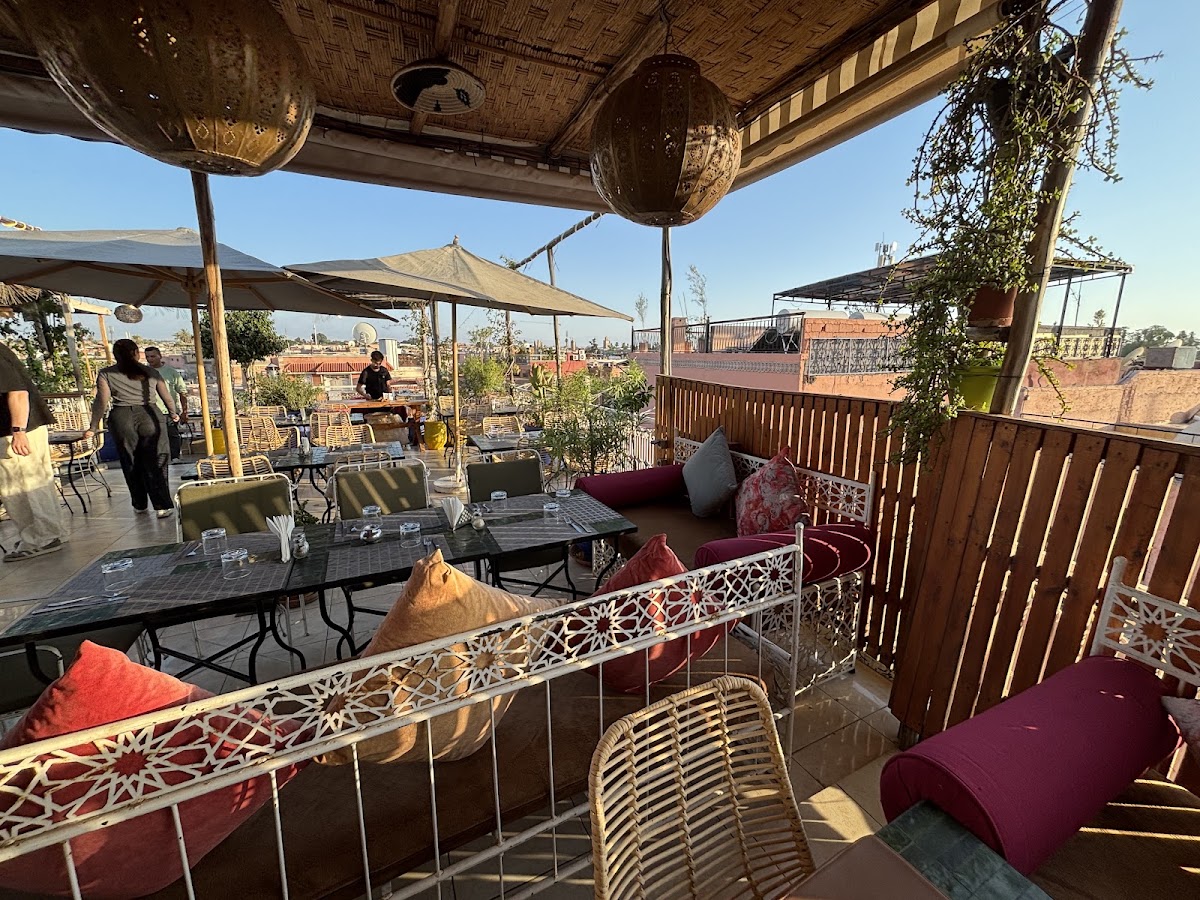
The Mellah at a glance
- Best time
- Mid-morning, when the market is busy; the synagogue keeps its own hours (closed on the Sabbath).
- What it feels like
- The old Jewish quarter: narrow lanes, balconies over the street, the covered spice market, Place des Ferblantiers and the Lazama synagogue, still opened to visitors by its caretaker.
- Eat here
- The covered market's spice cones, olives and preserved lemons; street snacks on Place des Ferblantiers.
- See
- Lazama synagogue (Slat al-Azama)
- The Mellah covered market
- Place des Ferblantiers, the tinsmiths' square
- The Jewish cemetery
The Lazama synagogue
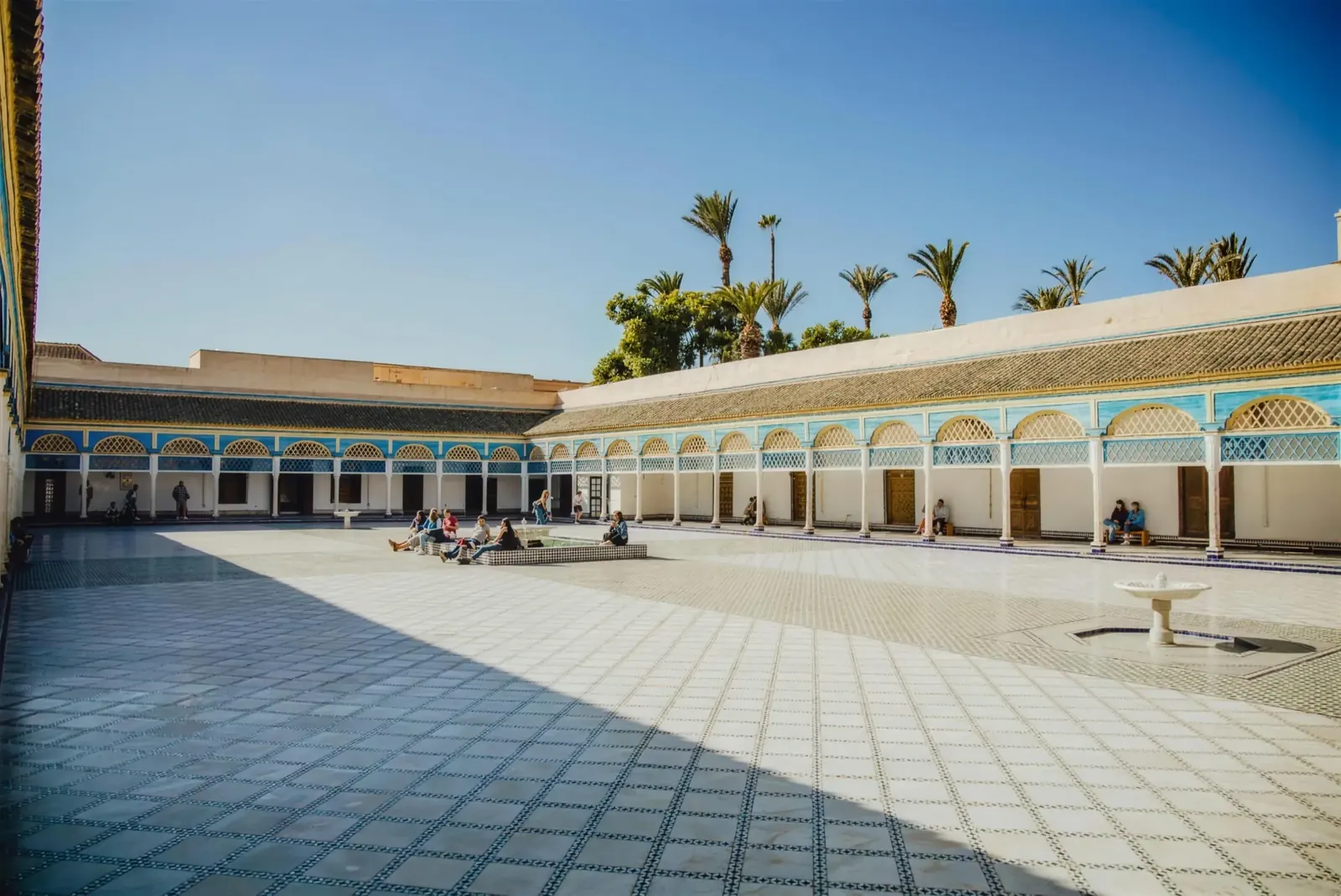
The Lazama synagogue, also called Slat al-Azama, is dated to about 1492 or later, linked to Jews who arrived after the expulsion from Spain. It is the Mellah synagogue most often open to visitors; a caretaker lets people in, and it closes on the Sabbath.
The covered market
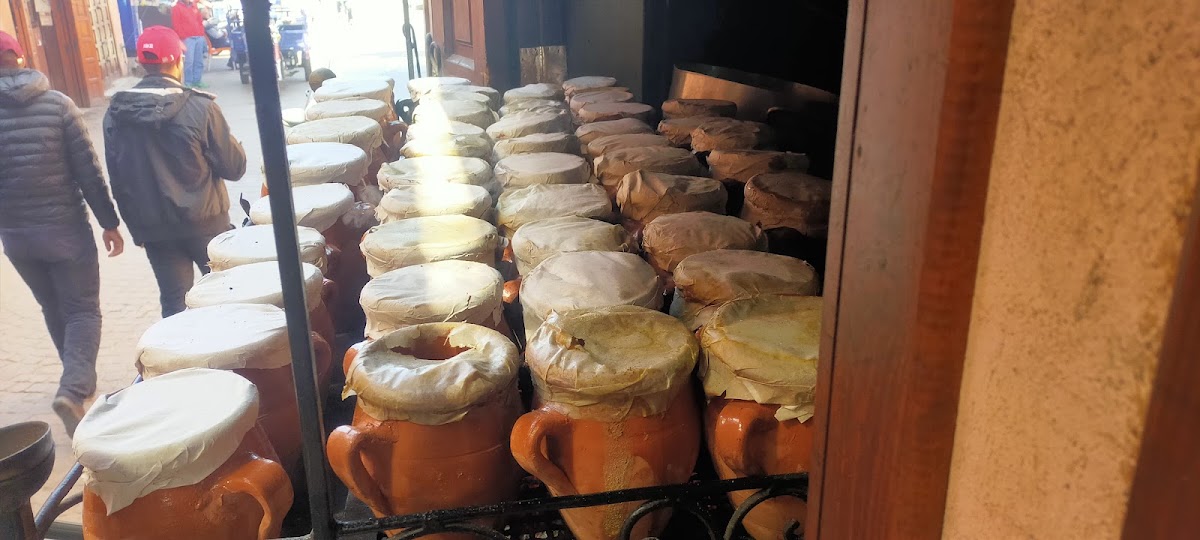
The Mellah's covered market sells spice cones, olives and preserved lemons to neighbourhood cooks. Smell freely and buy small.
Getting there
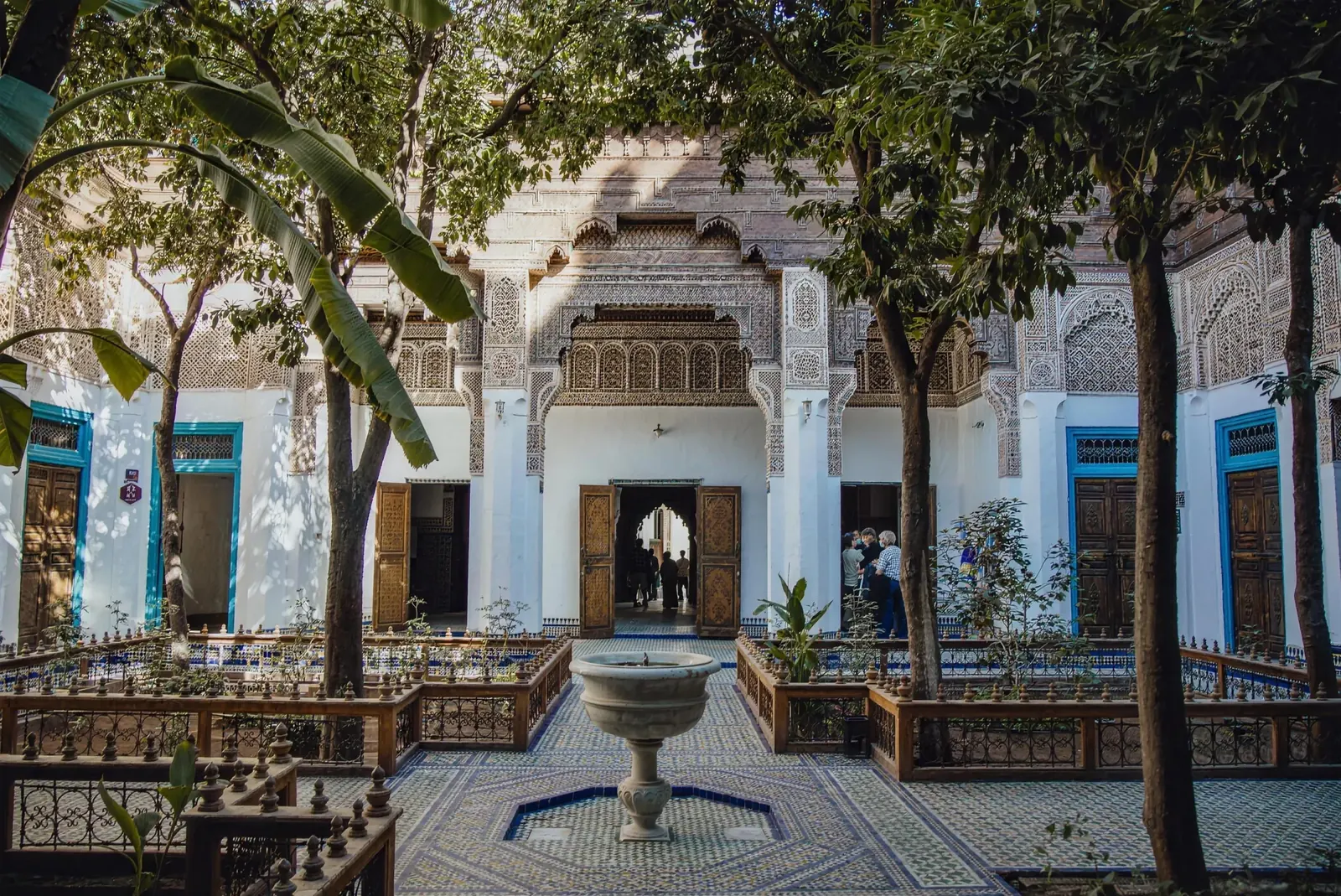
Place des Ferblantiers, the tinsmiths' square, is the main way in. From Jemaa el-Fnaa, walk south along Riad Zitoun. The Bahia palace is next door.
The quarter's past
The Mellah once had many synagogues; today Lazama is the one most often open to visitors. A small Jewish community still lives in the city.
Don't miss
- Lazama synagogue (Slat al-Azama)
- The Mellah covered market
- Place des Ferblantiers, the tinsmiths' square
- The Jewish cemetery
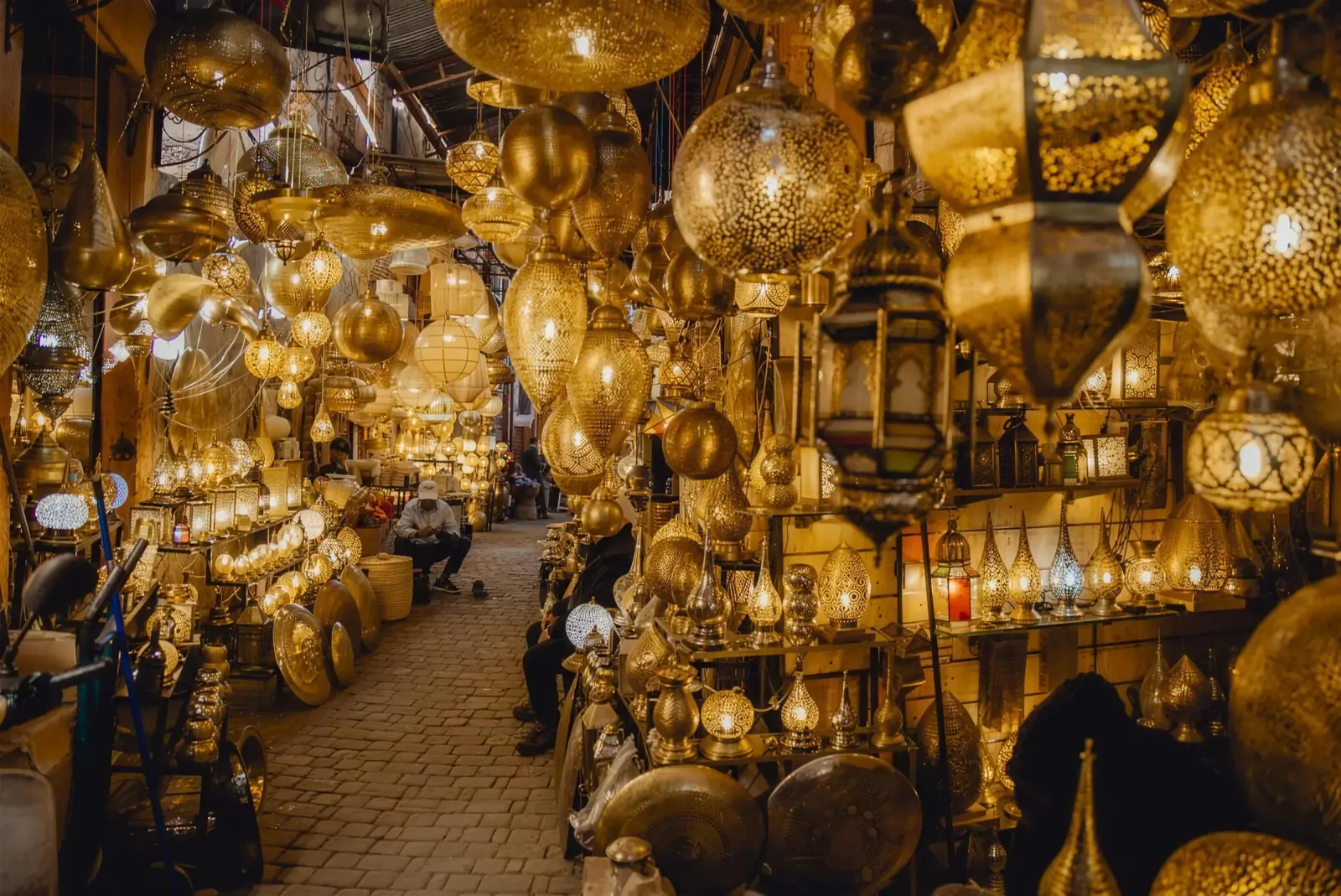 A lantern shop in the souk
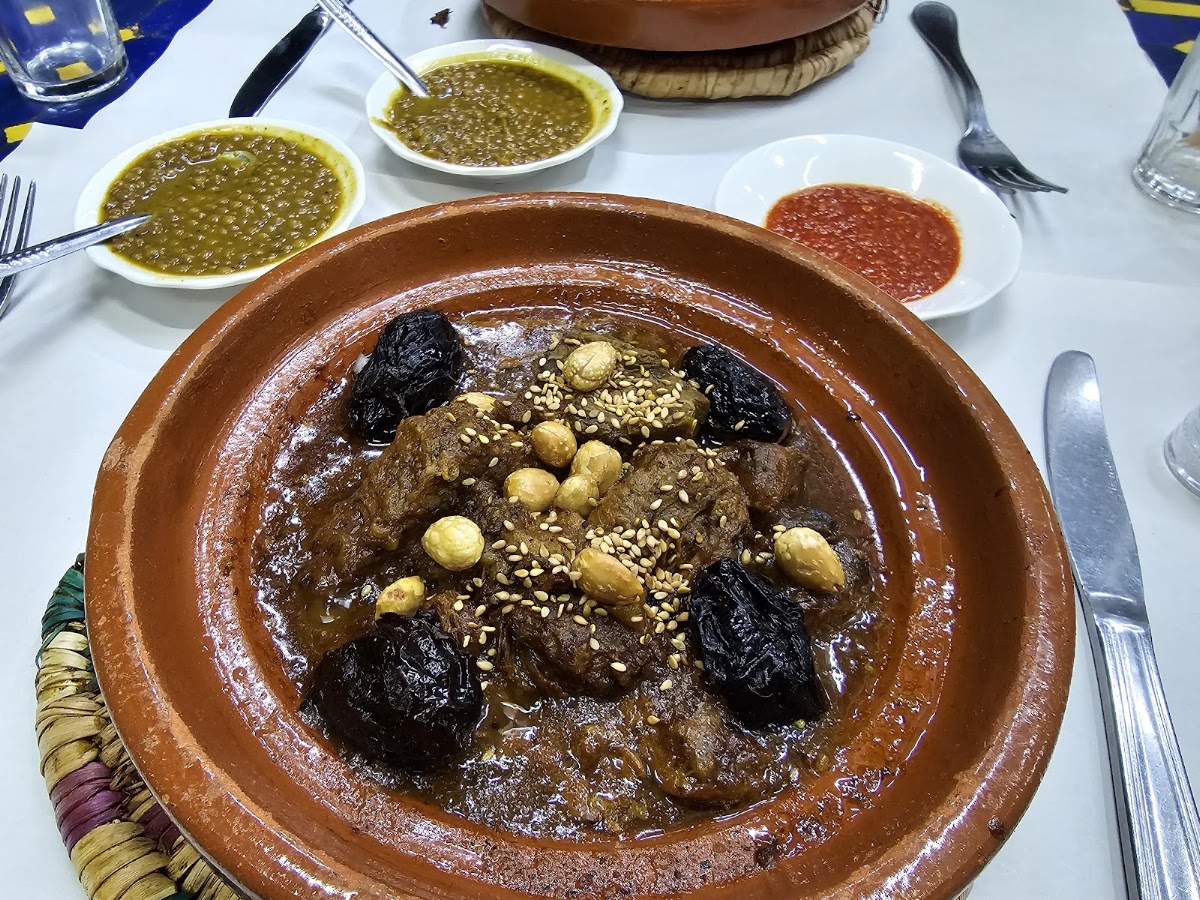 Lamb and prune tagine
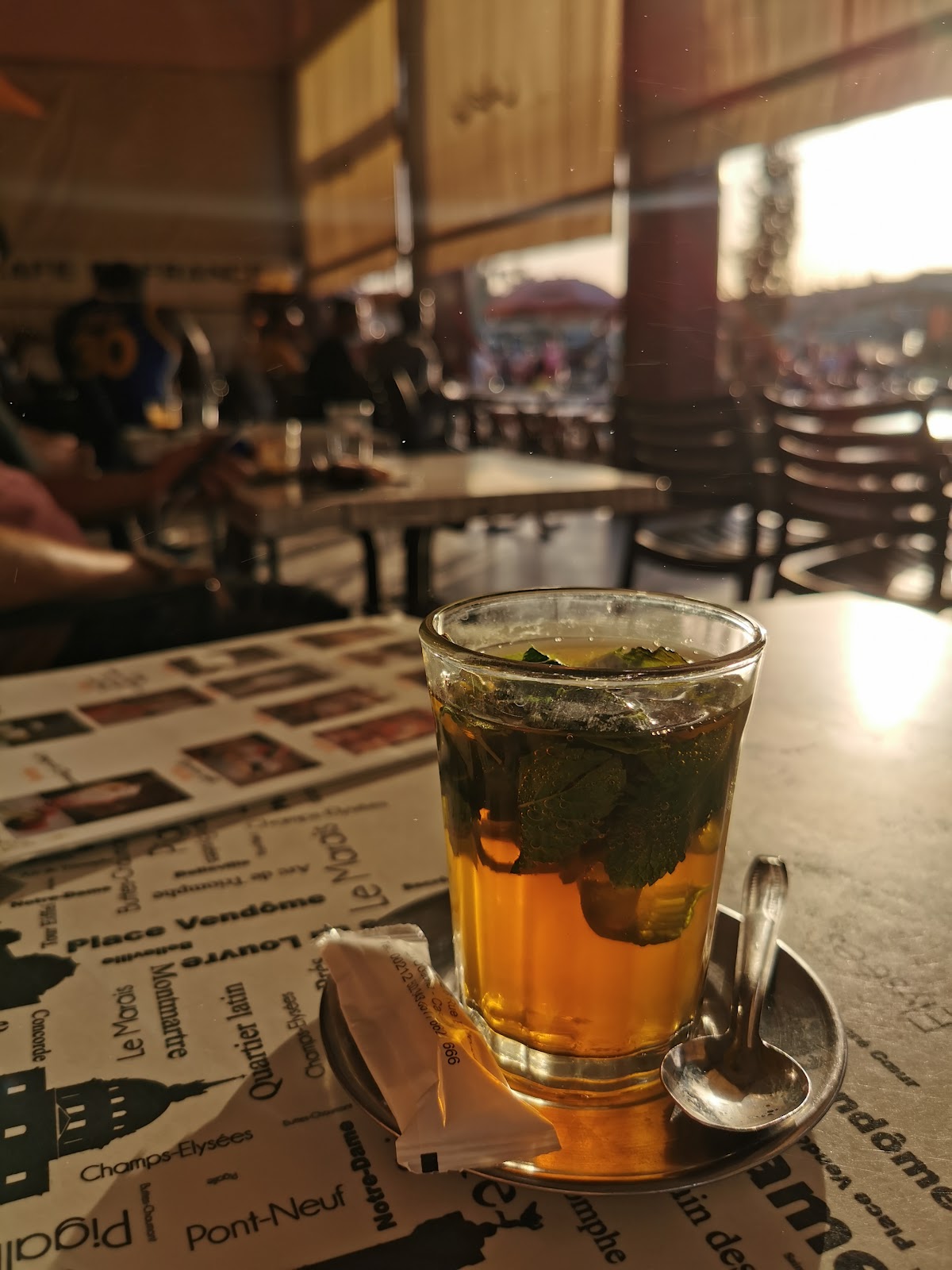 Mint tea at a café on Jemaa el-Fnaa
Worth knowing before you go
- Ask before photographing people in the Mellah, and in the synagogue follow the caretaker's lead.
- Herbalist tastings are a sales pitch; 'la, shukran' ends them politely.
See The Mellah with someone who lives here
Tell us your dates and group size. A planner writes back within 24 hours with a plan and a fixed written quote. Asking costs nothing.
Questions people ask
Can visitors enter the Lazama synagogue?
Yes, outside the Sabbath. A caretaker opens the door; the entrance is easy to miss, so ask locally.
How do I get to the Mellah from Jemaa el-Fnaa?
Walk south along Riad Zitoun towards the Bahia palace, then enter by Place des Ferblantiers.
Is there a spice market in the Mellah?
Yes, the covered market sells spices, olives and preserved lemons, mostly to local cooks.