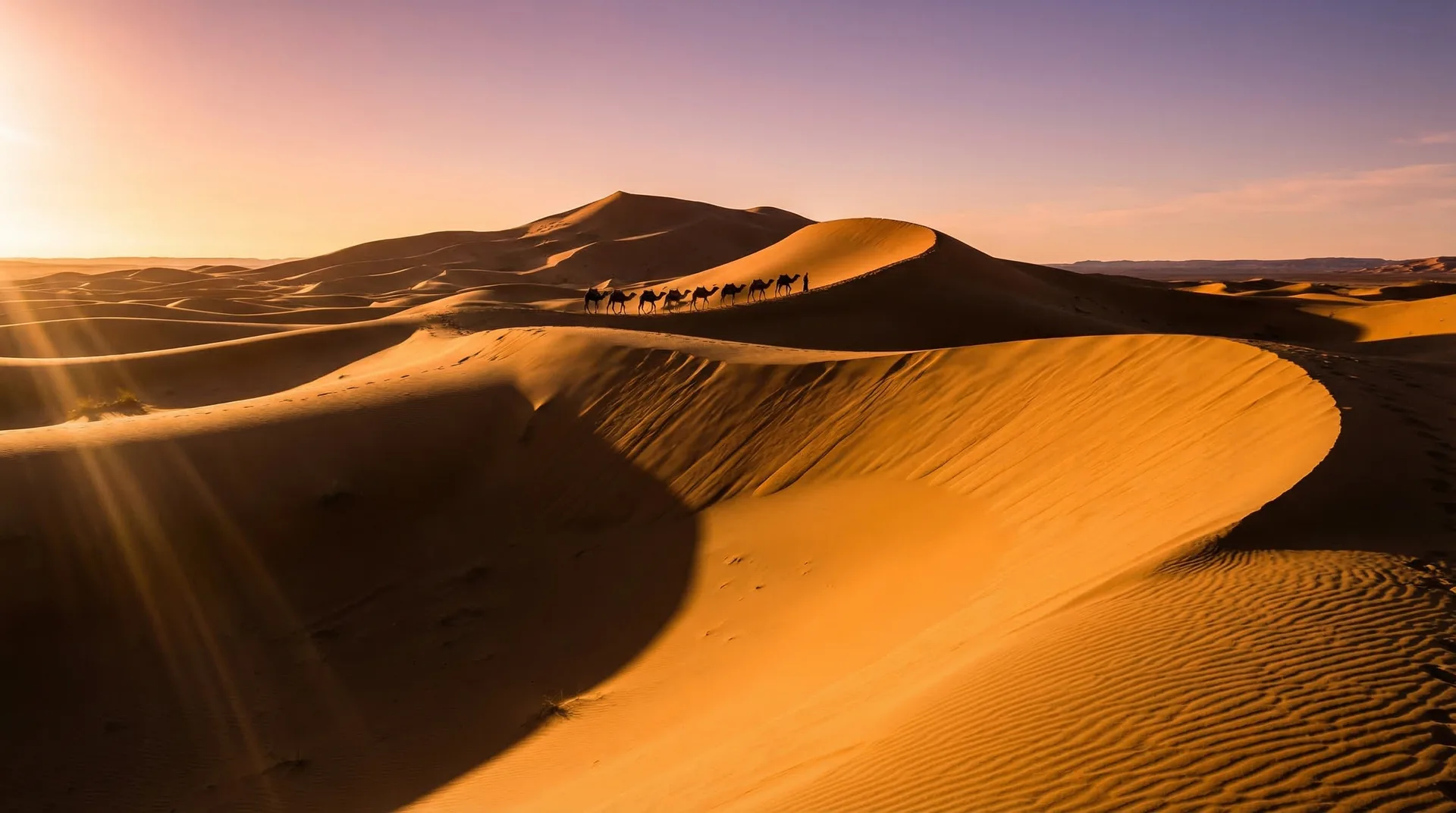
Here is the honest short answer. On a first trip, the things travellers most regret skipping are a night in the Sahara, the Marrakech medina, and at least one of Fes or a High Atlas valley — get those three and you have seen the soul of Morocco. Almost everything else — the Atlantic coast, the blue town of Chefchaouen, the imperial north — is a wonderful bonus you add only if your days allow. The single biggest first-timer mistake is the opposite instinct: trying to cram all of it into one short visit and spending the trip in a car.
The honest version up front
Morocco is a big country and there is no train south of Marrakech, so the desert is a road trip rather than a day out. We have kept drive times deliberately rough here — roads, stops and season all change them — and we have not printed prices, because they move too. Treat the distances below as “allow plenty of time,” and confirm timings with whoever drives you.
The things first-timers regret skipping
If you only remember one section of this page, make it this one. These are the experiences that, time and again, guests tell us were the trip — and the ones people who rushed wish they had made room for.
1. A night in the Sahara
Nothing else on a Morocco trip lands quite like it: dinner under the stars at a desert camp, total silence, and sunrise breaking over the dunes. The big dunes at Erg Chebbi (near Merzouga) are a long drive from Marrakech — usually built as a two- or three-day loop rather than a quick out-and-back — so it needs planning, not a spare afternoon. If your trip can fit only one “big” thing beyond the cities, make it this. Our guide to desert camps explains the standard-versus-luxury difference, and what a night in a camp is actually like sets expectations. The five-day Marrakech–Sahara itinerary shows how the loop fits together.
2. The Marrakech medina & Jemaa el-Fna
Marrakech is most travellers’ first taste of Morocco, and the old city earns its reputation: the labyrinth of souks, the craftsmen’s quarters, and the theatre of Jemaa el-Fna as the grill smoke rises at dusk. Give it at least a couple of slow days rather than a hurried morning — our three-day Marrakech itinerary is the natural starting point, and a guided medina & souks walk is the quickest way to read a place that can otherwise feel overwhelming on day one.
3. Fes — or a High Atlas valley
Here is a genuine fork in the road for a short trip. Fes has the largest car-free medina on earth and a medieval intensity Marrakech has partly traded for tourism — it is the better northern base and a highlight in its own right; see our Fes medina guide. But if your route keeps you in the south, a High Atlas valley delivers the other side of Morocco — Berber villages, walnut groves and mountain air within an easy drive of Marrakech. The Atlas Mountains day trips, the gateway village of Imlil and the Ourika Valley all make the point in a single day. On a first trip, one of Fes or the mountains is plenty; both is a bonus.
4. Aït Ben Haddou & the road south
If you drive to the desert, you cross the High Atlas by the spectacular Tizi n'Tichka pass and reach Aït Ben Haddou, the honey-coloured fortified village you have seen in a dozen films. Even as a day trip from Marrakech it is one of the country’s great drives — and on the way to the dunes it comes almost for free. Don't treat the journey south as dead time; the landscape is half the reason to go.
5. A slow riad and a glass of mint tea
The least “sightseeing” item on the list, and the one people are quietly happiest they made room for. Staying in a riad — the old courtyard houses tucked behind the medina walls — and giving yourself an unhurried afternoon of mint tea on a rooftop is not a waste of a day; it is the texture of the trip. Build in at least one.
What you can safely skip on a first trip
Just as useful as the must-do list is permission to leave things out. Morocco rewards depth over distance, and a first visit cannot be comprehensive — so here is what most first-timers can comfortably save for next time.
- The everything-at-once route. Marrakech, the Sahara, Fes, Chefchaouen and the coast in one short week looks tempting on a map and feels exhausting in practice. Pick a lane.
- The far south. Dakhla, the deep Anti-Atlas and the remote Atlantic south are extraordinary but a long way from the classic loop — a second-trip reward, not a first-trip must.
- A second imperial city. Meknes and Rabat are rewarding, but on a tight first trip one great medina (Fes or Marrakech) usually does the job; doubling up eats driving days.
- Long out-and-back detours. If a side trip means retracing hours of the same road, it is usually the first thing to cut. A clean loop beats a spider's web.
- Chefchaouen, if you're southern-based. The blue town is lovely but sits up in the north; squeeze it in only if you are already routing through that region. Our Chefchaouen guide helps you judge whether it fits.
How long do you need to fit the essentials in?
Roughly seven to ten days is the sweet spot — enough for Marrakech, a Sahara overnight and Fes (or the coast) without living in the car. Five days works well for Marrakech plus the desert; you simply skip the north. Two weeks lets you add the coast and the imperial north at a humane pace. Fewer than five days and the honest advice is to pick one region and do it properly rather than race the whole country. For the detail, our trip-length planning guide and the day-by-day classic seven-day loop are the companion pieces here, and our full set of itineraries lays out the options by length.
How to get around to see them
The north and the south travel very differently. Up north, the high-speed Al Boraq train links Tangier, Rabat and Casablanca quickly and comfortably, and conventional trains carry on to Fes and Marrakech — so the city-to-city north is easy without a car. South of Marrakech there is no train at all, which is the single fact that shapes most first trips: the desert, the Atlas passes and the kasbah country are reached by road. For that stretch a private driver-guide is the usual choice — it removes the mountain driving, the navigation and the parking, and turns the long transfers into part of the trip. Where to start and finish is worth a thought too: most people fly into Marrakech, but flying into one city and out of another (an open-jaw ticket) saves doubling back on the classic loop.
When to go so the essentials are at their best
Broadly, spring (roughly March to May) and autumn (roughly September to November) are the sweet spots: warm days, cooler desert nights and comfortable city sightseeing. High summer can be punishing in Marrakech and the desert valleys, which turns a midday medina wander or a camel ride into an ordeal; winter is lovely in the cities and can bring snow to the Atlas passes. Seasons shift year to year, so treat these as guidance rather than guarantees — our month-by-month best-time guide goes deeper.
First-timer tips: what's overhyped, what's underrated
- Underrated: the drive itself. The road over the Atlas to the desert is one of the highlights, not the cost of one.
- Underrated: a coast day. If your route allows, an Essaouira day trip — breezy ramparts and grilled fish — is a perfect change of pace from the medinas.
- Overhyped: seeing “all of Morocco” in a week. You can't, and trying to is the surest way to enjoy none of it.
- Don't over-schedule. Leave gaps. The best Morocco moments — a rooftop tea, a souk conversation, an unplanned detour — happen in the spaces between the sights.
- Pack layers and good shoes. Mountain mornings and desert nights are cool even in summer, and medina cobbles are hard on suitcase wheels.
Frequently asked
What is the one thing you shouldn't miss in Morocco?
A night in the Sahara. Of everything Morocco offers, sleeping at a desert camp on the edge of the dunes — dinner under the stars, the silence, sunrise over the sand — is the single experience first-timers most often say they'd have regretted skipping. It's a long road trip from Marrakech to reach the big dunes at Merzouga, usually built as a multi-day loop, so it needs planning rather than a spare afternoon. If your trip can fit only one 'big' thing beyond the cities, make it this.
What are the must-see places in Morocco for first-timers?
For a first visit the core four are: Marrakech and its medina; a Sahara overnight at the dunes; Fes, home to the world's largest car-free medina; and at least one taste of the landscape between them — a High Atlas valley or the kasbah country around Aït Ben Haddou. Get those and you've seen the heart of the country. The Atlantic coast (Essaouira), the blue town of Chefchaouen and the imperial north are wonderful additions you fit in only if your days stretch to it.
Can you see the Sahara and Fes on a first trip?
Yes, and it's the classic first-timer route — but be honest about the driving. Morocco is a big country and there's no train south of Marrakech, so the desert is a road trip. The usual loop runs Marrakech to the dunes over two or three days, then north to Fes, which is again a long driving day. It's very doable in about seven days, but it's a lot of road, so allow extra time and don't try to wedge the coast or the far north into the same week.
What should you skip on a first trip to Morocco?
Skip the urge to see everything. The most common first-trip mistake is over-packing the route — trying to combine Marrakech, the Sahara, Fes, Chefchaouen and the coast in one short visit, then spending most of it in transit. On a first trip you can usually skip the far south (Dakhla, the deep Anti-Atlas), long out-and-back detours, and a second imperial city. Better to do three or four things slowly than ten things from a car window.
Is Marrakech or Fes more worth it on a first trip?
Most first-timers start in Marrakech — it has the most flights, the famous Jemaa el-Fna square, the easiest day trips into the Atlas and the desert, and the liveliest energy. Fes is quieter, older and arguably the more intact medieval medina, and it's the better northern base. You don't have to choose: the classic loop takes in both. If you genuinely only have time for one city, Marrakech is the more practical first base.
How many days do you need to see the highlights of Morocco?
Roughly seven to ten days is the sweet spot for the headline experiences — Marrakech, a Sahara overnight and Fes — without living in the car. Five days works for Marrakech plus the desert. Two weeks lets you add the coast and the north at a humane pace. Fewer than five and you should pick a single region and do it well rather than racing the whole country.
First time in Morocco?
Tell us your dates and we'll build the trip around the essentials.
Every Marrakech Tours journey is private and made to measure. We start from what you most want to see, keep the route honest about the driving, and leave room to breathe — so a first trip feels like a real introduction, not a sprint.