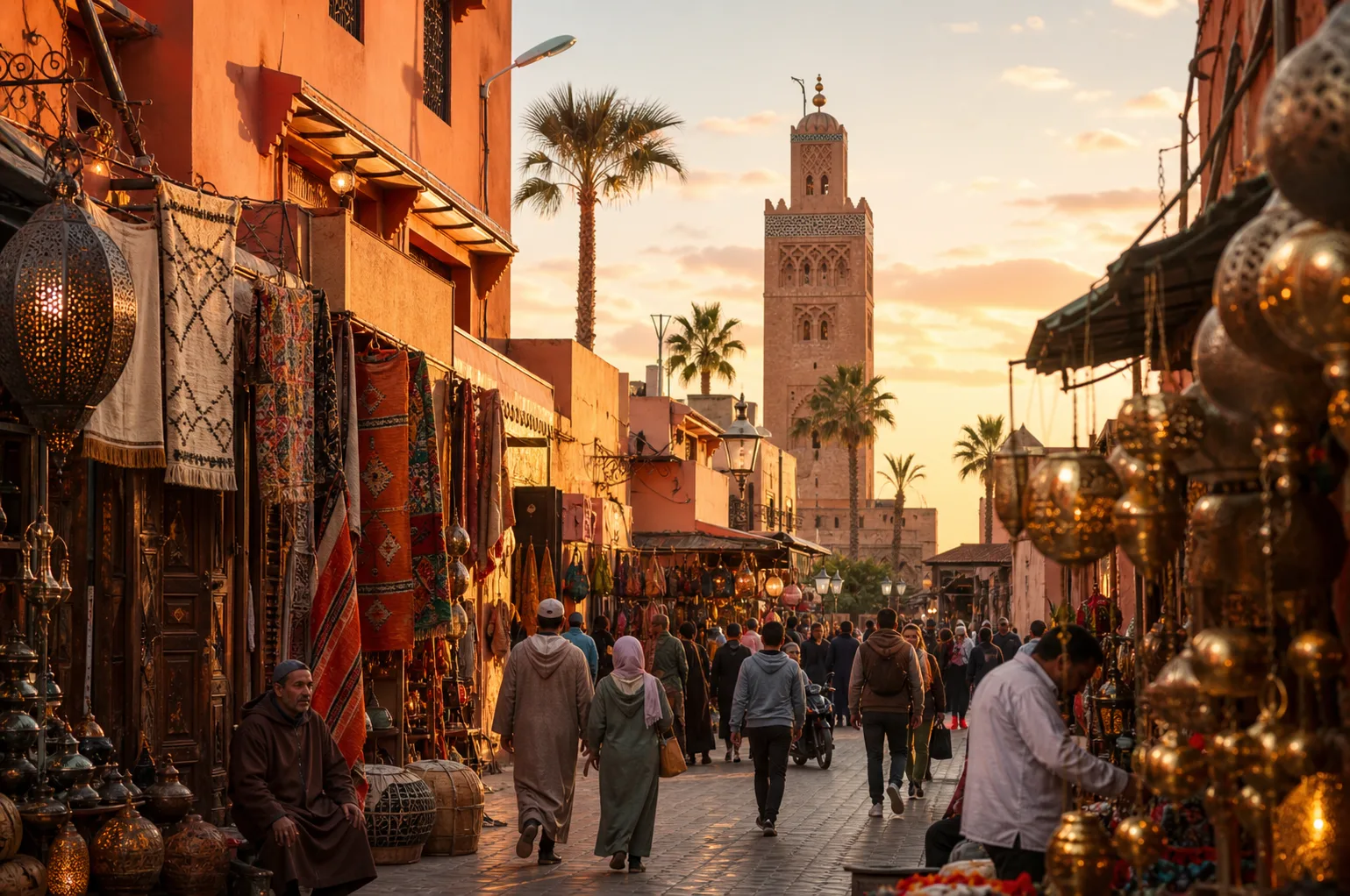
Here is the honest version. Morocco is co-hosting the 2030 FIFA World Cup alongside Spain and Portugal, and Marrakech has been named one of Morocco's host cities, with a stadium project associated with the Marrakech area. Almost everything else people ask about — the match schedule, the exact dates, the final venue name and capacity, ticket prices, fan-zone plans and whether high-speed rail will reach the city in time — is not yet confirmed. So the smart move right now is forward planning, not firm booking: understand the city, shortlist where you would stay, and watch the official FIFA, ONCF and local announcements as the details firm up.
A note on accuracy
We deliberately do not publish dates, kick-off times, ticket prices, stadium capacities or fixtures for 2030, because none of those have been officially confirmed at the time of writing. Where you see a specific claim about the tournament elsewhere, check it against FIFA's official announcements before you rely on it. This guide is built to be useful now and accurate later.
What is actually confirmed about Marrakech and 2030?
Two things are solid. First, the 2030 FIFA World Cup is being co-hosted by Morocco, Spain and Portugal. Second, Marrakech is one of the Moroccan host cities, and a stadium project is associated with the Marrakech area. That is enough to start planning around — a World Cup summer in Marrakech will be a big moment for the city.
What is not yet confirmed is the detail travellers most want: the published match schedule, the precise dates, the final name and capacity of the venue, ticketing and prices, official fan zones, and the transport build-out. Expect these to be announced in stages as 2030 approaches. Until then, treat any precise figure or fixture you see as provisional and verify it against official FIFA and Moroccan sources.
When should I start planning and booking?
Accommodation in any host city during a World Cup books out far ahead and prices climb — that is the one reliable pattern across past tournaments. So the sensible rhythm is:
- Now: learn the city, decide which neighbourhood suits you, and shortlist riads and hotels. No money down yet.
- When dates and fixtures are confirmed: move quickly. Favour flexible, refundable rates so a later schedule tweak does not strand you.
- For flights: watch capacity into Marrakech Menara (RAK) once dates are set; demand will be heavy around any match window.
- For day trips and drivers: these are easier to arrange and can be booked closer in — but popular dates around the tournament will still tighten up.
If you would rather not track all of this yourself, tell us your rough plans and we will flag the moments that matter.
How do I get to Marrakech?
The main gateway is Marrakech Menara Airport (RAK), a short drive from the centre, with direct flights from many European hubs and connections worldwide. Within Morocco, you can also reach the city overland from Casablanca and beyond.
On rail: Morocco runs the Al Boraq high-speed line in the north of the country. Whether that network will be extended to Marrakech in time for 2030 has not been confirmed — it is discussed, but treat it as not-yet-final and check ONCF, the national rail operator, for the latest before building a plan around it. For getting around once you arrive, see our guide to getting around Marrakech.
Where should I stay — medina, Gueliz or Hivernage?
Marrakech gives you three very different bases, and during a busy event it helps to be open to all of them:
- The medina (riads): staying in a traditional riad inside the old walls puts you in the heart of it — the souks, the Koutoubia and Jemaa el-Fna on your doorstep, courtyards that are quiet oases off noisy lanes.
- Gueliz: the modern ville nouvelle with contemporary hotels, restaurants, galleries and easy taxis — handy if you like a more conventional city base.
- Hivernage: the leafy hotel-and-nightlife district between the two, home to many of the larger and smarter hotels.
We go deeper in where to stay in Marrakech and in our pick of the best riads in the medina.
What should I do in the city between matches?
This is where Marrakech earns the trip whatever the football is doing. A first, unhurried day belongs to the medina: the souks, the Koutoubia minaret as your compass, the Bahia Palace and El Badi, the Saadian Tombs, and Jemaa el-Fna as it turns from daytime market into an open-air food theatre at dusk. Give a calmer half-day to the Jardin Majorelle and the Yves Saint Laurent museum, Le Jardin Secret, and a traditional hammam.
If you only have a few days around your match, our Marrakech in three days plan paces it sensibly, and our Marrakech food guide points you to the dishes worth seeking out.
Which day trips are worth fitting in?
Marrakech's real range is in the region around it, and the best trips are close enough to slot between match days. Drive times below are one-way and approximate.
- High Atlas — Imlil & the Ourika valley (~1–1.5h): the fastest swap from city heat to mountain air, with Berber villages, walnut groves and peaks. See our High Atlas day trip guide or book the Atlas & Ourika day trip.
- Agafay desert (~40min–1h): a rocky, lunar "stone desert" with Atlas views — perfect for a sunset, a dinner or an overnight camp when you cannot spare a full Sahara expedition. Take a look at the Agafay sunset experience.
- Ouzoud waterfalls (~2.5–3h): cascades dropping around 110 metres, with pools and resident Barbary macaques — a committed full-day outing for nature lovers.
- Essaouira (~2.5–3h): the breezy Atlantic counterpoint — blue-shuttered ramparts, a working port and a relaxed medina. Read the Essaouira weekend guide or book the Essaouira coast day trip.
For the honest, side-by-side verdict on which of these to prioritise, see how long in Marrakech, and which day trips are worth it. You can also browse everything we run from the city on our private tours page.
Is Marrakech worth it outside the World Cup?
Without hesitation, yes. The tournament is a fine reason to come, but the city and its region stand on their own all year — the medina, the palaces and gardens, the food, and day trips that run from snow-dusted mountains to stone desert to Atlantic coast. If 2030 does not fit your life, spring (March–May) and autumn (September–November) are the most comfortable seasons; our best time to visit Marrakech guide breaks it down month by month. And if you are wondering about travelling here generally, our note on whether Morocco is safe gives a measured answer.
Frequently asked
Is the 2030 World Cup schedule confirmed yet?
No. As of mid-2026, the match schedule, exact dates, kick-off times and which fixtures Marrakech will host are not yet finalised. What is confirmed is that Morocco is co-hosting the 2030 FIFA World Cup alongside Spain and Portugal, and that Marrakech has been named one of Morocco's host cities. Treat any specific date, fixture or 'official schedule' you see before FIFA publishes it as unconfirmed, and check FIFA's announcements closer to the event.
Is Marrakech definitely a 2030 World Cup host city?
Yes — Marrakech is one of the Moroccan cities announced as a host for the 2030 tournament, and a stadium project is associated with the Marrakech area. The final venue name, its capacity and the surrounding fan-zone and transport plans have not all been confirmed publicly, so it is worth following local and official announcements as the details firm up.
When should I start booking accommodation for the World Cup?
Plan early, but book carefully. Accommodation in a host city during a World Cup tends to fill far in advance and prices rise, so it pays to research neighbourhoods and shortlist riads or hotels now. We would hold off on non-refundable bookings until FIFA confirms the dates and the matches Marrakech will host — once those are public, move quickly and favour flexible, refundable rates where you can.
How will I get to Marrakech for the tournament?
Marrakech Menara Airport (airport code RAK) is the city's main gateway and sits only a short drive from the centre. Morocco also runs the Al Boraq high-speed rail line in the north of the country; whether that network will extend to Marrakech in time for 2030 has not been confirmed, so check ONCF (the national rail operator) for the latest before relying on it. For now, plan around flying into RAK or arriving overland from cities such as Casablanca.
Where is the best area to stay in Marrakech?
It depends on the experience you want. A riad in the medina puts you inside the old city's atmosphere, steps from the souks and Jemaa el-Fna. Gueliz, the modern 'ville nouvelle', is good for contemporary hotels, restaurants and easy taxis. Hivernage is the leafy hotel-and-nightlife belt between the two. All three are realistic bases; during a major event, demand will be high everywhere, so flexibility on area helps.
Is Marrakech worth visiting outside the World Cup too?
Very much so. The World Cup is a timely reason to come, but Marrakech is a year-round destination in its own right — the medina, palaces and gardens, the food, and a region that ranges from the High Atlas mountains to the Agafay desert and the Atlantic coast at Essaouira. If 2030 does not suit you, spring and autumn are the most comfortable seasons for both the city and its day trips.
Planning ahead for 2030 — or any year
Tell us your dates and we will shape the city and the best trips around them.
Whether you are coming for the World Cup or simply for Marrakech, we will build your days with an English-speaking driver and no schedules to wrangle — and we will keep an eye on the official announcements so you do not have to.
Request an itinerary